
Every crane, hoist, MEWP and forklift examined on time - with the report on file.
Lifting equipment on 6- or 12-month LOLER cycles, scaffolds every 7 days, LEV every 14 months, pressure systems on a written scheme, racking once a year. ExpiryEdge holds each item of equipment as a record with its interval, the competent person and the last report, reminds the right person before it falls due and keeps the evidence together.
Last updated · ExpiryEdge editorial team
For plant managers, SHE managers, workshop and warehouse managers
One record per asset, per examination type
Recurring dates roll forward when the report is logged
Examiners upload reports by link, no login
Defects become follow-up tasks with an owner
Quick answer
Equipment inspection tracking means holding every statutory examination and inspection of work equipment - LOLER thorough examinations, PUWER inspections, scaffold and excavation inspections, LEV tests, pressure system examinations, racking inspections - as a dated record per asset with its interval, the competent person and the last report. ExpiryEdge reminds the owner before each date, escalates overdue items and keeps a timestamped trail of reports and actions.
Why equipment inspections get missed
Different clocks for every asset
Lifting accessories every 6 months, a forklift every 12, LEV every 14, a pressure receiver on its own written scheme. One spreadsheet tab cannot keep all of that straight.
Equipment moves between sites
Plant goes from one project to the next, hired kit comes and goes, and the inspection due date stays on a sticker nobody reads.
The report arrives, the defect is forgotten
The thorough examination report lists a defect to fix within 28 days. It sits in an inbox and the next examination finds it again.
Weekly checks leave no trace
Scaffold inspections every 7 days and excavation checks each shift are done, but on paper that gets lost, wet or never filed.
The insurer's engineer books when they can
If nobody asks early, the examination slot comes after the due date and the equipment has to stand.
The plant manager leaves
The person who knew every asset, interval and examiner moves on. The next one starts from a box file.
UK inspection and examination intervals for common work equipment
Statutory intervals as set in the regulations. A written scheme of examination drawn up by a competent person can set different intervals for lifting equipment and pressure systems.
| Equipment | Interval | Basis | Notes |
|---|---|---|---|
| Lifting equipment for lifting people (MEWPs, passenger hoists) | Thorough examination at least every 6 months | LOLER 1998 reg 9(3) | Or per examination scheme; also after exceptional circumstances |
| Lifting accessories (chains, slings, shackles) | At least every 6 months | LOLER 1998 reg 9(3) | Or per examination scheme |
| Other lifting equipment (cranes, forklift lifting parts, goods hoists, lorry loaders) | At least every 12 months | LOLER 1998 reg 9(3) | Tail lifts: 6 or 12 months depending on whether they carry people / the scheme |
| Scaffolds and working platforms (fall of 2 m or more) | Within the previous 7 days, and after events such as high winds | Work at Height Regs 2005 reg 12, Sch 7 | Report before end of the working period; kept on site |
| Excavations | At the start of each shift, and after events affecting stability | CDM 2015 reg 22(4) | Competent person |
| Local exhaust ventilation (LEV) | Thorough examination and test at least every 14 months | COSHH 2002 reg 9 | Shorter for some processes; keep records at least 5 years |
| Pressure systems (air receivers, steam) | As set in the written scheme of examination | PSSR 2000 reg 8 | Scheme drawn up or certified by a competent person |
| Work equipment exposed to deterioration | At suitable intervals set by risk assessment | PUWER 1998 reg 6 | Plus pre-use checks (e.g. forklift brakes, lights) |
| Pallet racking | Expert inspection at least annually, plus regular visual checks | HSG76; SEMA guidance | Name a Person Responsible for Racking Safety |
| Forklift trucks | Lifting parts (forks, chains, mast) thoroughly examined every 12 months or per scheme; daily pre-use checks | LOLER 1998 reg 9; PUWER 1998 | Pre-use checks cover brakes, lights, steering |
| Portable electrical equipment | No fixed statutory interval; inspect and test according to risk and use | Electricity at Work Regs 1989 | User visual checks plus formal inspection by a competent person |
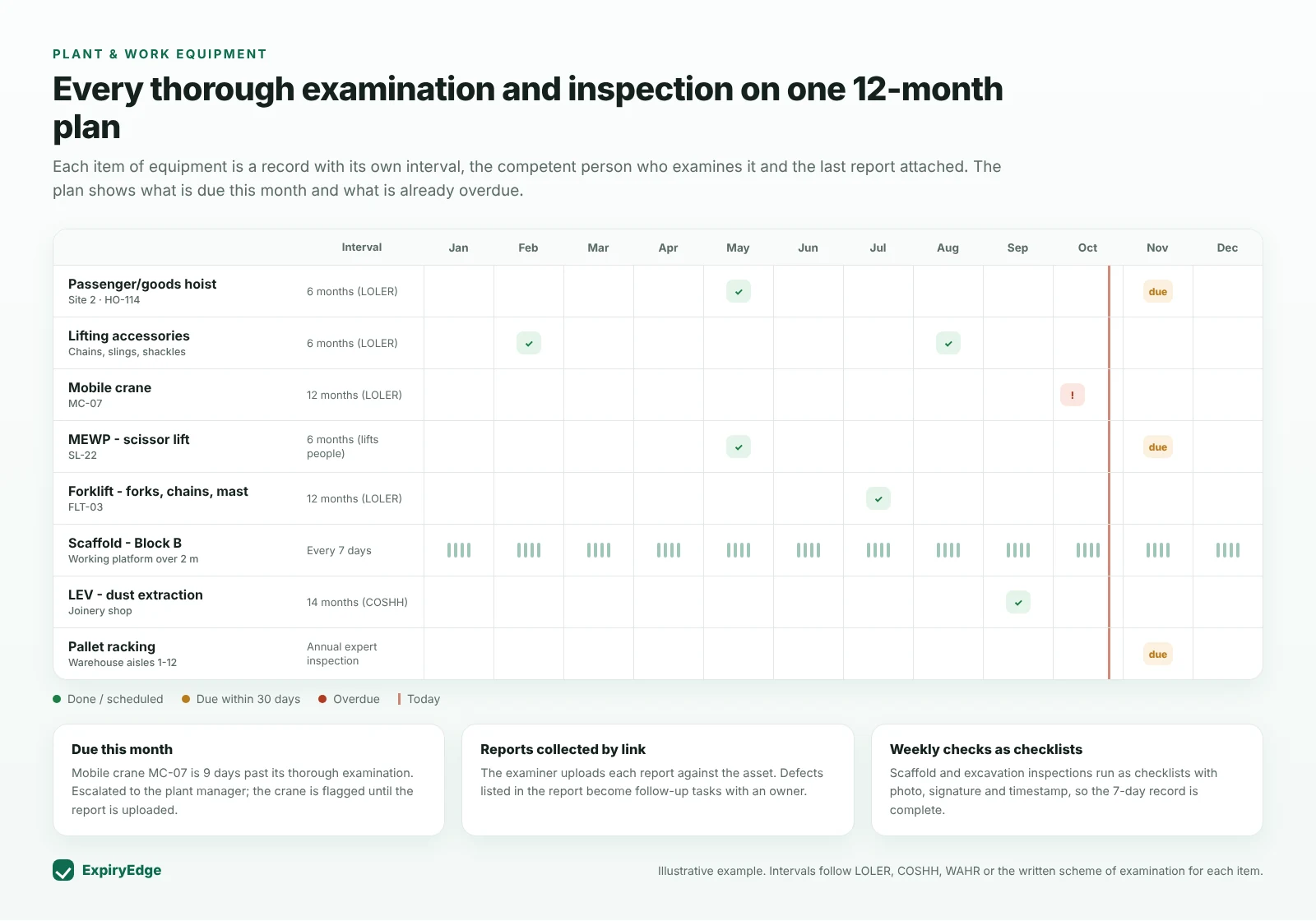
Twelve months of examinations, on one screen
Every asset with its interval, what has been done, what is due in the next 30 days and what is overdue - across sites, workshops and warehouses.
From stickers and box files to a register you can trust
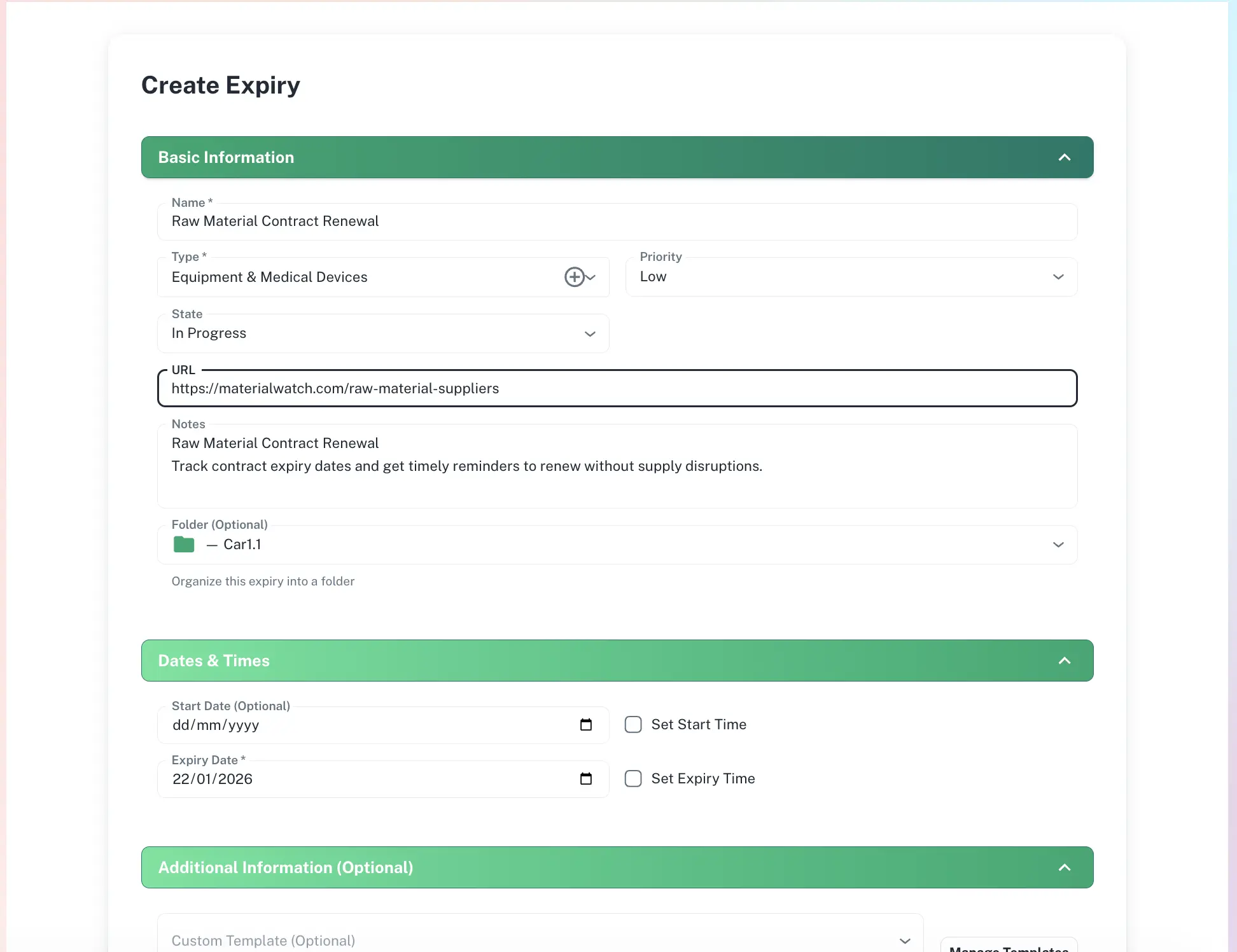
One record per asset and examination type
Import your plant and equipment register from a spreadsheet: asset number, location or site, examination type, interval, competent person and last examination date. A crane can carry a 12-month thorough examination and a separate record for its lifting accessories at 6 months. When the report is logged, the next due date rolls forward.
Spreadsheet import of the asset register
Several examination types per asset
Group by site, project, depot or asset class
Reminders to the person who books the examiner
Set a cadence per examination type - 60 and 30 days for a 6-monthly LOLER examination, 90 days for annual items booked through an insurer. Reminders reach the plant or site manager by email, SMS, WhatsApp, Slack or Teams. An overdue item turns red and escalates to the next person.
Cadence per record or per type
Owner, backup and escalation chain
Overdue equipment visible at a glance
Examiners upload reports by link; defects get an owner
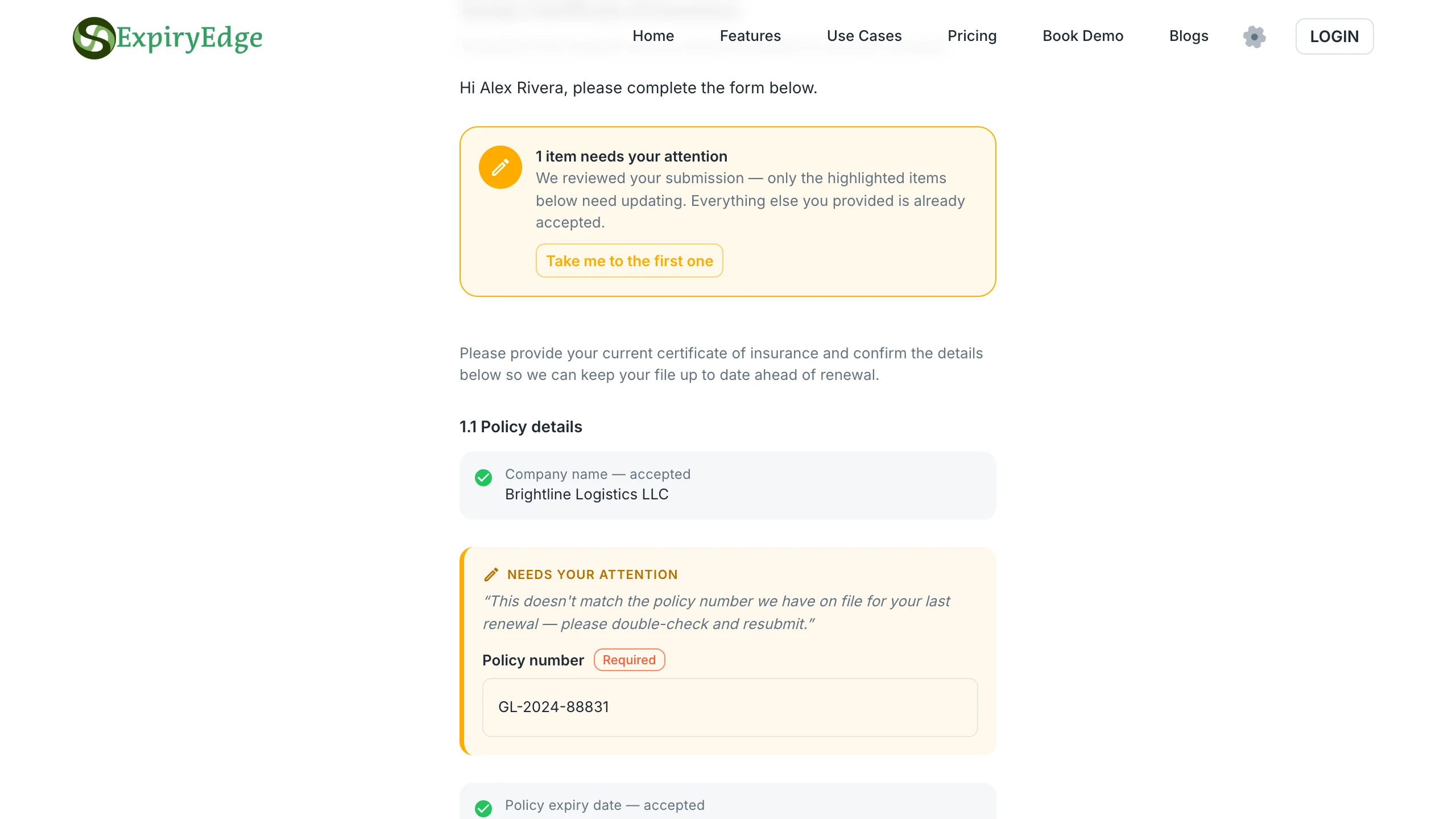
Send the examiner or hire company a link to upload the report and confirm the examination date - no account needed. If the report lists a defect, add it as a follow-up task with an owner and a deadline, so it is closed before the next examination, not found again.
No-login upload link
Reject a report with the wrong serial number
Defect actions tracked to completion
Scaffold, excavation and pre-use checks as checklists
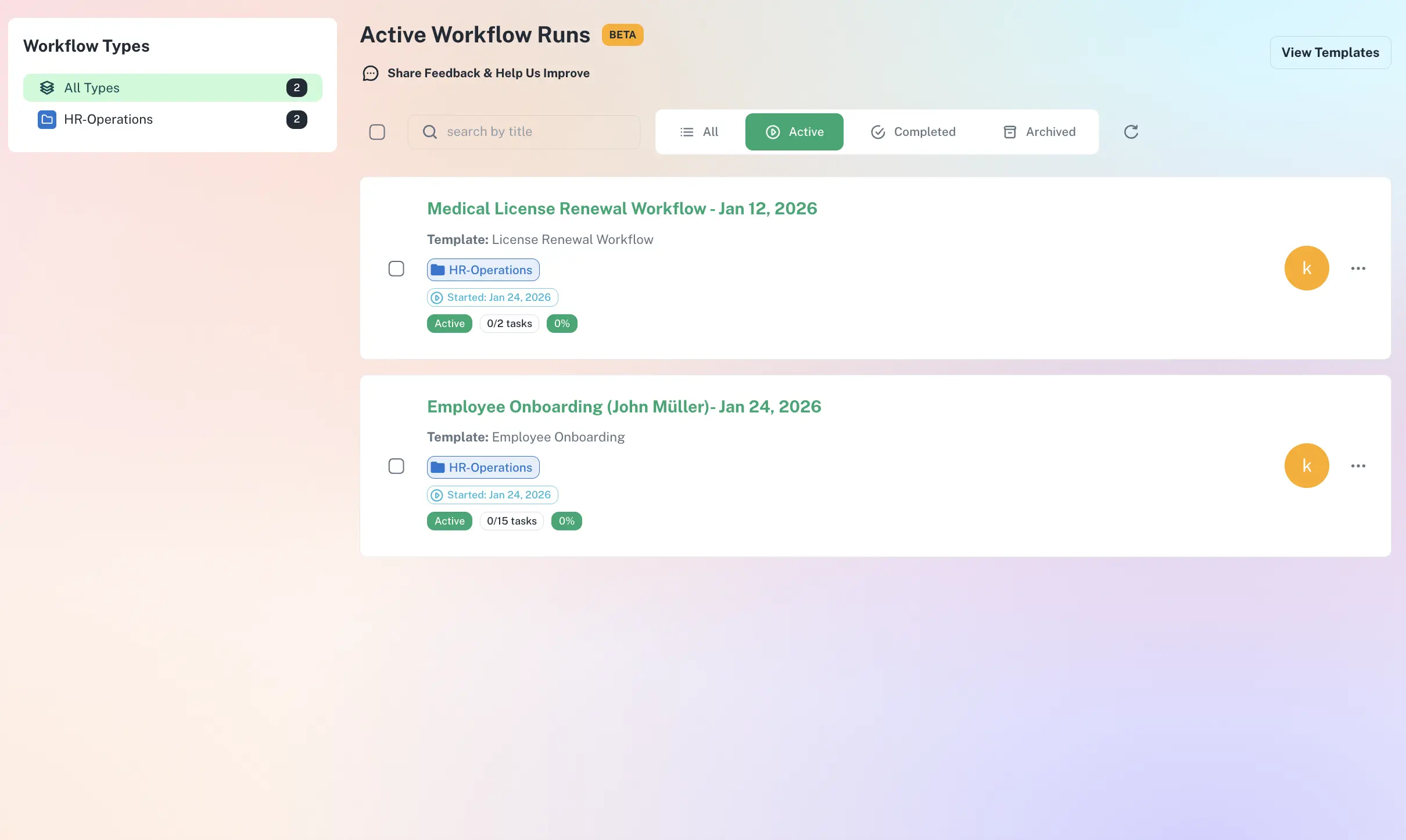
Weekly scaffold inspections, shift-start excavation checks and forklift pre-use checks become checklists on a phone. Each step can require a photo, signature, timestamp and location, so you can show the 7-day record is complete.
Photo, signature, timestamp, location
Assigned per site or per person
Missed checks flagged automatically
ExpiryEdge vs a spreadsheet vs a full CMMS
| ExpiryEdge | Spreadsheet | CMMS / EAM | |
|---|---|---|---|
| Live in a day, import from Excel | |||
| Reminders by SMS, WhatsApp, Teams | Varies | ||
| Escalation when an examination is overdue | |||
| Examiners upload reports without an account | Rarely | ||
| Checklists with photo and signature | |||
| Also tracks operator cards, insurance and permits | Manual | Partly | |
| Timestamped audit trail | |||
| Spare parts and work order costing |
At least every 6 months for equipment used to lift people and for all lifting accessories, and at least every 12 months for other lifting equipment - unless a competent person has drawn up an examination scheme with different intervals. A thorough examination is also needed after exceptional circumstances such as damage. ExpiryEdge holds each as a recurring record so the next date is set as soon as the report is logged.
It depends on use. A tail lift used only for goods falls in the 12-month category; if an operator rides the platform, it is lifting people and the 6-month interval applies. Many operators choose 6 months to be safe. Record the interval your examination scheme sets.
Under the Work at Height Regulations 2005, a working platform from which a person could fall 2 metres or more must not be used unless it has been inspected in that position within the previous 7 days, and again after anything that may affect its stability, such as high winds. ExpiryEdge can run the 7-day inspection as a recurring checklist with photos, signature and time.
COSHH regulation 9 requires a thorough examination and test of local exhaust ventilation at least every 14 months, more often for some processes, with records kept for at least 5 years. Track each LEV system as its own record with a 14-month interval and attach each test report.
Yes. Send a request link tied to the asset. The examiner uploads the report and confirms the examination date on any device. If the report shows the wrong serial number, reject that field and the same link asks only for the correction.
Not for planned maintenance, spare parts or work order costing. It covers the statutory dates, the reports, the defects that follow and the weekly checks, with reminders that reach site teams. Many teams run it alongside a CMMS, or instead of one when a CMMS is more than they need.
Put every examination on one plan
Import your asset register, set the intervals, send the first report request. Free 14-day trial, no credit card.