
Every vehicle test and every driver qualification, on one register.
An operator licence depends on dates: annual tests, safety inspections, tachograph inspections, Driver CPC hours, driver cards, D4 medicals. ExpiryEdge keeps each one as a record against the vehicle or the driver, names who is responsible, collects driver documents by link and reminds people 90, 60, 30 and 7 days before anything falls due. No telematics contract needed.
Last updated · ExpiryEdge editorial team
For transport managers, fleet managers and owner-operators
Vehicles and drivers in one register
Reminders to drivers by SMS or WhatsApp
Drivers upload CPC, card and D4 copies by link
Timestamped history for DVSA and the Traffic Commissioner
Quick answer
Fleet compliance software keeps every date that a goods vehicle operator must meet - HGV annual tests, safety inspections (PMIs), tachograph inspections, LOLER examinations, Driver CPC, driver cards, licence renewals and D4 medicals - on one register with an owner for each. ExpiryEdge reminds the driver and the transport manager at 90, 60, 30 and 7 days, collects documents from drivers without a login and keeps a timestamped record. It does not replace telematics or tachograph analysis software.
Where fleet deadlines go wrong
The PMI wall planner is the only plan
Safety inspections are booked on a whiteboard in the workshop. When the planner is wiped or the workshop manager is off, nobody can see what is due next week.
Driver documents live with the driver
The CPC card, driver card and D4 medical are in a cab or a wallet. The office finds out a card has expired when a roadside check does.
Every item has its own rule
Annual tests run from registration, tachographs every two years and after repairs, CPC every five years, HGV licences at 45 and then every five years. One spreadsheet column cannot cope.
Telematics does not cover it
Tracking and tachograph software shows where vehicles are and how long drivers drove. It rarely holds the tail lift examination, the O-licence continuation or the ADR certificate.
Grey fleet is invisible
Staff driving their own cars for work need business-use insurance, an MOT and a valid licence. Nobody asks again after the first day.
Evidence is scattered
At a maintenance investigation you are asked for inspection records, defect rectification and driver checks. They are in three systems and a filing cabinet.
UK fleet deadlines and the rule behind each
The dates most UK goods vehicle operators track. Where a rule sets a frequency it is shown; where it is guidance or common practice, that is said.
| Item | Interval / rule | Basis | Owner |
|---|---|---|---|
| HGV annual test (over 3,500 kg) | First test 12 months after first registration, then every year | DVSA annual test | Workshop / fleet manager |
| Safety inspection (PMI) | Normally every 4 to 13 weeks; at least every 6 weeks for vehicles 12 years and older; keep records 15 months | DVSA Guide to Maintaining Roadworthiness | Workshop / transport manager |
| Tachograph inspection | At least every 2 years | Retained Reg (EU) 165/2014 art. 23 | Fleet manager |
| Tachograph downloads | Vehicle unit every 90 days; driver card every 28 days | Drivers' hours rules | Transport office |
| Tail lifts and lorry loaders (LOLER) | 6 months if the lift carries people, otherwise 12 months, or per examination scheme | LOLER 1998 / HSE | Workshop |
| Car and van MOT (incl. grey fleet) | By the 3rd anniversary of registration, then yearly | MOT rules | Fleet manager / driver |
| Driver CPC | 35 hours of periodic training every 5 years; National CPC (UK only) since Dec 2024 | Driver CPC rules | Transport manager / driver |
| Digital tachograph driver card | Valid 5 years; apply to renew at least 15 working days before expiry | DVLA INF177B; Reg 165/2014 | Driver |
| HGV licence (Group 2) | Renew at 45 with a D4 medical, every 5 years to 65, then every year | DVLA INF4D | Driver / transport manager |
| Driving licence check | No statutory frequency; RoSPA recommends at least annually, more often by risk | RoSPA guidance; DVLA check code valid 21 days | Fleet manager |
| ADR driver certificate | Valid 5 years; refresher training and exams to renew | Dangerous goods driver rules | Driver / DGSA |
| Operator licence | Continuous, with a continuation fee every 5 years | Office of the Traffic Commissioner | Director / transport manager |
Vehicles and drivers on the same 12-month view
Annual tests, PMIs, tachograph inspections and LOLER on the vehicle lane. CPC, driver cards, licences and ADR on the driver lane. Each item has an owner.
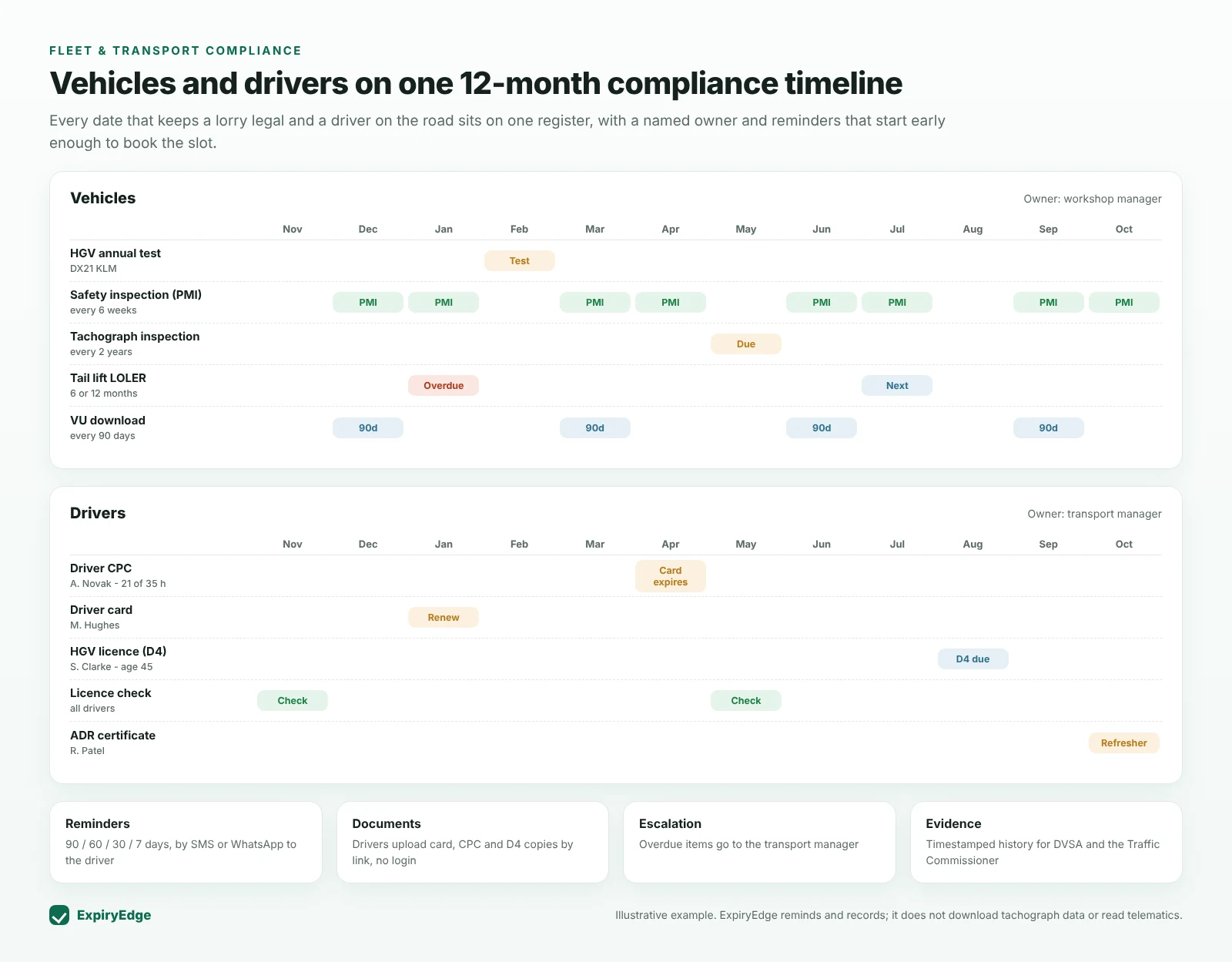
From a whiteboard and a wallet of cards to a register that chases itself
A record for every vehicle date and every driver date
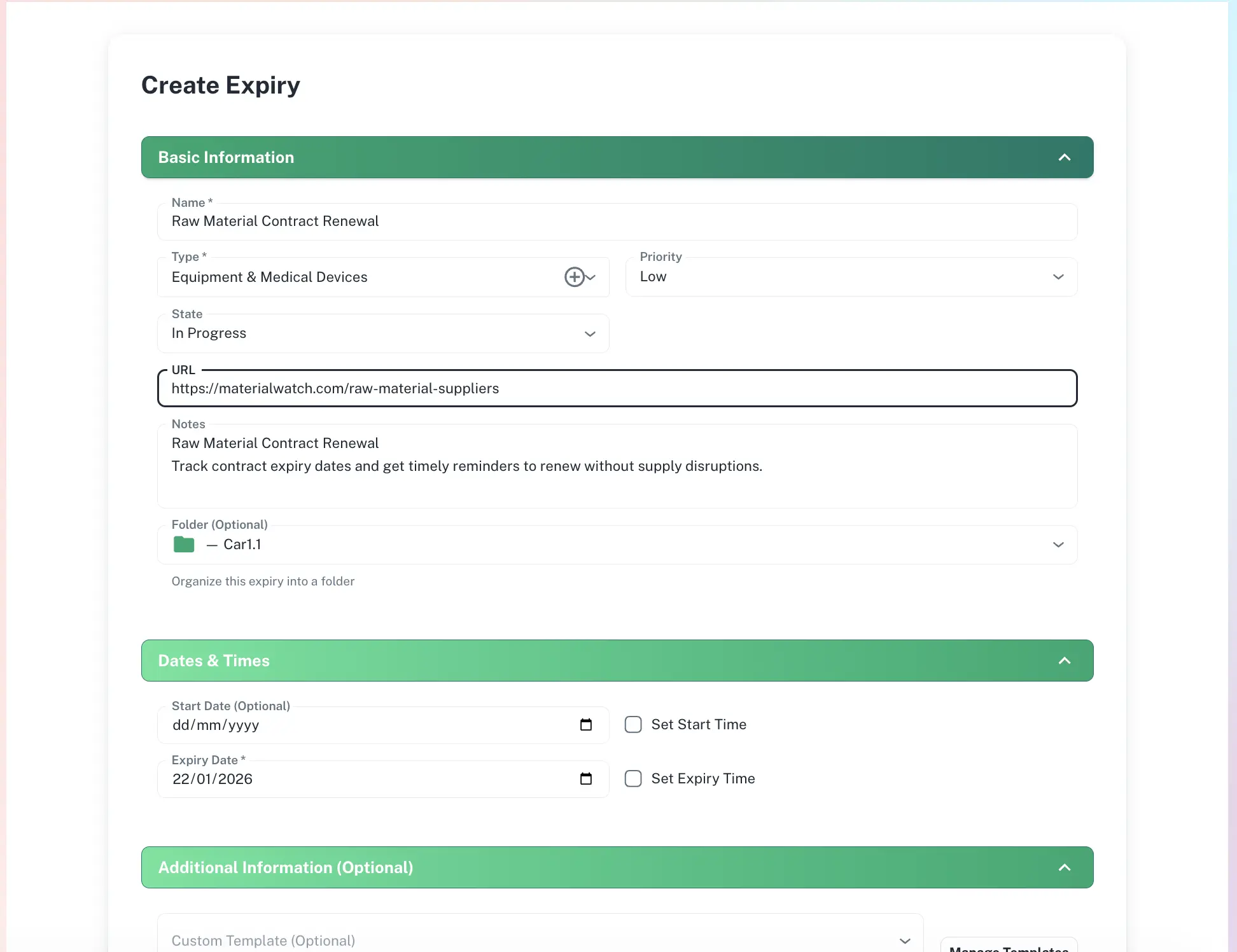
Import vehicles and drivers from a spreadsheet. Give each vehicle its annual test, PMI interval, tachograph inspection and LOLER dates; give each driver their CPC, driver card, licence and medical dates. Recurring items roll forward when you log the inspection, so the next PMI is already on the register.
Spreadsheet import for vehicles and drivers
Recurring records for PMIs and annual tests
Group by depot, vehicle type or driver group
Reminders to the driver and the transport manager
Drivers get their own reminders by SMS or WhatsApp - CPC hours to book, a driver card to renew, a D4 medical to arrange. The transport manager gets the same item by email or Teams, and overdue items escalate. Set a longer lead time where the process is slow, such as licence renewals with a medical.
Cadence per item type, default 90/60/30/7 days
Driver and manager reminded together
Escalation when a date passes
Drivers upload documents by link
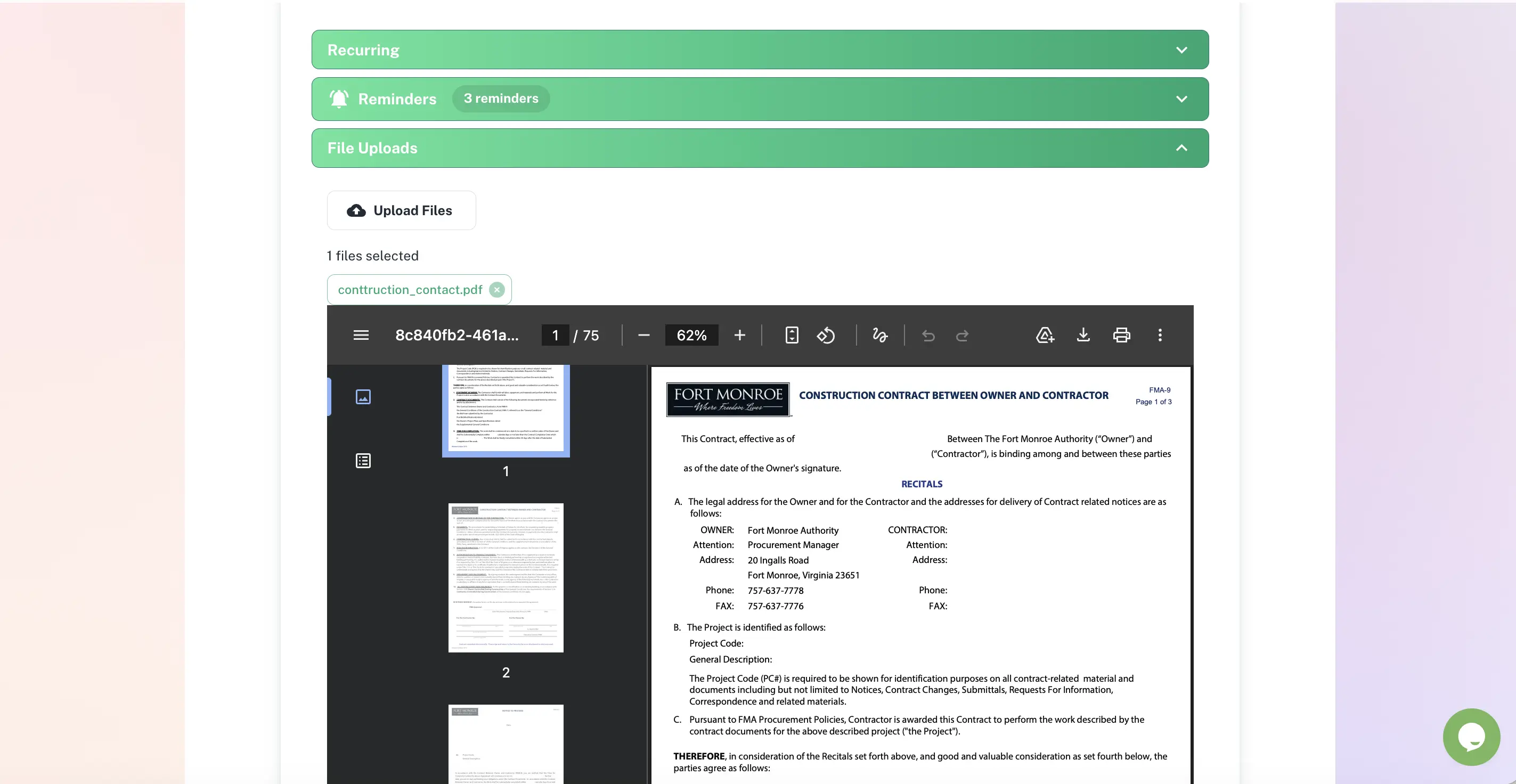
Send a driver a link to upload their CPC card, driver card, D4 or ADR certificate. No account, no app. ExpiryEdge follows up until it arrives and files it against the driver with its expiry date. If the photo is unreadable, reject that item and the same link asks again.
No-login upload link per driver
Automatic follow-up
Reject and re-request a single document
Walkaround and defect checklists
Turn the daily walkaround check, tail lift pre-use check or yard inspection into a checklist with photo, signature, timestamp and location per step. Defects stay open until signed off, and the record shows who checked what and when.
Photo, signature, timestamp and location
Defects tracked to sign-off
Assigned per depot or vehicle
Records you can produce in minutes
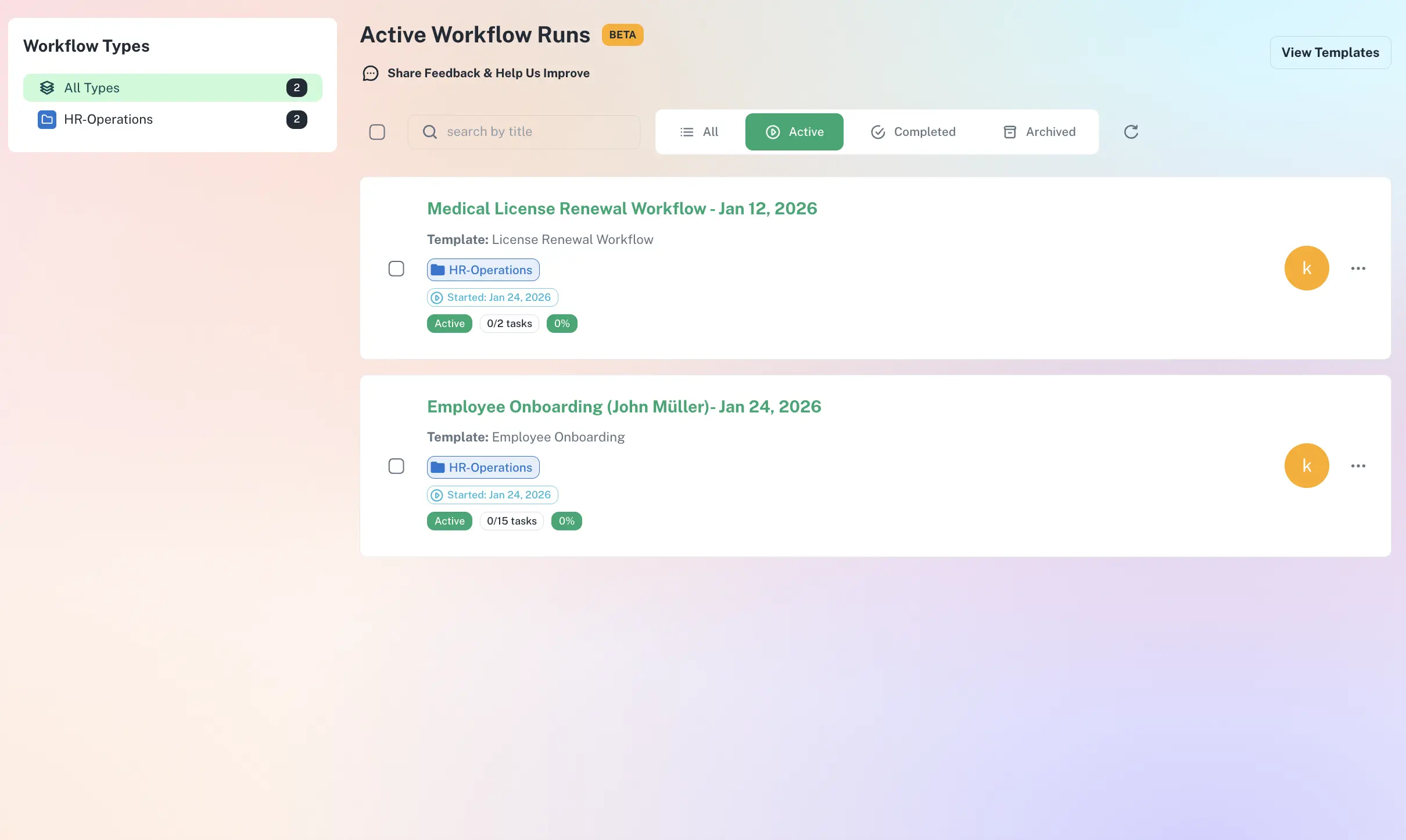
Filter by vehicle, driver or depot and export current status, documents and the full history of reminders, uploads and completions as CSV, PDF or XLSX. The history stays with the record when people move on.
Export by vehicle, driver or depot
Every reminder and upload timestamped
History survives staff changes
Drivers do not read email. Reach them anyway.
Send driver reminders by SMS or WhatsApp and office reminders by email, Slack or Microsoft Teams.
ExpiryEdge vs a spreadsheet vs a telematics suite
| ExpiryEdge | Spreadsheet | Telematics suite | |
|---|---|---|---|
| Vehicle and driver dates in one register | Manual | Partly | |
| Reminders to drivers by SMS or WhatsApp | Varies | ||
| Drivers upload documents without an account | Rarely | ||
| Also tracks O-licence, insurance, leases and contracts | Manual | ||
| No hardware or per-vehicle contract | |||
| Timestamped audit trail | |||
| Tachograph download and infringement analysis | |||
| Live vehicle tracking |
At a minimum: the annual test for each vehicle and trailer, safety inspections (PMIs) at the interval you declared, tachograph inspections at least every two years, LOLER examinations for tail lifts and loaders, vehicle unit downloads every 90 days and driver card downloads every 28 days, each driver’s Driver CPC, driver card and licence expiry, D4 medicals from age 45, ADR certificates where relevant and the operator licence continuation every five years. ExpiryEdge holds each one as a record with an owner and reminders.
DVSA’s Guide to Maintaining Roadworthiness says the interval would normally range between 4 and 13 weeks, depending on vehicle age, use and operating conditions, with vehicles and trailers 12 years and older inspected at least every 6 weeks. Inspection records should be kept for at least 15 months. In ExpiryEdge you set the interval per vehicle and the next PMI rolls forward each time one is logged.
Give each driver a record for their Driver CPC card with its expiry date, and note hours completed in the record. Drivers need 35 hours of periodic training every five years. Remind the driver and the transport manager well ahead - 12 months is sensible for drivers with few hours booked - and collect the new card by upload link once training is done. Note that since December 2024 a National Driver CPC exists for UK-only driving.
Every 6 months if the tail lift is used to lift people, otherwise every 12 months, unless a written examination scheme sets a different interval. Many operators use 6 months because an operator may ride the platform. Record the interval your competent person sets on the vehicle’s LOLER record in ExpiryEdge.
Not for the dates and documents. Telematics and tachograph software handle tracking, drivers’ hours and infringements. ExpiryEdge handles the deadlines around them - tests, inspections, qualifications, cards, licences and insurance - with reminders, document collection and an audit trail, and runs alongside whatever telematics you use.
For staff who drive their own vehicles for work, check business-use insurance, MOT and tax, and the driving licence on appointment and at regular intervals; RoSPA recommends licence checks at least annually. In ExpiryEdge each grey fleet driver gets recurring records, and they upload their insurance certificate and MOT by link, without an account.
No. ExpiryEdge reminds you that downloads and checks are due and records that they were done. Your tachograph software downloads the data, and the DVLA check is made by your staff with the driver’s check code. The result can then be logged on the driver’s record with the evidence attached.
Put every vehicle and driver deadline on one register
Import vehicles and drivers, set intervals, send the first document request. Free 14-day trial, no credit card.