Manufacturing Regulatory Inspections: A Compliance Team's Guide

Manufacturing Regulatory Inspections: A Compliance Team’s Guide
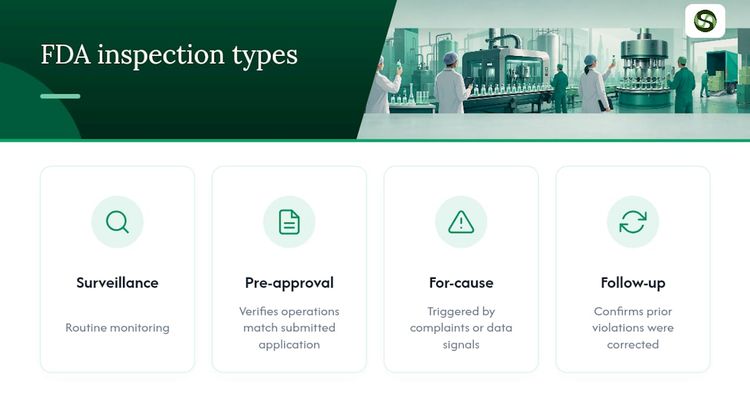
Manufacturing facilities face four core types of regulatory inspections: surveillance (routine), pre-approval/application, for-cause/reactive, and follow-up. The three agencies most likely to show up at your door are the FDA, OSHA, and EPA, each operating under distinct legal authority and triggering different evidence demands. Beyond those regulator-led visits, internal QA checks, supplier audits, and certification audits like ISO 9001 run parallel to the regulatory cycle and feed directly into the evidence regulators request.
Here is a fast-scan inventory of the main inspection categories:
- Surveillance/routine — scheduled, risk-based monitoring of ongoing compliance
- Pre-approval/application — verifies facility operations match a submitted application before approval
- For-cause/reactive — triggered by complaints, adverse events, or data anomalies
- Follow-up — confirms prior violations were corrected
- Internal QA inspections — incoming, in-process, and final checks owned by the facility
- Supplier and certification audits — third-party or customer-led reviews against standards like ISO 9001 or IATF 16949
Key Takeaways
Manufacturing regulatory inspections fall into four types, and the compliance teams that prepare evidence, assign roles, and automate deadline tracking before an inspection arrives consistently achieve better outcomes than those that react after the fact.
| Point | Details |
|---|---|
| Four FDA inspection types | Surveillance, pre-approval, for-cause, and follow-up each require different evidence packs and response timelines. |
| OSHA and EPA add parallel tracks | Programmed and complaint-driven OSHA visits, plus EPA full evaluations, run independently of FDA cycles. |
| Internal QA feeds regulatory evidence | Batch records, calibration logs, and CAPA documentation from your QA program are the first records regulators request. |
| Automate scheduling and expiry tracking | Automated reminders for calibration, training, and CAPA deadlines prevent the gaps most commonly cited during inspections. |
| Assign clear inspection roles | A named inspection lead, records coordinator, and subject-matter experts eliminate confusion when an unannounced inspector arrives. |
How regulatory inspections differ from quality and supplier audits
Not every inspection carries enforcement teeth. The distinction matters because it determines who owns the response, what evidence to prioritize, and how fast you need to act.
A regulatory inspection is conducted by a government agency with statutory authority to issue citations, warning letters, consent decrees, or initiate recalls. The inspector arrives representing the law, not a customer. An internal QA inspection is a process-control tool: your team checking its own work against SOPs, specifications, or standards. A supplier audit sits in between, often contractually required but without direct enforcement power unless tied to a certification body.
The IAEA’s inspection methodology guidance frames this cleanly: regulatory programs should include both planned (programmed) inspections and reactive inspections, with the approach graded to risk. Planned inspections are scheduled in advance; reactive ones are triggered by incidents, complaints, or referrals.
Who typically owns each type:
- QA team — incoming, in-process, and final inspections; calibration records; batch records
- EHS/Environmental team — OSHA and EPA compliance, safety data sheets, environmental monitoring logs
- Regulatory Affairs — FDA interactions, application-linked inspections, CAPA documentation
- Procurement/Supplier Quality — supplier audits, COA review, approved vendor lists
Pro Tip: Run a simple ownership matrix before your next inspection cycle. Map each inspection type to a named team lead and a backup. When an unannounced inspector arrives, the last thing you want is three people looking at each other.
Types of manufacturing regulatory inspections by agency
The table below maps the four FDA inspection types alongside OSHA and EPA categories across the dimensions compliance teams need most.
FDA operational notes worth knowing:
- Surveillance inspections follow a QSIT-style framework for device manufacturers, with baseline (comprehensive) and abbreviated (follow-up) levels that determine scope and frequency, as detailed in Greenlight Guru’s FDA inspection breakdown.
- Pre-approval inspections can be unannounced for domestic facilities; foreign facilities typically receive advance notice. A PAI failure delays approval and often triggers a for-cause review of the same facility.
- For-cause inspections start focused but frequently expand into a full GMP review once inspectors are on-site. Treat every for-cause visit as a potential full inspection from the moment the investigator walks in.
The EPA’s ICIS FE&C data dictionary maps each inspection type to specific environmental statutes, which helps your EHS team anticipate exactly which records an EPA investigator will request under a given program.
Shop-floor and QA inspection types that feed regulatory evidence
Internal QA inspections are not separate from regulatory compliance; they generate the records regulators ask for first. Here are the types compliance teams need to understand and maintain:
- Incoming/material inspection — verifies raw materials and components against specifications before production begins. Key evidence: certificates of analysis (COAs), supplier qualification records, approved vendor lists.
- In-process/in-line inspection — checks product at defined production stages. Key evidence: process control charts, deviation logs, operator sign-offs, environmental monitoring data.
- First-article/first-piece inspection — confirms the first unit of a new run meets all specifications before full production. Key evidence: PPAP documentation (automotive), first-article inspection reports, dimensional data.
- Final inspection — full product review before release. Key evidence: batch records, certificate of conformance, release signatures, test reports.
- Environmental and cleanroom monitoring — tracks particulate counts, temperature, humidity, and microbial levels in controlled environments. Key evidence: environmental logs, trend analyses, out-of-specification investigations.
- Destructive and non-destructive testing (NDT) — assesses structural integrity without (or with) destroying the sample. Key evidence: test method validations, calibration records for test equipment, technician certifications.
- Supplier and third-party audits — evaluates supplier quality systems against your requirements or a standard. Key evidence: audit reports, corrective action requests (CARs), supplier scorecards. Supplier compliance tracking is a separate discipline from internal QA but feeds the same regulatory evidence pool.
How certification audits differ from regulator audits:
ISO 9001, IATF 16949, and SQF audits are conducted by accredited certification bodies, not government agencies. Their purpose is conformance to a standard, not legal enforcement. Regulators may reference your ISO certification as evidence of a functioning QMS, but they are not bound by it. A modern manufacturing audit checklist now covers ISO/IATF alignment, process control, incoming quality, calibration, traceability, EHS, and OT cybersecurity — areas that increasingly overlap with what FDA and OSHA investigators examine.
What happens during a regulatory inspection, step by step
- Notification (if any) — FDA surveillance inspections are typically announced days to weeks in advance. OSHA and for-cause FDA visits arrive unannounced. Use any notice period to confirm document access, brief key personnel, and verify your evidence pack is current.
- Entrance conference — the inspector presents credentials, states the inspection’s scope and authority, and outlines what they expect to review. Your designated inspection lead should be present, take notes, and ask clarifying questions about scope.
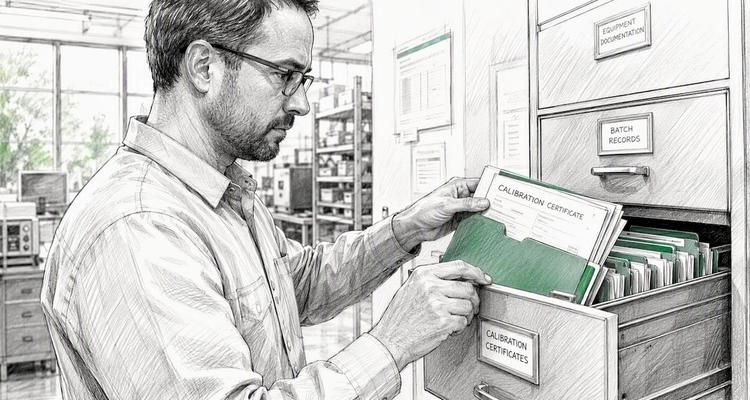
- Records review — inspectors request specific documents: batch records, SOPs, CAPA logs, training records, calibration certificates, complaint files. Have a retrieval protocol ready so no one is scrambling through shared drives.
- Sampling and observations — inspectors may collect product samples, swab surfaces, photograph equipment, or take environmental readings. They will observe production lines and interview operators directly.
- Personnel interviews — line operators, QA staff, and supervisors may be interviewed separately. Brief your team beforehand: answer only what is asked, be honest, and escalate anything outside their knowledge to the inspection lead.
- Exit meeting (closeout conference) — the inspector summarizes observations verbally. This is not the final report, but it is your first signal of findings. Document everything said, ask for clarification on any observation you do not understand, and avoid making commitments you cannot keep.
Timeline reality check: A routine FDA surveillance inspection at a mid-size pharmaceutical facility typically runs two to five days. OSHA targeted inspections at a manufacturing site can wrap in a single day for a focused hazard review or extend to a week for a complex site. For-cause FDA inspections have no fixed ceiling; they end when the investigator is satisfied.
Inspection outcomes and what your team does next
Findings range from minor observations to enforcement actions that halt production. Knowing the sequence helps you respond proportionately and fast.
Typical outcome ladder:
- No action indicated (NAI) — no significant findings; inspection closes without further action
- Voluntary action indicated (VAI) — minor observations; facility corrects voluntarily
- Official action indicated (OAI) / Form 483 — documented observations requiring a written response, typically within 15 business days for FDA
- OSHA citation — formal notice of violation with a proposed penalty and abatement deadline
- Warning letter — FDA’s public signal that violations are serious and unresolved; triggers heightened scrutiny
- Consent decree / civil penalty — negotiated or imposed legal agreement; can restrict or halt operations
- Product seizure or recall — most severe; triggered by imminent public health risk
When a Form 483 lands on your desk, the clock starts immediately. Your written response must address each observation with a root cause analysis, a corrective action, and a realistic completion date. Vague commitments (“we will review our procedures”) invite a warning letter. Specific, evidence-backed responses with attached documentation close observations faster and signal a functioning CAPA system to the agency.
Short-term operational responses:
- Contain affected product (quarantine, production hold) before the inspector leaves if a critical finding is identified
- Preserve all records related to the finding — do not alter, delete, or “improve” documents after an inspection begins
- Notify senior leadership and legal counsel immediately for OAI findings or citations
Medium-term compliance work:
- Conduct root cause analysis within the first week
- Build a CAPA with measurable milestones, assigned owners, and verification steps
- Track CAPA completion dates against your response commitments — missed dates are a red flag in follow-up inspections
For preventing regulatory fines through proactive expiry monitoring, the window between a 483 response and a follow-up inspection is your best opportunity to close gaps permanently.
How to prepare your team and evidence before an inspection
Pre-inspection readiness checklist:
- Confirm all SOPs are current, approved, and accessible in one location
- Verify calibration certificates for all critical instruments are within validity
- Pull and review the last three CAPA cycles for open items
- Check training records for all personnel likely to be interviewed
- Confirm environmental monitoring logs are complete and trend analyses are current
- Test your document retrieval process under a timed mock request
Inspection roles:
| Role | Responsibility |
|---|---|
| Inspection Lead (Regulatory Affairs or QA Director) | Greets inspector, manages scope discussions, attends all meetings |
| Records Coordinator (QA Manager) | Retrieves requested documents, logs every request and response time |
| Subject Matter Experts (QA, EHS, Production) | Accompany inspector in their area, answer technical questions |
| Legal/Compliance Counsel | Available by phone; reviews any written commitments before they are made |
| Executive Sponsor | Briefed daily; authorizes production holds or containment decisions |
Mock audit cadence: Run a full mock audit at least once per year, timed to simulate an unannounced visit. Test evidence retrieval under a 30-minute window for the five most commonly requested document types. Rotate the mock inspector role among senior QA staff to surface blind spots.
Pro Tip: Build a “hot evidence” folder, updated monthly, containing your current calibration certificates, the last completed CAPA, your most recent environmental monitoring summary, and your training completion report. When an unannounced inspector arrives, your records coordinator can produce this pack in under five minutes. Digital retrieval through a deadline-tracking platform cuts that time further and removes the risk of handing over an expired certificate.
For automotive suppliers, TISAX compliance automation follows a similar evidence-readiness logic, with pre-defined assessment levels that map directly to the document packs your auditor will request.
Where automation reduces inspection risk
The most common gaps that surface during inspections are not missing procedures. They are expired calibrations nobody caught, overdue retraining that slipped through a busy quarter, and CAPA items that closed on paper but never got verified. These are deadline failures, not knowledge failures.
Operational gaps automation closes:
- Calibration certificates expiring between scheduled reviews
- Employee training records lapsing before the next audit cycle
- Supplier qualification renewals missed during procurement transitions
- CAPA verification deadlines passing without confirmation
- Inspection scheduling gaps when a facility misses its own internal audit calendar
Example automated workflow for inspection readiness:
A compliance team configures recurring reminders 90, 30, and 7 days before each calibration expiry. When a certificate is renewed, the updated document uploads directly to the evidence folder, timestamped and linked to the relevant equipment record. If the renewal is not completed by day 7, an escalation alert goes to the QA director. The same logic applies to employee certifications, environmental monitoring schedules, and CAPA verification milestones.
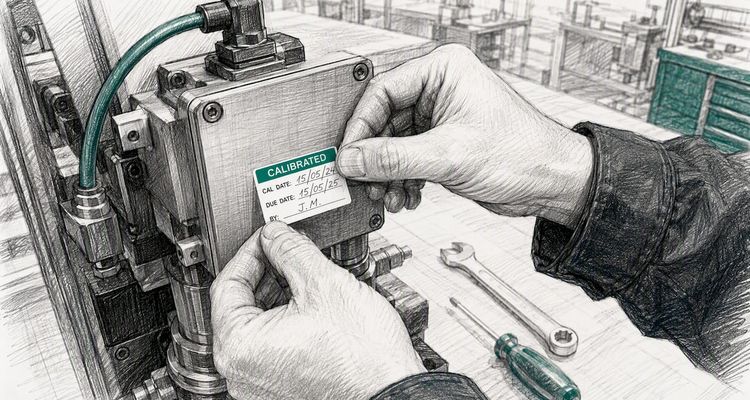
Expiryedge supports exactly this workflow: centralized deadline tracking, multi-channel alerts, assignable SOP checklists, and audit trails that show inspectors a complete, timestamped record of compliance activity. The benefits of automated compliance tracking go beyond convenience; they produce the kind of documented, time-stamped evidence trail that turns a Form 483 response from a scramble into a straightforward submission.
Pro Tip: Configure your inspection schedule calendar as a recurring workflow, not a one-time calendar entry. Each inspection type (internal audit, supplier audit, calibration review, regulatory surveillance cycle) should have its own recurring trigger with assigned owners and escalation paths. When the schedule slips, the system flags it — not a person who happened to remember.
What actually matters when an inspector is in your building
The compliance professionals who handle inspections well share one trait: they treat readiness as an operational state, not a pre-inspection sprint. The facilities that struggle are the ones that spend the week before an announced inspection pulling records together for the first time.
From an operational standpoint, the hardest real-time decision during an inspection is usually the production continuity call. When an inspector identifies a potential critical finding mid-line, the instinct is to keep running while you investigate. The right call is almost always to stop, contain, and document. The short-term production loss is recoverable. A warning letter citing continued production after a known defect is not.

Calm, factual communication with inspectors matters more than most teams expect. Inspectors are not adversaries; they are doing a job with a checklist and a legal mandate. Answering questions directly, producing records promptly, and acknowledging gaps honestly (with a credible correction plan) consistently produces better outcomes than defensive posturing or over-explaining. Deadline-tracking and workflow automation support this posture by making evidence retrieval fast and audit trails complete, which removes the anxiety that drives poor inspection-room behavior.
Sources
- Types of FDA Inspections | FDA
- IAEA standards and guidance on inspection methodologies and planned vs reactive inspections
- ICIS FE&C inspection types data dictionary | EPA / ECHO
- Regovant knowledge hub — types of FDA inspections and operational notes
This article is general information, not a substitute for advice from a qualified lawyer. Consult a qualified legal professional about your own circumstances before acting on anything here.
FAQ
What are the four types of FDA inspections?
The FDA categorizes inspections as surveillance (routine monitoring), pre-approval/application (verifying operations match a submitted application), for-cause (triggered by complaints or data signals), and follow-up (confirming prior violations were corrected).
What are the main types of inspections in manufacturing?
Manufacturing facilities face regulatory inspections from agencies like FDA, OSHA, and EPA, plus internal QA inspections (incoming, in-process, final), supplier audits, and certification audits against standards such as ISO 9001 or IATF 16949.
What are the three main types of inspections?
Most frameworks group inspections into planned/routine, reactive/for-cause, and follow-up inspections. This applies across regulators: FDA, OSHA, and EPA all operate some version of each category.
What are the seven types of inspection in quality control?
Common QA inspection types include incoming material, first-article, in-process, final, environmental/cleanroom monitoring, destructive testing, and non-destructive testing. Each generates specific records that regulators may request during a compliance inspection.
Recommended
Frequently asked questions
Manufacturing facilities face regulatory inspections from agencies like FDA, OSHA, and EPA, plus internal QA inspections (incoming, in-process, final), supplier audits, and certification audits against standards such as ISO 9001 or IATF 16949.
Most frameworks group inspections into planned/routine, reactive/for-cause, and follow-up inspections. This applies across regulators: FDA, OSHA, and EPA all operate some version of each category.
Common QA inspection types include incoming material, first-article, in-process, final, environmental/cleanroom monitoring, destructive testing, and non-destructive testing. Each generates specific records that regulators may request during a compliance inspection.