Inspection Deadline Automation: A 2026 Ops Guide

Inspection Deadline Automation: A 2026 Ops Guide

TL;DR:
Inspection deadline automation ensures compliance by systematically managing all inspection and evidence submission deadlines. It saves labor hours, prevents violations from secondary deadlines, and improves audit readiness through proactive notifications and organized documentation. Effective systems support accurate scheduling, multi-stage escalations, and workflows that cover every step from inspection to regulatory reporting.
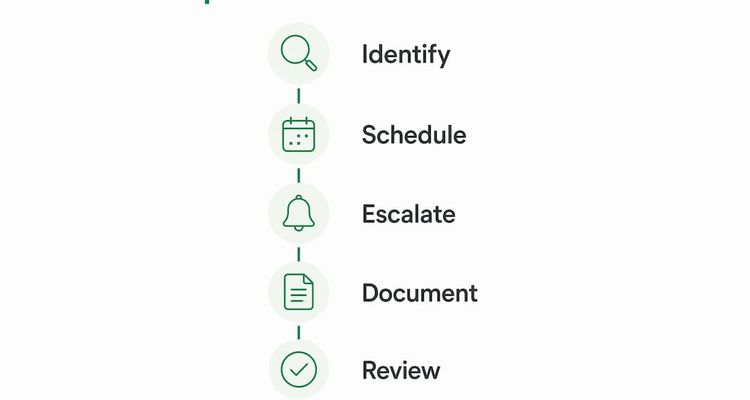
Inspection deadline automation is the process of using software to systematically track, schedule, escalate, and document inspection obligations so no regulatory deadline is missed. The role of inspection deadline automation goes far beyond sending calendar reminders. It enforces complete compliance workflows, from the initial inspection date through evidence submission and corrective action closure. Operations and compliance teams that rely on manual tracking face a measurable gap: automated systems save approximately 8 labor hours per week and prevent roughly 2 hours of unplanned downtime per month. Those numbers reflect a structural shift in how compliance-driven organizations manage time-sensitive obligations.
What are the main challenges with manual inspection deadline management?
Manual tracking fails in predictable ways. Spreadsheets, shared calendars, and memory-based systems work when teams are stable, asset counts are low, and workloads are steady. None of those conditions hold permanently.
Manual inspection schedules break down during busy periods, staff turnover, and asset growth. A technician who owns a spreadsheet leaves the company, and the institutional knowledge leaves with them. A facility adds 40 new assets over two years, and the original tracking sheet never gets updated to reflect the new inspection cycles. These are not edge cases. They are the normal lifecycle of any growing operation.
The three most common failure modes in manual deadline management are:
- Calendar drift. Recurring inspections get rescheduled once and never reset. The next due date is calculated from the original schedule, not the actual completion date, creating a growing gap between what the system shows and what is actually overdue.
- Ownership gaps. When a staff member changes roles or leaves, inspection ownership becomes unclear. No one receives the reminder, and no one notices until an auditor asks.
- The secondary deadline trap. This is the most underappreciated failure mode. Compliance programs fail more often at the evidence submission phase than at the inspection itself. A team completes the physical inspection on time but misses the deadline to upload corrective action evidence or submit a verification report. The audit finds a violation despite the work being done.
Pro Tip: Map your last 12 months of compliance findings and categorize each one as a missed inspection, a missed evidence submission, or a documentation error. Most teams discover that secondary deadlines cause more violations than missed inspections.
The secondary deadline trap is particularly costly because it is invisible in basic tracking systems. A spreadsheet marks an inspection “complete” the moment the field work ends. It has no mechanism to track what happens next: the corrective action work order, the photo evidence upload, the sign-off from a qualified technician, and the submission to the regulatory body. Each of those steps carries its own deadline.
How does inspection deadline automation improve compliance and efficiency?
Automated deadline management replaces reactive firefighting with a structured, proactive workflow. The core benefit is not speed. It is consistency. Automation applies the same process to every inspection, every time, regardless of who is on shift or how busy the team is.
The specific efficiency gains are well documented. Inspection automation saves 8 labor hours per week and prevents approximately 2 hours of downtime per month. Those savings compound across a year and across multiple facilities. The labor hours freed from manual tracking and chasing overdue items shift toward higher-value compliance work.
The compliance benefits extend across several dimensions:
- Continuous compliance calendars. Automated systems calculate the next inspection date immediately upon task completion, using the actual completion date rather than the scheduled date. The calendar stays accurate without manual intervention.
- Escalating notifications. Deadlines escalate at 30, 14, 7, and 3 days before the due date, giving teams enough lead time to schedule resources, order parts, or reassign work. This eliminates the emergency corrective work that comes from discovering an overdue inspection the day before an audit.
- Secondary deadline enforcement. Automated workflows track evidence submission deadlines as separate, linked obligations. Completing the inspection triggers a new deadline for documentation. Missing that documentation deadline triggers its own escalation chain.
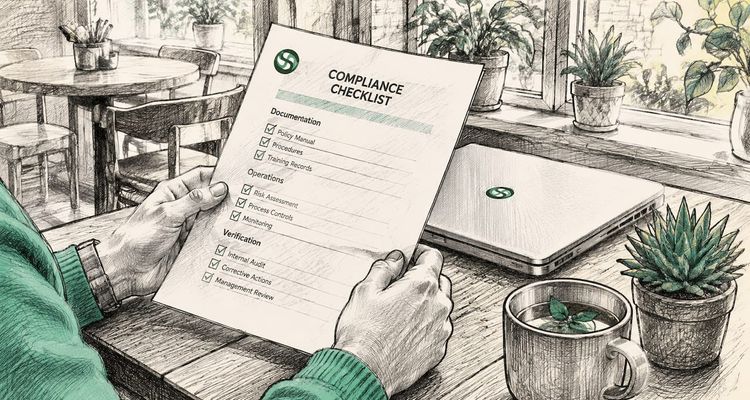
- Audit-ready documentation. Automated systems capture timestamps, photo evidence, and technician attribution in a standardized format. Audit preparation time drops from weeks to minutes because the records are already organized and complete.
Pro Tip: When evaluating deadline tracking software, ask specifically whether the system tracks secondary deadlines separately from primary inspection dates. Most entry-level tools do not. That gap is where compliance violations happen.
The ROI calculation for inspection automation covers more than labor savings. Automation impacts risk reduction, uptime protection, and reporting efficiency simultaneously. A team that measures only labor hours saved will undercount the full value. Regulatory fines, emergency repair costs, and audit remediation expenses all decrease when deadlines are managed proactively.
What features make inspection deadline automation effective?
Not all deadline management tools deliver the same results. The difference between a basic reminder system and a full inspection deadline automation platform comes down to workflow coverage. Effective automation must cover every step from detection through closure.
The essential feature categories are:
- Configurable inspection intervals. Different asset types and locations require different inspection frequencies. The system must support custom intervals per asset, not a single global setting.
- Automatic next-date calculation. Automated scheduling calculates the next inspection date upon task completion and sends push notifications before, on, and after the due date. This removes the manual step of resetting the calendar after each inspection.
- Multi-stage escalation protocols. Notifications at 30, 14, 7, and 3 days before a deadline give different stakeholders appropriate lead time. A facilities manager needs 30 days to schedule a contractor. A compliance officer needs 3 days to review documentation before submission.
- Qualified technician routing. AI-driven systems maintain qualifications records and route corrective action tasks only to certified personnel. Assigning work to an unqualified technician creates a compliance violation even when the work is completed on time.
- Mandatory evidence capture. The system requires photo evidence, checklists, and sign-offs before marking an inspection complete. This prevents the common pattern of marking work done without capturing the documentation auditors require.
- Linked secondary deadlines. Every primary inspection deadline must link to dependent deadlines for evidence submission, corrective action closure, and regulatory reporting.
The table below shows how these feature categories map to compliance outcomes.
| Feature category | Compliance outcome |
|---|---|
| Configurable intervals | Correct frequency per asset type and regulatory requirement |
| Automatic next-date calculation | Calendar accuracy without manual resets |
| Multi-stage escalation | Proactive resource planning before deadlines become critical |
| Qualified technician routing | No violations from unqualified task completion |
| Mandatory evidence capture | Audit-ready records at every inspection |
| Linked secondary deadlines | No secondary deadline trap violations |
Platforms like Expiryedge are built specifically for this type of deadline-driven workflow. Expiryedge tracks inspection dates, escalates through multi-channel alerts, and links primary and secondary deadlines within a single compliance calendar. Teams managing deadline escalation workflows across multiple asset types or locations benefit from having all obligations visible in one place.
How can organizations implement inspection deadline automation successfully?
Implementation succeeds when teams define the full workflow before selecting a tool. The most common mistake is purchasing a reminder system and expecting it to solve a workflow problem. Reminders address one step. Compliance requires covering every step.
A practical implementation sequence follows this order:
- Audit your current inspection obligations. List every asset, its required inspection frequency, the regulatory body that mandates it, and the evidence required for compliance. This inventory becomes the foundation of your automation configuration.
- Map the full workflow for each inspection type. Define the triage, verification, work order generation, corrective action, evidence capture, and submission steps. Identify which steps carry their own deadlines. This is where secondary deadlines become visible for the first time.
- Run a pilot on a defined asset group. Select one facility or one asset category and run the automated system in parallel with your existing process for 60 days. Measure missed deadlines, labor hours spent on tracking, and documentation completeness before and after.
- Configure escalation protocols before go-live. Set notification intervals at 30, 14, 7, and 3 days for each inspection type. Assign ownership at each escalation stage so every notification goes to someone with the authority to act.
- Transfer institutional knowledge into the system. Document inspection notes, asset quirks, and compliance history inside the platform. When staff changes happen, the knowledge stays in the system rather than leaving with the person.
Engineering and construction teams have found that automating client reporting alongside inspection tracking creates a unified compliance record that serves both internal audits and client deliverables. The same documentation that satisfies a regulatory inspector also satisfies a client’s quality review.
Post-implementation, track three metrics monthly: the percentage of inspections completed on time, the percentage of evidence submissions completed before their deadline, and the number of escalations that reached the final stage without resolution. The third metric is your early warning indicator for workflow gaps.
Key Takeaways
Inspection deadline automation prevents compliance violations by enforcing complete workflows, from primary inspection dates through evidence submission, corrective action closure, and regulatory reporting.
| Point | Details |
|---|---|
| Secondary deadlines cause most violations | Automate evidence submission and corrective action deadlines, not just inspection dates. |
| Labor savings are measurable | Automation saves approximately 8 labor hours per week and prevents 2 hours of downtime monthly. |
| Escalation intervals matter | Notifications at 30, 14, 7, and 3 days give teams time to act before deadlines become critical. |
| Institutional knowledge must live in the system | Staff changes should not break compliance continuity. |
| Audit readiness is built in | Mandatory evidence capture and technician attribution reduce audit prep from weeks to minutes. |
Why inspection automation is more than a reminder tool
I have worked with operations and compliance teams across multiple industries, and the pattern is consistent. Teams that implement inspection automation expecting a better calendar get marginal results. Teams that implement it as a workflow system get transformational ones.
The most common misunderstanding I see is treating automation as a notification layer on top of existing manual processes. That approach improves reminder delivery but leaves the underlying workflow gaps intact. The secondary deadline trap still catches teams because the system is not tracking what happens after the inspection.
The more sophisticated platforms now predict deadline risk before it materializes. They flag inspections where the assigned technician has a scheduling conflict, where parts lead times exceed the available window, or where a pattern of late completions suggests a systemic resource problem. That is a fundamentally different capability than sending an email 7 days before a due date.
My recommendation for teams evaluating automation solutions: require a demonstration of secondary deadline tracking before making a decision. Ask the vendor to show you what happens after an inspection is marked complete. If the workflow ends there, the tool will not prevent the compliance failures that matter most.
— Kuldeep
How Expiryedge supports inspection deadline management
Operations and compliance teams that need a purpose-built solution for inspection deadline tracking will find Expiryedge built specifically for this type of work.

Expiryedge automates inspection scheduling, sends multi-channel escalation alerts at configurable intervals, links primary and secondary deadlines within a single compliance calendar, and captures audit-ready documentation at every step. Teams managing certifications, regulatory inspections, asset maintenance schedules, and corrective action workflows can centralize all obligations in one platform. The result is fewer missed deadlines, less time spent on manual tracking, and documentation that is ready for an auditor the moment they ask. Visit Expiryedge’s deadline tracking platform to see how it fits your compliance workflow.
FAQ
What is inspection deadline automation?
Inspection deadline automation is the use of software to schedule, track, escalate, and document inspection obligations so no regulatory deadline is missed. It covers the full workflow from the initial inspection date through evidence submission and corrective action closure.
Why do manual inspection tracking systems fail?
Manual systems fail during staff turnover, busy periods, and asset growth because they lack institutional memory and cannot enforce secondary deadlines like evidence submission. Systematic failures occur whenever tracking depends on a single person or static spreadsheet.
What is the secondary deadline trap?
The secondary deadline trap occurs when an organization completes a physical inspection on time but misses the subsequent deadline for submitting evidence or closing a corrective action. Compliance violations result even though the inspection itself was performed correctly.
How much time can inspection automation save?
Inspection automation saves approximately 8 labor hours per week and prevents roughly 2 hours of unplanned downtime per month. Those savings scale with the number of assets and inspection types managed.
What escalation intervals should inspection deadline systems use?
Effective systems send notifications at 30, 14, 7, and 3 days before each deadline. This multi-stage approach gives facilities managers, technicians, and compliance officers enough lead time to act at their respective levels of responsibility.
Recommended
Frequently asked questions
Manual systems fail during staff turnover, busy periods, and asset growth because they lack institutional memory and cannot enforce secondary deadlines like evidence submission. Systematic failures occur whenever tracking depends on a single person or static spreadsheet.
The secondary deadline trap occurs when an organization completes a physical inspection on time but misses the subsequent deadline for submitting evidence or closing a corrective action. Compliance violations result even though the inspection itself was performed correctly.
Inspection automation saves approximately 8 labor hours per week and prevents roughly 2 hours of unplanned downtime per month. Those savings scale with the number of assets and inspection types managed.
Effective systems send notifications at 30, 14, 7, and 3 days before each deadline. This multi-stage approach gives facilities managers, technicians, and compliance officers enough lead time to act at their respective levels of responsibility.