How Fire Safety Inspection Tracking Works for Compliance Teams

How Fire Safety Inspection Tracking Works for Compliance Teams

Fire safety inspection tracking works by combining a digital asset register, automated interval scheduling, mobile inspection tools, closed-loop corrective workflows, and timestamped audit evidence into one system that keeps compliance teams ahead of every deadline. The core components your team needs to evaluate:
- Asset register: every fire protection device cataloged with location, class, and test interval
- Interval scheduler: recurring inspections mapped to NFPA 25 and NFPA 72 windows (weekly through 10-year cycles)
- Mobile inspection app: field checklists with photo capture, GPS, and digital signatures
- Automated corrective workflows: failed items trigger tracked work orders with deadlines
- Audit trail and dashboard: timestamped records visible to facility staff, contractors, and AHJ reviewers
Pro Tip: Wire your system so every failed inspection automatically generates a corrective work order with a due date and escalation path. That single configuration prevents the most common compliance gap: a deficiency that gets noted but never formally closed.
What core components does a fire inspection tracking system need?
A fire safety tracking system is only as strong as the modules underneath it. Each component maps to a specific governance need.
| Component | Primary Function | Required Audit Evidence |
|---|---|---|
| Asset register | Catalog every device by class, location, interval | Asset ID, location, install date |
| Interval scheduler | Auto-generate recurring inspections per NFPA/IFC | Scheduled vs. completed dates |
| Mobile inspection app | Field checklists, offline support, evidence capture | Timestamped checklist, inspector ID |
| Evidence capture | Photos, GPS coordinates, digital signatures | Image files, signature log |
| Deficiency tracking | Classify findings, assign severity, track closure | Open/closed status, resolution date |
| CMMS integration | Link failures to maintenance work orders | Work order number, completion date |
| Dashboard and reporting | Real-time compliance rate, overdue count, KPIs | Exportable compliance package |
Digitizing inspection records reduces audit prep from hours or days to minutes by producing timestamped records with photo evidence and technician credentials. That shift matters most when an AHJ inspector shows up unannounced. The automated compliance tracking benefits extend beyond speed: real-time visibility means your team spots a lapsing test before the authority does, not after.
How does the inspection lifecycle run from scheduling through closure?
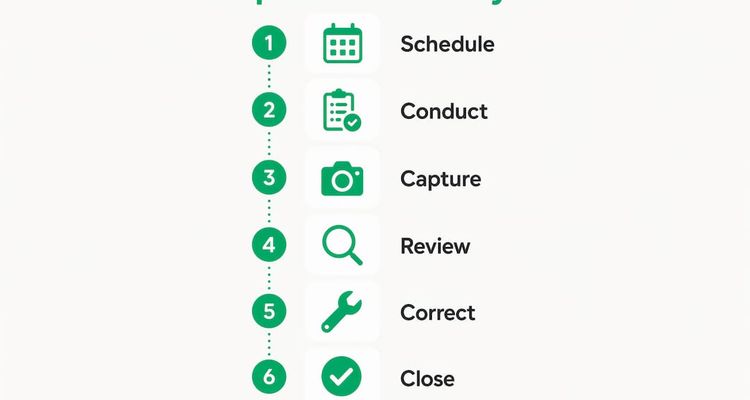
The lifecycle has nine distinct steps, and the handoffs between them are where most paper-based programs fall apart.
- Asset onboarding: facility staff load device metadata (type, location, serial number, applicable standard) into the system.
- Interval scheduling: the platform auto-generates recurring inspections based on NFPA 25 or NFPA 72 intervals, from weekly alarm tests to 5-year sprinkler checks.
- Notification: assigned inspectors and contractors receive automated reminders ahead of the due date, with escalation if no acknowledgment arrives.
- Field inspection: the inspector opens the mobile app, scans the asset’s QR or barcode to confirm physical location, and completes the digital checklist.
- Evidence capture: photos, GPS stamp, and digital signature are attached to the record in real time.
- Result classification: the system marks the item pass, conditional, or fail. Fails trigger the next step automatically.
- Corrective work order: a tracked work order is created automatically with a correction deadline and assigned to the responsible contractor or maintenance team.
- Verification: once the repair is complete, a follow-up inspection confirms closure. The AHJ may require this step for life-safety systems.
- Closure and archival: the record is locked with a final timestamp and stored in the audit trail. Portland’s municipal program, for example, schedules reinspections roughly 40 days after findings, with faster windows for serious violations.
Pro Tip: During a pilot, capture at minimum: asset ID, inspector credential, timestamp, photo, and pass/fail result. Those five fields satisfy most AHJ evidence requests and give you a clean baseline before full rollout.
Which technologies make fire inspection management reliable?
Cloud-based platforms now handle QR/RFID asset tagging, mobile digital checklists, and audit trails in one system. Here is what each technology actually prevents:
Mobile apps with offline support eliminate the “no signal in the stairwell” problem. Inspectors complete checklists in dead zones; records sync when connectivity returns.
QR and barcode scanning forces physical verification of the exact asset. Scanning each device prevents pencil-whipping — the practice of signing off on items without physically checking them.
Immutable cloud timestamps create a tamper-resistant record that holds up under AHJ scrutiny. Any edit is logged with the editor’s identity and time.
IoT and telemetry extend coverage between scheduled visits. Continuous digital monitoring closes the blind windows that periodic-only inspection programs leave open, supporting proactive risk management rather than reactive response.
Integration examples worth asking vendors about:
- CMMS/work-order systems: failed inspections push directly to your maintenance queue
- HR/credential systems: inspector certifications are validated before a checklist can be submitted
- AHJ portal exports: inspection packages formatted for direct upload to municipal systems like the LAFD FIMS portal or Charleston’s self-service site
What KPIs should operations teams track to govern their inspection program?
Governance without metrics is just paperwork. These are the numbers that actually signal risk:
- Compliance rate by asset class: percentage of assets with current, passing inspections. Drop below your internal threshold and escalate before the AHJ visit.
- Overdue item count: any asset past its scheduled inspection date. Zero is the target; anything above five in a single facility warrants a management review.
- Time-to-remediate: days from deficiency identification to verified closure. Escalate automatically when this approaches the AHJ’s reinspection window.
- Open deficiency aging: how long each open finding has been unresolved. Older items carry higher citation risk.
- First-pass pass rate: the percentage of inspections that pass without requiring a corrective action. A declining rate signals a systemic equipment or maintenance issue.
- Audit-ready report time: how long it takes to produce a complete compliance package. Automated dashboards showing overdue items, open deficiencies, and days-to-deadline cut this to minutes.
Set up a weekly dashboard widget for overdue count and a monthly governance report covering compliance rate and deficiency aging. Those two cadences catch most problems before they become citations.
What operational best practices reduce audit failures?
The gap between a passing AHJ inspection and a citation often comes down to process discipline, not equipment quality.
Treat compliance as a continuous process, not an annual event. Inspection intervals under NFPA 25 range from weekly to 10 years depending on asset class. A system that only activates when an AHJ visit is imminent will always have gaps.
Use QR or barcode verification on every asset. Physical scanning creates granular proof that the right device was checked, not just the right room. Pair this with electrical safety inspection records when fire and electrical systems share the same evidence package for a combined AHJ review.
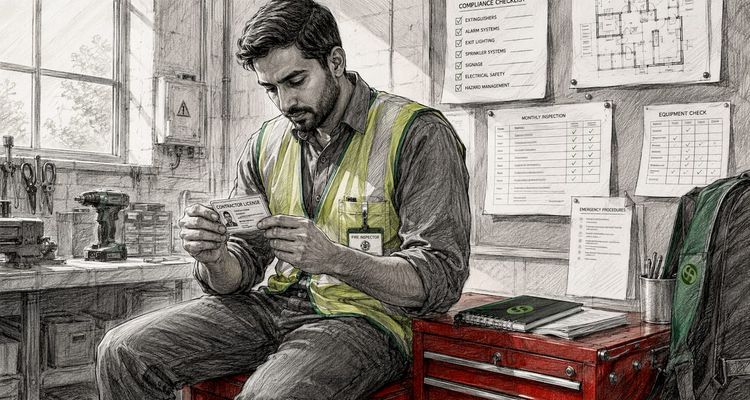
Capture contractor credentials at the point of inspection. If a licensed technician’s certification has lapsed, you want to know before the work order is closed, not during an audit.
Build closed-loop corrective actions with automatic reminders and escalation. An open deficiency with no deadline is a liability. Assign it, set a due date, and escalate to the facility manager if it is not closed within the AHJ’s reinspection window.
Pro Tip: Run a monthly exception review: pull every item overdue by more than 7 days and every deficiency open longer than 14 days. That 30-minute review prevents the majority of AHJ citations.
What drives implementation costs and how long does rollout take?
| Cost Driver | Budget/Timeline Impact |
|---|---|
| Number of assets | Directly scales license cost and tagging hardware |
| User/license seats | Per-seat pricing adds up quickly for large contractor networks |
| CMMS/AHJ integrations | Custom API work adds weeks and professional services cost |
| QR/RFID hardware | One-time tagging cost; RFID runs higher than QR |
| Data migration | Legacy paper or spreadsheet conversion is often underestimated |
| Discovery and configuration | Scoping NFPA intervals per asset class takes 2–4 weeks |
A realistic rollout runs in four phases: discovery and scoping (2–4 weeks), pilot on one building or asset class (4–6 weeks), phased rollout by facility (4–12 weeks depending on portfolio size), and full deployment with reporting live. The pilot phase is where most teams discover data quality issues in their asset register — budget time for cleanup before the broader rollout.
How do AHJ portals fit into your tracking and audit workflow?
Many U.S. AHJs now provide online portals to request inspections, check permit status, and view violation history. Miami-Dade, for instance, assigns inspectors to investigate life-safety complaints within three working days. San Francisco’s fire permits data map shows inspection records going back to 2014. Charleston’s self-service portal lets contractors and property owners check upcoming and completed inspection outcomes in real time.
Documents AHJs commonly request during on-site inspections:
- Timestamped test records for each asset class
- Technician credentials and license numbers
- Photo evidence of tested equipment
- Manufacturer references and model numbers
- NFPA section citations for each test type
- Corrective action status for any open deficiencies
Align your internal inspection schedule to run 2–3 weeks ahead of your expected AHJ visit window. That buffer gives you time to close any open deficiencies before the authority arrives. Where a portal allows direct export, configure your system to produce AHJ-formatted packages automatically.
How Expiryedge maps to the deadline-first inspection model
Expiryedge is built around the same logic this article describes: every compliance obligation has a fixed date, and missing it has consequences. For fire inspection management, that means configuring expiration rules per asset class (mapped to NFPA 25 or IFC intervals), setting automated multi-channel reminders that escalate as deadlines approach, and assigning tasks to the right inspector or contractor with a tracked due date.
Implementation follows the same four-phase pattern: discovery to load asset metadata and configure interval rules, a single-building pilot to validate the workflow, phased rollout across the portfolio, and full deployment with dashboard reporting live. Expiryedge’s centralized expiry tracking gives facility directors a single view of every upcoming inspection deadline across the portfolio.
For procurement, Expiryedge provides audit trails with timestamped evidence exports and one-click compliance packages — the same evidence format AHJs request during on-site visits.
Key Takeaways
A fire safety inspection tracking system only delivers compliance value when scheduling, evidence capture, corrective workflows, and AHJ-ready reporting are all connected in one closed loop.
| Point | Details |
|---|---|
| Closed-loop corrective actions | Every failed inspection must auto-generate a tracked work order with a deadline and escalation path. |
| Asset-level verification | QR or barcode scanning on each device prevents pencil-whipping and creates granular audit proof. |
| AHJ-ready evidence | Timestamped records, technician credentials, and photos cut audit prep from hours to minutes. |
| Continuous process mindset | NFPA 25 intervals run from weekly to 10 years; compliance requires year-round scheduling, not annual reviews. |
| Expiryedge for deadline-first tracking | Expiryedge maps expiration rules, automated escalations, and compliance exports to the inspection lifecycle described here. |
Why continuous compliance beats the annual scramble
The organizations that consistently pass AHJ inspections without citations are not doing more inspections than everyone else. They are running a tighter process between inspections. Deficiencies get closed before the reinspection window closes. Contractor credentials are validated before work orders are approved. Evidence packages are ready before the inspector calls.
The conventional wisdom treats fire inspection compliance as a calendar event. The operational reality is that it is a workflow. Every failed test is a work order. Every expiring certification is a deadline. Every AHJ visit is a report that either exists or does not. Teams that wire those facts into a system with real deadlines and real escalations spend less time in audit prep and fewer hours responding to citations. The certification expiration tracking checklist approach applies directly here: the same discipline that keeps employee certifications current keeps fire asset tests current.
Expiryedge keeps every inspection deadline visible and closed
Missed fire inspection deadlines do not announce themselves in advance. Expiryedge gives compliance and operations teams a deadline-first platform where every inspection interval, corrective action, and contractor certification has a due date, an owner, and an escalation path. No spreadsheet refreshes. No manual follow-ups. When a deadline approaches, the right person gets notified through the right channel, automatically.
Teams managing multi-facility portfolios use Expiryedge to configure NFPA-aligned inspection rules once, then let the platform drive reminders, task assignments, and evidence collection across every building. The result is an audit-ready compliance package available on demand, not assembled under pressure the night before an AHJ visit. Start tracking inspection deadlines with Expiryedge, or sign up for a trial to see the deadline-first workflow in action.
Useful sources
Standards, AHJ portals, and reference pages to support procurement and audit preparation:
- NFPA 25 (water-based system inspection intervals): nfpa.org — the primary standard for sprinkler, standpipe, and fire pump testing schedules
- NFPA 72 (fire alarm and signaling systems): nfpa.org — governs alarm testing intervals from weekly to annual
- Miami-Dade Fire Inspections portal: request inspections, check permit status, view violation history
- LAFD FIMS portal: track permits and request new inspections online in Los Angeles
- [San Francisco Fire — Inspection, Violation & Permit History](https://sf-fire.org/services/inspection-violation-permit-history): search property inspection records and fire permits back to 2014
- [Portland Fire & Rescue — Inspection Program](https://www.portland.gov/fire/permits-inspections/code-policies-pfrs-fire-safety-inspection-program/how-it-works): explains routine inspection cadence, reinspection windows, and fee structures
- [Charleston Building & Fire Inspections Status](https://www.charleston-sc.gov/1315/Building-Fire-Inspections-Status): self-service portal for checking and scheduling permitted inspections
FAQ
How does fire safety inspection tracking differ from paper logs?
Digital tracking automates scheduling, captures timestamped photo evidence, and links failed inspections to tracked corrective work orders — paper logs do none of that automatically and cannot produce an audit-ready report on demand.
What is the minimum evidence to capture on every fire inspection?
Capture asset ID, inspector credential, timestamp, photo of the tested device, and pass/fail result. Those five fields satisfy most AHJ evidence requests.
How long does it take to implement a fire inspection tracking system?
A realistic rollout runs 10–22 weeks: 2–4 weeks for discovery, 4–6 weeks for a single-building pilot, then 4–12 weeks for phased portfolio rollout depending on asset count and integrations.
Can Expiryedge manage fire inspection deadlines across multiple facilities?
Yes. Expiryedge lets teams configure expiration rules per asset class, automate multi-channel reminders with escalation, and export timestamped compliance packages — covering multiple facilities from one dashboard.
What KPI should a compliance team watch most closely?
Time-to-remediate is the highest-risk metric: if open deficiencies are not closed before the AHJ’s reinspection window, citations and fines follow. Set an automatic escalation when this figure approaches that window.
Recommended
Frequently asked questions
Capture asset ID, inspector credential, timestamp, photo of the tested device, and pass/fail result. Those five fields satisfy most AHJ evidence requests.
A realistic rollout runs 10–22 weeks: 2–4 weeks for discovery, 4–6 weeks for a single-building pilot, then 4–12 weeks for phased portfolio rollout depending on asset count and integrations.
Yes. Expiryedge lets teams configure expiration rules per asset class, automate multi-channel reminders with escalation, and export timestamped compliance packages — covering multiple facilities from one dashboard.
Time-to-remediate is the highest-risk metric: if open deficiencies are not closed before the AHJ's reinspection window, citations and fines follow. Set an automatic escalation when this figure approaches that window.
Not safety or OSHA compliance advice
This article is for general informational purposes and does not constitute formal OSHA or workplace-safety compliance advice. Safety regulations and standards (OSHA, state plans, EU OSHA, AS/NZS, etc.) vary by jurisdiction and change. Consult a qualified safety professional or your regulator for the specifics of your operation.