Contract Expiration Risks Every Legal Team Must Address

TL;DR:
Legal teams face significant risks from expired contracts, including loss of enforceable rights and compliance gaps. Implementing automated alerts, clear ownership, and proactive renewal programs can prevent costly auto-renewals and service interruptions. Centralized contract management tools like Expiryedge help embed these processes and monitor expiry risks effectively.
The most costly contract expiration risks legal teams face are loss of enforceable rights, silent auto-renewal into unfavorable terms, compliance gaps in regulated industries, service interruption, unintended survival obligations, data and retention exposures, and loss of negotiation leverage. These aren’t theoretical. Organizations lose an average of 8.6% of total spending each year to unnecessary contract-related costs, and most of that waste traces back to missed expiry windows and unclear ownership. The common contract expiration risks legal teams encounter are almost always preventable with three immediate controls: confirm which contracts expire in the next 90 days, assign a named owner to each one, and activate automated alerts with escalation logic before the week is out.
72-hour checklist for legal teams:
- Pull every contract expiring within 90 days and confirm its current status (active, expired, or in holdover).
- Assign a named owner to each contract, not a team or department, a specific person accountable for the renewal decision.
- Set automated alerts at 90 days and 30 days out, with escalation to the owner’s manager if no action is taken within a defined window.
Pro Tip: Design your escalation workflow so that if an owner does not act within five business days of the first alert, the system automatically notifies their manager, then legal leadership at the 30-day mark. Turnover and role changes are the single most common reason escalation fails.
Table of Contents
- What does contract expiration actually mean, and how is it different from termination?
- How do different expiration types create different risks?
- What are the primary legal and operational risks when contracts expire?
- What happens legally and practically after a contract expires?
- Which contract clauses most commonly cause expiration problems?
- What operational mistakes make expiration risk worse?
- How can legal teams build a proactive program to prevent expiry risk?
- What should legal teams require from contract management technology?
- How should legal teams integrate expiry risk into enterprise risk management?
- Key Takeaways
- The governance shift most legal teams still haven’t made
- How Expiryedge helps legal teams stay ahead of contract deadlines
- Useful sources
- FAQ
What does contract expiration actually mean, and how is it different from termination?
Contract expiration is the natural end of a contract’s agreed term. The contract simply runs out of time. No party needs to take an affirmative action; the term ends by its own terms on the date written into the agreement.
Termination is different. It is an affirmative act by one or both parties to end the contract before its natural term, usually triggered by breach, convenience, or a specific contractual right. Termination requires notice, often formal written notice, and may carry consequences of termination fees or cure periods.
Renewal is a third path: the extension or continuation of the contract relationship, either automatically (through an evergreen clause) or by mutual agreement. The distinction matters because each path triggers different legal obligations:
- Expiration activates survival clauses, triggers data return obligations, and may end indemnities unless the contract says otherwise.
- Termination may trigger liquidated damages, termination-for-convenience fees, or specific notice requirements that expiration does not.
- Renewal restarts or extends the term, which can reset notice windows and, in some contracts, modify pricing or scope.
Look for these phrases in contract language to classify the event correctly: “this Agreement shall expire on,” “unless terminated earlier,” “shall automatically renew unless written notice is provided no later than [X] days prior,” and “the following provisions shall survive expiration or termination.” Getting the classification right determines which clause checklist you run next.
How do different expiration types create different risks?
Not all expiration is the same, and the type of expiration built into a contract determines the specific operational controls you need.
Fixed-term contracts expire on a date certain. The risk is straightforward: if no one acts before that date, the service, license, or obligation simply ends. For critical vendor relationships or software licenses, that means an overnight gap in access or coverage.

Evergreen and auto-renew contracts are the most dangerous for most legal teams. These contracts roll over automatically unless one party provides notice of termination within a defined window, often 30, 60, or 90 days before the renewal date. Miss that window and you are locked in for another full term, often at escalating prices. Benchmarking performance and market rates at least six months before renewal is the only reliable way to avoid rolling into unfavorable terms without leverage. Industry data shows organizations lose an average of 8.6% of total spending a year to unnecessary contract-related costs, emphasizing why early renewal planning is essential.
Conditional and milestone-based extensions add a layer of complexity. These contracts extend only if a specific condition is met: a performance threshold, a regulatory approval, or a project milestone. The risk here is tracking the condition itself, not just the date. If the condition is met but no one documents it, the extension may be disputed. If the condition is missed, the contract may expire without anyone realizing it.
A practical illustration: a fixed-term IT services contract and an evergreen SaaS license both expire on the same date, but they require completely different actions. The IT contract needs a renewal negotiation or a wind-down plan. The SaaS license needs a termination notice sent before the notice deadline, or you pay for another year automatically.
What are the primary legal and operational risks when contracts expire?
This is where legal teams need to be specific, because “contract risk” is too vague to prioritize. Here are the principal exposures, with risk-rating guidance.
Legal risks
- Loss of enforceable rights. Once a contract expires, the rights it granted, exclusivity, IP licenses, pricing protections, and SLA commitments, generally end. If a vendor continues performing and you continue paying, you may be operating under an implied contract whose terms are vague and difficult to enforce.
- Unintended survival obligations. Confidentiality, indemnification, and warranty clauses often survive expiration. If your team does not know which obligations survive, you may inadvertently breach them or fail to enforce them against the other party.
- Regulatory non-compliance. In regulated industries, an expired vendor contract can mean you lack a valid data processing agreement, a BAA under HIPAA, or a required compliance certification. Auditors flag these gaps, and regulators can impose fines.
- Exposure to claims. A contract that expires while a dispute is unresolved can complicate your ability to assert claims or defenses. Limitation periods may run, and the evidentiary record becomes harder to reconstruct.
- Warranty and indemnity gaps. If a product defect surfaces after expiration and the warranty clause did not survive, you may have no contractual remedy.
Operational and commercial risks
- Service interruption: A missed expiry on a critical SaaS tool or infrastructure contract can halt workflows overnight.
- Licensing gaps: Software licenses that lapse can trigger compliance audits from vendors and expose the organization to infringement claims.
- Revenue loss: For contracts that generate revenue, an expired agreement means no legal basis to invoice or collect.
- Procurement disruption: Expired supplier contracts can force emergency procurement at spot prices, often far above negotiated rates.
- Slipping SLAs: Without a valid contract, there is no SLA to enforce, and vendors have no contractual obligation to maintain service levels.
Risk-rating guidance: Triage by likelihood multiplied by impact. Regulatory non-compliance and service interruption on critical systems are high-likelihood, high-impact and require immediate escalation to leadership. Warranty gaps on low-value, non-critical purchases are lower priority. Build a simple matrix and review it quarterly.
Pro Tip: Tag contracts in your repository by criticality tier (critical, standard, low-value) at intake. This single classification step makes triage automatic when expiry windows open.

What happens legally and practically after a contract expires?
The moment a contract expires, the default legal position in most U.S. jurisdictions is that the parties’ obligations under that contract cease, except for provisions that expressly survive. Here is the step flow legal teams should run immediately after an expiry event:
- Check the survival clause. Identify every obligation that survives expiration: confidentiality, indemnification, dispute resolution, governing law, and any representations and warranties. These remain enforceable.
- Confirm notice mechanics. Review whether any post-expiration notice is required, such as a formal close-out notice or a data return request, and send it within the required window.
- Audit invoicing and payment status. Confirm that all invoices have been issued and paid. An expired contract does not extinguish a payment obligation for services already rendered.
- Address access and data return. Determine whether the other party retains access to your systems, data, or property, and initiate return or deletion per the contract’s data handling provisions. Expired vendor agreements without formal closure create audit exposure under data privacy frameworks like HIPAA and SOX. For a deeper look at post-expiration data handling, preventing data leakage in regulated industries is a useful reference.
- Document the expiry event. Retain the expired contract and all related correspondence. Expired agreements are critical for litigation readiness and regulatory audits. Deleting expired files can increase exposure by removing the evidentiary record needed to defend claims or demonstrate compliance with frameworks like HIPAA and SOX.
If both parties continue performing after expiration without a new agreement, courts may find an implied contract. The terms of that implied contract are often unclear and harder to enforce. To avoid this, use a short bridge notice:
This preserves continuity without creating ambiguity about the legal basis for ongoing performance.
Which contract clauses most commonly cause expiration problems?
Most expiry-related legal disputes trace back to a handful of clause types. Here is what to flag during every contract review:
- Automatic renewal / evergreen clauses: Look for language like “shall automatically renew for successive one-year terms unless either party provides written notice of non-renewal at least [X] days prior to the end of the then-current term.” The risk: the notice window is often buried and shorter than teams expect.
- Notice and delivery requirements: Some contracts require notice by certified mail or overnight courier, not email. Sending notice by the wrong method can invalidate it entirely, even if it arrives on time.
- Survival clauses: Vague survival language like “provisions that by their nature should survive” creates disputes. Flag any survival clause that does not enumerate specific sections.
- Termination-for-convenience triggers: These clauses allow one party to exit without cause, but they often require advance notice and may include wind-down fees. Missing the trigger window can lock you in.
- Assignment and novation conditions: If the contract prohibits assignment without consent, an M&A transaction or internal restructuring can inadvertently trigger a breach or termination right at expiry.
- Conditional performance triggers: Extensions tied to performance metrics require documented evidence. Without it, the extension may be disputed.
- Deemed acceptance language: Some contracts include clauses where silence or continued performance after expiry is treated as acceptance of new terms proposed by the vendor. This is how price increases get locked in without a signature.
Pro Tip: Build a standard annotation template for contract review that flags each of these clause types with a risk label and a recommended action. Reviewers who work from a checklist catch these issues consistently; those who rely on memory do not.
When drafting or negotiating, push for explicit notice periods with multiple delivery methods accepted, enumerated survival clauses, and a mutual termination-for-convenience right with a reasonable notice window (30–90 days is standard for most commercial agreements).
What operational mistakes make expiration risk worse?
The legal risk is real, but the operational failures are what turn manageable risk into actual harm. These are the mistakes legal teams make most often, and why they keep happening.
- Unclear ownership: No single person is accountable for the renewal decision. Contracts sit in a shared folder with no assigned owner, and when the expiry date arrives, everyone assumes someone else handled it. The root cause of most renewal failures is exactly this: unclear accountability backed by no centralized visibility.
- Decentralized storage: Contracts are scattered across email threads, shared drives, and department folders. Legal cannot run a reliable expiry report because no one knows where all the contracts are. Centralized expiry tracking is the structural fix.
- Manual calendar reminders with no escalation: A calendar invite is not a renewal process. When the person who set the reminder leaves the company or changes roles, the reminder disappears with them. Manual reminders lack the escalation logic needed to cover turnover and role changes.
- Late stakeholder engagement: Legal sends a renewal recommendation two weeks before expiry, leaving no time for procurement to benchmark pricing, finance to approve budget, or the business unit to assess whether the vendor is still delivering value.
- No performance data at renewal: Renewals happen without any review of SLA compliance, usage data, or market pricing. The result is automatic renewal at the same terms, even when the vendor has underperformed or the market rate has dropped.
Each of these mistakes has a specific fix: assign owners at contract intake, centralize storage in a single repository, replace calendar reminders with automated alerts that escalate, engage stakeholders 90–120 days out, and build a performance review step into every renewal workflow.
How can legal teams build a proactive program to prevent expiry risk?
A repeatable renewal program has seven steps. Run them in sequence for every contract above your materiality threshold.
- Intake and classification. At execution, classify the contract by type (fixed-term, evergreen, conditional), criticality tier (critical, standard, low-value), and regulatory category (HIPAA, SOX, other). Assign a named owner.
- Set automated alerts. Configure alerts at 180, 90, and 30 days before expiry. Renewal planning should begin 3–6 months out, with automated reminders at least 90–120 days in advance to avoid last-minute scrambling.
- Performance review. At the 90-day mark, the owner pulls SLA data, usage metrics, and any open disputes. This is the evidence base for the renewal negotiation.
- Stakeholder engagement. Loop in procurement, finance, and the relevant business unit no later than 90 days out. Their input determines whether to renew, renegotiate, or exit.
- Negotiation window. For critical contracts, begin negotiation at 90 days. For standard contracts, 60 days is workable. Never enter a negotiation inside 30 days; you have no leverage.
- Decision and execution. Document the renewal decision (renew, renegotiate, terminate, or allow to expire) and execute the appropriate action: sign the renewal, send the termination notice, or initiate a replacement procurement.
- Close-out. For contracts that expire or terminate, run the post-expiration checklist from Section 5: survival obligations, data return, final invoicing, and retention.
Recommended lead times by contract category
| Contract category | Start renewal review | Send automated alert | Escalate if no action |
|---|---|---|---|
| Critical vendor / infrastructure | 6 months out | 120 days out | 90 days out |
| Software licenses | 4 months out | 90 days out | 60 days out |
| Low-value supplier | 2 months out | 60 days out | 30 days out |
| Regulatory / compliance agreements | 6 months out | 120 days out | 90 days out |
KPIs to track and report upward
- Percentage of contracts with a named owner assigned at intake (target: 100%)
- Percentage of renewals initiated before the 90-day threshold (target: 90%+)
- Number of accidental auto-renewals in the trailing 12 months (target: zero)
- Percentage of expired contracts retained per the retention policy (target: 100%)
- Average days between first alert and renewal decision (use to identify bottlenecks)
Report these metrics quarterly to general counsel and annually to the board as part of the legal risk register. For practical workflow design, fixed-deadline workflow best practices offer a useful operational framework.
What should legal teams require from contract management technology?
Technology does not fix a broken process, but the right tool makes a sound process repeatable at scale. Here is what to require when evaluating any contract lifecycle management (CLM) or expiry tracking platform:
- Canonical contract repository: All contracts in one place, searchable, with version control and access permissions.
- Obligation extraction: The ability to tag or extract key dates, notice periods, survival clauses, and renewal terms from contract text.
- Configurable alerts: Multi-level alerts at custom intervals (180, 90, 30 days) with the ability to set different cadences by contract category.
- Multi-channel reminders: Email, in-app, and SMS notifications so alerts reach owners regardless of which system they live in.
- Escalation rules: Automated escalation to the owner’s manager, then legal leadership, if no action is taken within a defined window. This is the single most important feature for managing turnover risk.
- Audit trail: A complete, timestamped log of every action taken on a contract, including who received alerts and when they responded.
- Role-based access: Owners, reviewers, approvers, and read-only stakeholders each see only what they need.
- API integrations: Sync with procurement and finance systems for spend and SLA data; connect to HR directories for ownership updates when people change roles.
Integration patterns that matter most: Connect the contract repository to your ERP or procure-to-pay system so that contract expiry data flows into spend reporting automatically. Integrate with your HR directory so that when an owner changes roles, the system flags the orphaned contract for reassignment rather than silently losing the alert chain. For teams using ITSM platforms like ServiceNow, a ticketing integration turns a renewal alert into an assignable work item with a due date and an audit trail.
Pro Tip: When piloting a new tool, start with your critical-tier contracts only. Validate that escalation logic works correctly under role changes before rolling out to the full portfolio. A pilot that skips this test will fail in production the first time a key person leaves.
For teams evaluating contract obligation tracking workflows, the key question is whether the tool tracks obligations continuously or only at point-in-time review.
How should legal teams integrate expiry risk into enterprise risk management?
The shift from reactive legal advisory to proactive enterprise risk management is well underway. Thomson Reuters recommends that legal functions align with ERM, contribute to risk identification and reporting, and move beyond siloed advice. Diligent frames the in-house counsel’s ERM role as identifying and evaluating risks, advising stakeholders, and preparing board-level reporting. Wolters Kluwer recommends building legal risk frameworks with clear ownership, quantitative reporting, and automated risk feeds as maturity goals.
In practice, ERM integration for contract expiry risk means:
- Governance model: Establish a cross-functional contract governance committee with representatives from legal, procurement, finance, and operations. This committee owns the renewal calendar, escalation matrix, and exception approvals.
- Legal risk register: Maintain a formal register of material contract expiry risks, each with a likelihood score, impact estimate, owner, and mitigation status. Update it quarterly.
- Board-level reporting: Report the renewal backlog, number of contracts in the 90-day window, accidental auto-renewals, and compliance coverage gaps to the board or audit committee at least annually.
- Standardized risk scoring: Apply a consistent scoring methodology (likelihood × impact) to every contract at intake so that the risk register is comparable across categories and business units.
- Automated feeds: Connect your contract system to the risk register so that new expiry events populate the register automatically rather than requiring manual entry.
The cross-functional model matters because contract renewal decisions are rarely purely legal. A vendor contract renewal involves procurement’s pricing data, finance’s budget approval, and the business unit’s performance assessment. Legal’s role is to coordinate the process, flag the legal risks, and ensure the decision is documented. Procurement and legal alignment on renewal alerts is the operational mechanism that makes this coordination work.
Key Takeaways
Proactive contract expiry management requires named ownership, automated escalation, ERM integration, and consistent retention of expired agreements to prevent legal exposure and operational disruption.
| Point | Details |
|---|---|
| Assign owners at intake | Every contract needs a named individual accountable for the renewal decision, not a team or department. |
| Automate alerts with escalation | Set alerts at 90 and 30 days out; escalate to the owner’s manager automatically if no action is taken within five business days. |
| Start renewal reviews early | Critical contracts require a 6-month lead time; software licenses need at least 90–120 days to avoid auto-renew traps. |
| Integrate with ERM | Report renewal backlog, compliance gaps, and accidental auto-renewals to the board as part of the legal risk register. |
| Expiryedge for centralized tracking | Expiryedge centralizes contract deadlines, automates multi-channel alerts with escalation logic, and provides audit trails for compliance readiness. |
The governance shift most legal teams still haven’t made
The conventional wisdom on contract expiry risk focuses on the tool: get a CLM, set some reminders, and the problem is solved. That framing misses the harder part.
The real issue is governance, specifically who owns the decision and whether the organization has built accountability into the process rather than relying on individual diligence. Most legal teams I have seen operate with a contract repository that is reasonably well organized and alerts that fire on schedule. What they lack is a clear escalation path when the owner does not act, and a cross-functional process that brings procurement, finance, and the business unit into the renewal conversation early enough to matter.
The result is predictable: legal sends a renewal recommendation two weeks before expiry, procurement has no time to benchmark, finance has no budget approval in place, and the default is auto-renewal at last year’s terms. The tool worked. The governance failed.
If I were rebuilding a renewal program from scratch, the first thing I would change is not the software. It is the intake process: classify every contract by criticality at execution, assign a named owner, and document the escalation path before the contract is ever filed. Everything downstream, the alerts, the performance reviews, the negotiation windows, works better when that foundation is in place. Technology amplifies a good process. Without the process, it just automates the chaos faster.
How Expiryedge helps legal teams stay ahead of contract deadlines
Legal teams that have built solid renewal processes often hit the same ceiling: the process is sound, but the manual effort of tracking hundreds of contracts across spreadsheets and calendar reminders is unsustainable as the portfolio grows.

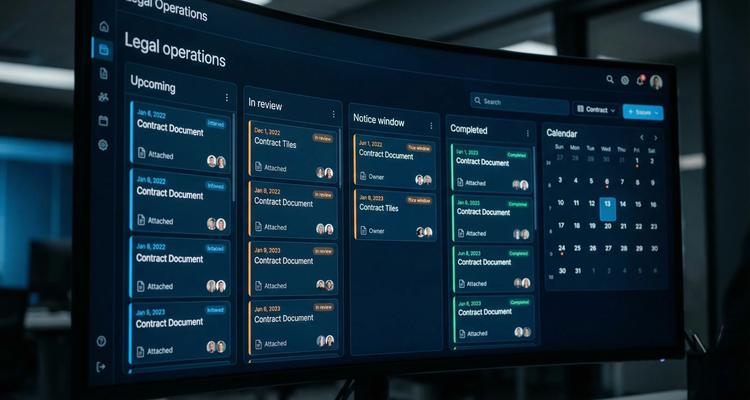
Expiryedge is built specifically for this problem. It centralizes all contract deadlines in a single platform, fires multi-channel alerts at configurable intervals, and escalates automatically when owners do not act. The audit trail captures every notification, every acknowledgment, and every action taken, so legal teams can demonstrate compliance readiness without reconstructing records from email threads.
For a 30–60 day pilot, scope it to your critical-tier contracts. Success metrics to track: percentage of renewal decisions made before the 90-day threshold, number of escalations triggered, and zero accidental auto-renewals during the pilot period. Involve legal, procurement, and finance as stakeholders from day one so the cross-functional workflow is validated, not just the alert logic.
Expiryedge also integrates with procurement and HR systems, so ownership updates automatically when people change roles and spend data flows into renewal decisions without manual pulls. Start a free trial and run your first critical-contract audit within the first week.
Useful sources
The following sources informed this guide and are recommended for deeper reading:
- Thomson Reuters (Legal team and risk management): Authoritative guidance on aligning legal functions with ERM, including risk identification, reporting, and moving beyond reactive advisory roles.
- Diligent (In-house legal and ERM): Practical framework for in-house counsel’s role in enterprise risk management, including board-level reporting and stakeholder advisory.
- Wolters Kluwer (How to start legal risk management): Step-by-step guidance on building a legal risk management framework with ownership, quantitative reporting, and technology-enabled maturity goals.
- Ironclad (Contract renewal strategy): Benchmark data on contract-related cost waste and practical guidance on renewal strategy, owner assignment, and automation.
- Sirion.ai (Contract renewal best practices): Recommended lead times for renewal planning (3–6 months) and automated alert cadences (90–120 days).
- Dilitrust (Contract deadline management): Practical guidance on escalation logic design and the limitations of manual reminder systems.
- De Bottom Line (Contract renewal pitfalls): Industry practitioner advice on benchmarking and pre-renewal preparation to preserve negotiation leverage.
Note: This article is general information for legal professionals and does not constitute legal advice. Confirm current regulatory requirements and contract obligations with qualified legal counsel for your specific situation.
FAQ
What are the most common contract expiration risks for legal teams?
The top risks are loss of enforceable rights, silent auto-renewal into unfavorable terms, regulatory non-compliance, service interruption, unintended survival obligations, and data return failures. Most trace back to unclear ownership and missed notice windows.
How far in advance should legal teams start the renewal process?
Renewal planning should begin 3–6 months before expiry for critical contracts, with automated alerts firing at least 90–120 days out. Starting inside 30 days leaves no negotiation leverage.
What happens if a contract expires without a renewal agreement in place?
Obligations generally cease except for survival clauses. If both parties continue performing, courts may find an implied contract with vague, hard-to-enforce terms. Send a written bridge notice immediately to document the legal basis for continued performance.
How does Expiryedge help legal teams manage contract expiration risk?
Expiryedge centralizes contract deadlines, automates multi-channel alerts with configurable escalation logic, and maintains a full audit trail. Legal teams can track every contract’s status, assign owners, and receive automatic escalations when deadlines approach without action.
Why is retaining expired contracts important?
Expired contracts are critical for litigation defense and regulatory audits. Deleting them can increase exposure by removing the evidentiary record needed to defend claims or demonstrate compliance with frameworks like HIPAA and SOX.
Recommended
Frequently asked questions
How far in advance should legal teams start the renewal process?
Renewal planning should begin 3–6 months before expiry for critical contracts, with automated alerts firing at least 90–120 days out. Starting inside 30 days leaves no negotiation leverage.
What happens if a contract expires without a renewal agreement in place?
Obligations generally cease except for survival clauses. If both parties continue performing, courts may find an implied contract with vague, hard-to-enforce terms. Send a written bridge notice immediately to document the legal basis for continued performance.
How does Expiryedge help legal teams manage contract expiration risk?
Expiryedge centralizes contract deadlines, automates multi-channel alerts with configurable escalation logic, and maintains a full audit trail. Legal teams can track every contract's status, assign owners, and receive automatic escalations when deadlines approach without action.
Why is retaining expired contracts important?
Expired contracts are critical for litigation defense and regulatory audits. Deleting them can increase exposure by removing the evidentiary record needed to defend claims or demonstrate compliance with frameworks like HIPAA and SOX.
Not legal advice
This article is for general informational purposes and does not constitute legal advice. Laws, regulations and contract requirements vary by jurisdiction and change over time. Consult a qualified attorney in your jurisdiction before making decisions that depend on the specific legal interpretation discussed here.