
Subcontractor compliance software for real GCs, not the Fortune 500.
Vet your subs. Track every COI, W-9, license, OSHA card, EMR rating, and safety doc in one place. Block any sub who is not up to date from showing up on site. Pay one flat monthly fee - your subs upload free, with no per-sub network charges.
Quick answer
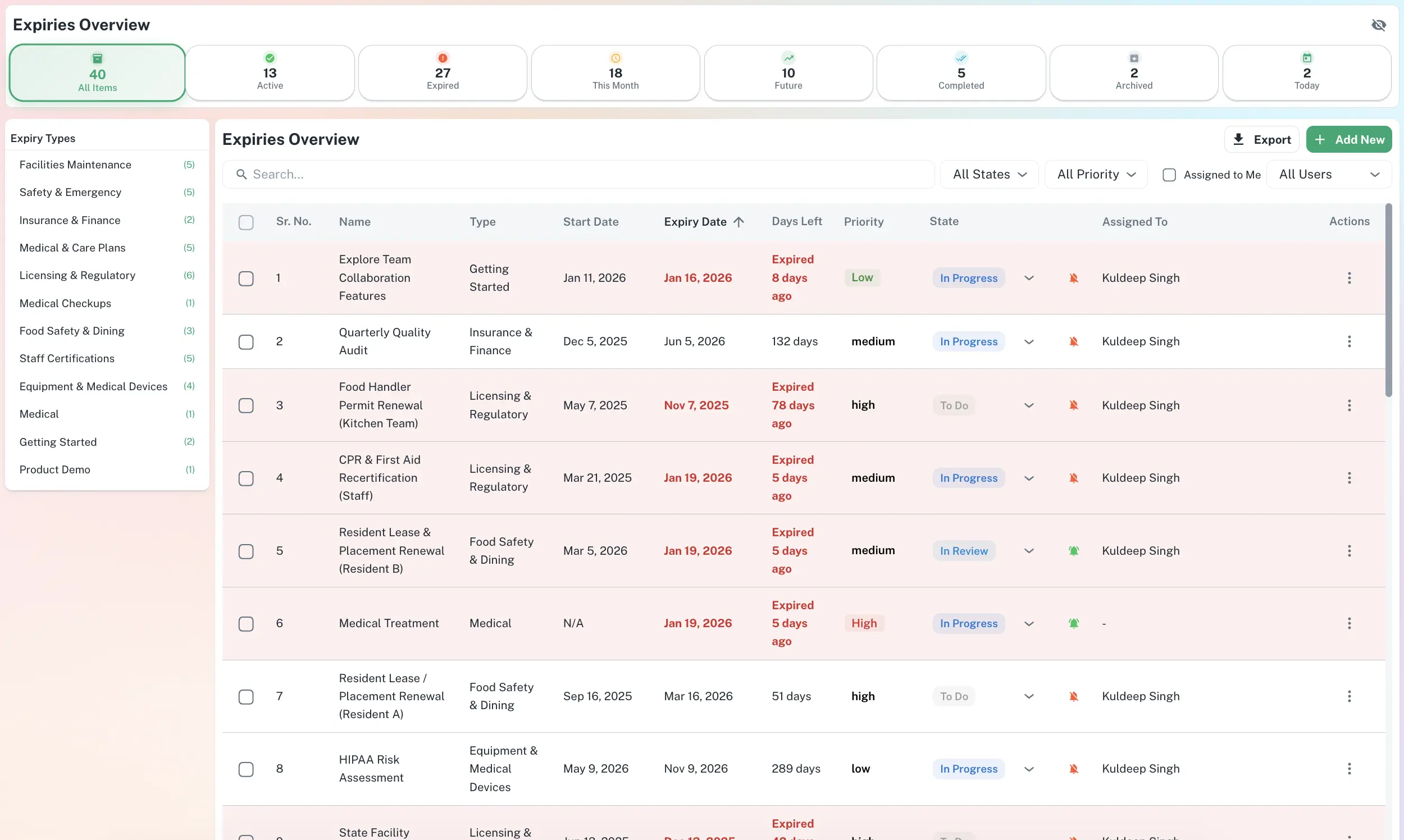
Subcontractor and contractor compliance software collects and checks the documents that prove a sub is qualified and insured to work on a project - Certificates of Insurance, additional insured endorsements, W-9s, trade licenses, and safety records like EMR and OSHA cards. ExpiryEdge gives subs a free upload portal, validates every document against your rules, gates any non-compliant sub out at pre-mobilization, and keeps a timestamped audit trail - on a flat GC subscription with no per-sub fees.
The economics of subcontractor compliance
$400–900
Avetta cost per subcontractor per year (paid by the sub)
Source: Contractor-reported estimates; neither vendor publishes public pricing$875+
ISNetworld cost per subcontractor per year (paid by the sub)
Source: Contractor-reported estimates; neither vendor publishes public pricing9 in 10
certificates in some artisan-contractor market segments materially misrepresented the cover in force.
Source: IRMI – Dybdahl (2015; artisan-contractor market)Documents tracked across every active subcontractor
General Liability - $1M / $2M typical minimum
Workers' Comp + Commercial Auto
Umbrella / Excess coverage
Additional insured endorsements (CG 20 10, CG 20 37)
Waiver of subrogation
IRS Form W-9 + state tax registration
State contractor + specialty trade licenses
DBE / MBE / WBE certifications
EMR (must be < 1.0) + TRIR / DART rates
OSHA 10 / 30 cards + OSHA 300 logs
Site-specific safety plan + JHAs
Surety bond (where required)
From chasing COIs by email to a compliance gate that holds the line
Every required document, checked automatically
Insurance certificates, additional insured endorsements, W-9, trade license, EMR rate, and OSHA cards are tracked per sub and validated against the limits you set. A sub can pass prequalification in January with a current COI and an EMR of 0.85, then lapse in March - ExpiryEdge catches the gap because compliance is continuous, not a one-time check.
Per-trade rules - helpers need OSHA 10, not a state license
Configurable per trade, per project, or per dollar threshold
Stores the cert page AND the endorsement as separate records
No sub on site until the file is verified and current
A sub stays in "pending" until the COI passes validation, the license is verified, and project-specific docs are signed. Once cleared, the sub becomes "mobilized" and shows on the site superintendent's daily report. If anything expires mid-project, the status reverts and the project manager is alerted on Slack or Teams.
Site supers stop rejecting subs at the gate
Status reverts automatically on any lapse
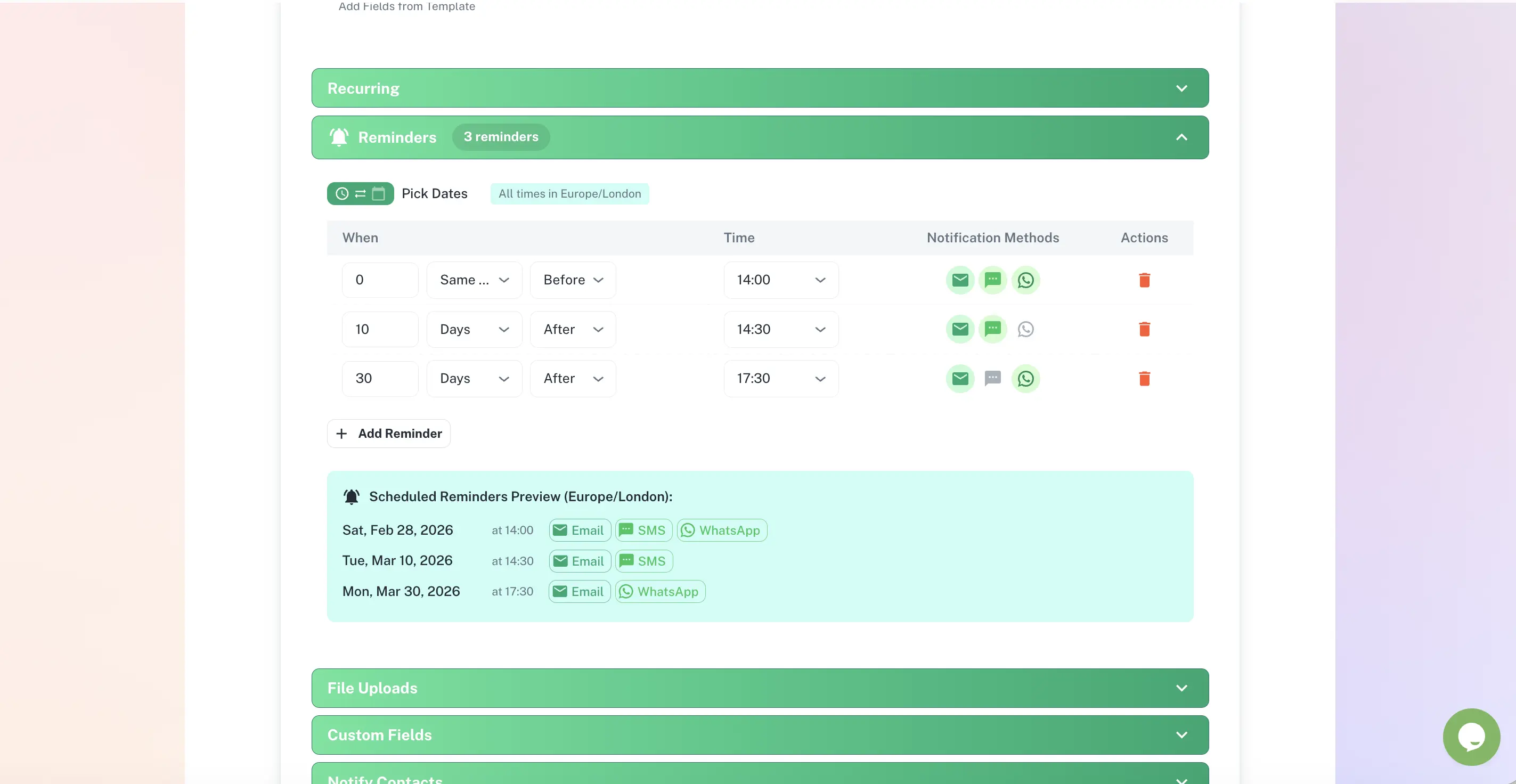
Reminders at 90 / 60 / 30 / 7 days to sub AND GC PM
A timestamped log you hand your broker at renewal
A Certificate of Insurance only shows coverage existed when issued; additional insured status lives in a separate endorsement, and a tendered claim can be denied without it. ExpiryEdge keeps a timestamped record of every cert, endorsement, and additional insured letter - the audit pack your GL carrier wants for OCIP credit, and the evidence that defends a claim.
Cert page and endorsement stored separately
Audit prep in hours, not weeks
Export the full compliance log per project
Built for GCs the existing networks ignore
Mid-size GCs (10–150 person teams)
Too big for spreadsheets, too small for ISNetworld's per-sub fees. Build your own private compliance program: subs upload docs free, you set the bar, and the pre-mobilization gate prevents surprises on day one.
Owner-builders & developers
Hiring 30+ trade subs across multiple projects, with a GL carrier requiring proof of sub insurance for OCIP credit. OCIP-ready compliance: a timestamped log of every cert, endorsement, and additional insured letter to hand your broker at renewal.
Specialty trade GCs (mechanical, electrical, glazing)
Lower-tier subs - solderers, helpers, equipment operators - are often unlicensed or out of state. Per-trade rules enforce the right minimum: helpers need OSHA 10, not a state license, so EMR creep on the GC side stops.
Public works contractors
Davis-Bacon prevailing wage, certified payroll, and DBE participation goals on top of standard insurance and safety. One dashboard with public works documents alongside the standard package, DBE certifications tracked through their renewal cycles.
ExpiryEdge vs Avetta vs ISNetworld
| ExpiryEdge | Avetta | ISNetworld | |
|---|---|---|---|
| Pricing model | Flat GC subscription, unlimited subs | Sub pays ~$400–900/yr + GC enterprise fee | Sub pays ~$875+/yr + GC enterprise fee |
| Subcontractor cost | $0 | ~$400 – $900 / year | ~$875+ / year |
| Pre-mobilization gate | Yes - per trade | ||
| Insurance limits validation | Yes - incl. endorsements | ||
| Self-service vendor portal | |||
| Multi-channel reminders (Slack, Teams, SMS) | Limited | Limited | |
| Best fit | Mid-size GCs, builders | Industrial, oil & gas, utilities | Heavy industrial owner-operators |
| Setup time | Hours | Weeks | Weeks to months |
Subcontractor compliance software helps a general contractor collect and check the documents that prove a sub is qualified to work on a project. The main documents are insurance certificates (COIs), W-9s, trade licenses, safety records (EMR rating, OSHA training), and any extra paperwork the project needs. Instead of chasing documents by email and tracking them in a spreadsheet, the software gives you one portal where subs upload, rules that check the documents automatically, and alerts before anything expires.
Prequalification happens once, before a sub is hired. It checks their financial stability, safety history, capacity, and insurance. Compliance is the ongoing part: making sure those qualifications stay valid for the whole project. A sub can pass prequalification in January with a current COI and an EMR of 0.85, then be out of compliance in March because the COI lapsed. Good software handles both stages in one record.
Pricing depends heavily on who pays. Network-based platforms charge the subcontractors: contractors report roughly $400–$900 per sub per year for Avetta and $875+ per sub per year for ISNetworld. Neither vendor publishes public pricing, so treat these as contractor-reported estimates rather than list prices. The hiring GC typically pays a separate enterprise subscription on top. Self-service SaaS like ExpiryEdge takes a different model: the GC pays a flat monthly subscription, subs upload documents free, and there are no per-vendor fees. For a GC with 100 subcontractors, the network model can total roughly $40K–$90K per year in subcontractor fees alone (paid by the subs but driving up bid prices); the SaaS model is typically a few thousand dollars per year regardless of sub count.
Spreadsheets work up to roughly 20 active subcontractors per project, or about 50 total subs across the company. Past that, three things break: (1) renewal alerts get missed when one person owns the spreadsheet and is out of office; (2) document version control fails - subs send updated COIs by email and the spreadsheet stays out of date; (3) audit prep takes weeks instead of hours. The trigger for software is usually the second insurance-claim near-miss, not the headcount.
Avetta and ISNetworld are subcontractor networks. Subs pay an annual fee to be visible to multiple hiring clients, GCs pay an enterprise subscription on top, and verification is done by the network. They are well-suited for very large industrial buyers in oil & gas, utilities, and chemicals. ExpiryEdge is a self-service compliance platform: the GC owns the program, sets the rules, invites subs directly, and pays a flat subscription. There are no per-sub fees, no separate network for the sub to register on, and no requirement that the sub be on a paid platform to do business with you. For most GCs under 500 active subs, ExpiryEdge is significantly cheaper at the same compliance bar.
The minimum baseline most GCs enforce: (1) Certificate of Insurance with general liability ($1M/$2M), workers' comp, and auto coverage; (2) GC named additional insured on GL and auto via endorsement, not just the cert page; (3) IRS Form W-9; (4) state contractor license proof; (5) safety records including current EMR rate; (6) signed master subcontract agreement; (7) OSHA 10 or OSHA 30 training cards for everyone on site. Higher-risk trades or larger projects add umbrella coverage, JHAs, and pre-task plans.
Pre-mobilization compliance means a sub cannot show up to the job site until every required document has been verified and is current. In ExpiryEdge, this is enforced as a gate: the sub stays in "pending" status until COI passes validation, license is verified, and any project-specific docs are signed. Once cleared, the sub becomes "mobilized" and shows on the site superintendent's daily report. If anything expires mid-project, the status reverts and the project manager is alerted on Slack or Teams.
Yes - and this is one of the most important compliance gaps in the market. A Certificate of Insurance only shows that coverage existed when the cert was issued. Additional insured status is conveyed by a separate endorsement (typically CG 20 10 for ongoing operations and CG 20 37 for completed operations). Without the endorsement, a tendered claim can be denied even if the cert listed your entity. ExpiryEdge stores both the certificate page and the endorsement as separate document records so claims can be defended with full evidence.
Yes. Each subcontractor receives a document collection link. They submit COIs, W-9s, and licenses through a simple form - no login, no account, no platform fee. The subcontractor pays nothing. Only the GC pays for the platform. This is the fundamental difference from network-based tools where the sub pays an annual fee to be listed.
Reminders fire to both the subcontractor and the GC project manager at 90, 60, 30, and 7 days before any document expires. The sub clicks the link, uploads the renewed cert, and ExpiryEdge re-runs validation automatically. If validation passes, status stays current with zero action from the GC. If something is short - lower limit, missing endorsement - the GC rejects just that field with a comment, and the same link reactivates so the sub fixes only what is flagged, not the whole submission.
Run your own subcontractor compliance program
Free for 14 days. No credit card. Set your insurance limits, invite a sub, and have a working compliance gate live this afternoon.