
6 Core Documents Hiring Managers Must Verify Before Day One

6 Core Documents Hiring Managers Must Verify Before Day One

Before any subcontractor sets foot on a job site, you need six things in hand: a certificate of insurance with the right endorsements, a signed W-9, a verified state contractor license, a signed subcontractor agreement, proof of workers’ compensation (or a written exemption), and a completed ACH payment form. The rule is simple and non-negotiable: incomplete file, no site access. Collecting these documents matters less than verifying them, since a PDF nobody checked is not proof of anything.
TL;DR:
Verifying insurance policies through direct carrier confirmation with ACORD 25 forms and endorsement pages ensures actual coverage rather than just submission proof.
Subcontractor licenses must be validated in the specific state where the work occurs, not just in the subcontractor’s home state.
OSHA safety records like OSHA 10/30 cards and OSHA 300A summaries must be checked in real-time, especially if crews rotate or replacements happen mid-project.
Automating document tracking with a centralized portal reduces missing renewal dates and speeds up compliance verification, especially for ongoing projects.
The full subcontractor file should be retained for at least three years post-project, with proper indexing and timestamped verification evidence to facilitate audits or disputes.
ExpiryEdge helps teams monitor certifications, licenses, contracts, and other time-sensitive obligations with automated reminders and deadline tracking.
The Subcontractor Onboarding Checklist: Documents to Collect Before Mobilization
Treat this as a pre-mobilization gate, not a paperwork suggestion. Every item below should live in a subcontractor’s file before that person or crew shows up on site, and the order reflects real risk exposure, starting with the documents that protect you legally and financially.
- Certificate of Insurance (COI). Confirm general liability (typically $1 million per occurrence / $2 million aggregate as a floor for most trades), commercial auto, and umbrella coverage where the contract requires it. Your company needs to appear as an additional insured, backed by endorsement forms CG 20 10 and CG 20 37, plus a waiver of subrogation. A COI without the endorsement pages attached is not a complete document, no matter how official it looks.
- W-9 and tax classification. Every subcontractor, whether an LLC, sole proprietor, or corporation, completes an IRS Form W-9 before the first payment goes out. Run the taxpayer ID through IRS TIN matching to catch typos or mismatched names before they turn into a rejected 1099.
- State contractor license, verified in the project state. A license valid in the subcontractor’s home state means nothing if the job is three states away. Pull the license number and check status directly through the state licensing board for the state where the work happens.
- Signed subcontractor agreement. This needs a defined scope of work, payment terms, a flow-down clause tying the sub to your prime contract obligations, retainage terms, and termination language. Skip the boilerplate and read the scope section line by line. Vague scope language is the single most common source of change-order disputes later.
- Business entity verification. A quick Secretary of State search confirms the entity is active, in good standing, and registered to the name on the contract. Pair this with an EIN check to make sure you are paying the business, not an individual moonlighting under a company name.
- Workers’ compensation coverage or a written exemption. Sole proprietors and single-member LLCs in some states can legally exempt themselves, but that exemption needs to be documented in writing, not assumed.
- Experience Modification Rate (EMR) and OSHA 300A summary. These two numbers tell you more about a sub’s real safety record than a sales conversation ever will. An EMR above 1.0 or a 300A with a spike in recordable incidents is worth a direct conversation before signing anything.
- Lien waivers. Decide upfront whether you need conditional or unconditional waivers, and check your state’s statutory language. States like California and Texas require specific wording, and a generic template downloaded from a construction forum will not hold up.
- ACH authorization or direct deposit form. Store banking details in an encrypted system, never in a shared spreadsheet or email thread.
- Safety Data Sheets (SDS) and trade certifications. Any subcontractor bringing chemicals, solvents, or coatings onto site needs to supply SDS documentation before those materials arrive, not after.
Pro Tip: Build your checklist so company-level documents (insurance, license, entity status) gate the file open, and worker-level documents (safety cards, orientation sign-offs) gate the person onto the site. Two gates, two failure points, far less exposure.
How Do You Verify Subcontractor Documents Instead of Just Collecting Them?
Collecting a document and confirming it is real are two different jobs, and most onboarding failures happen because someone skipped the second one. A certificate of insurance PDF is a starting point, not proof. Insurers issue the standardized ACORD 25 form, and the safest move is requesting that exact form directly from the carrier along with the actual endorsement pages, rather than accepting whatever a subcontractor forwards from their inbox.
Here is what a real verification workflow looks like in practice:
- Call or email the insurance carrier directly to confirm the policy is active and matches the coverage limits on the certificate.
- Check the carrier’s AM Best rating if you have never worked with that insurer before. A financially weak carrier that cancels coverage mid-project leaves your job exposed.
- Run the license number through the state board’s public lookup tool and save a screenshot with a timestamp, since license status can change without notice.
- Cross-check the W-9 name and TIN against the Secretary of State filing for the business entity. A mismatch between the two is a common sign of an inactive or improperly registered vendor.
- Confirm workers’ comp coverage through the carrier or, if the sub claims exemption, get that exemption in writing on state letterhead where the state provides one.
That is a meaningful share of your subcontractor pool walking around with insurance you think exists but does not.
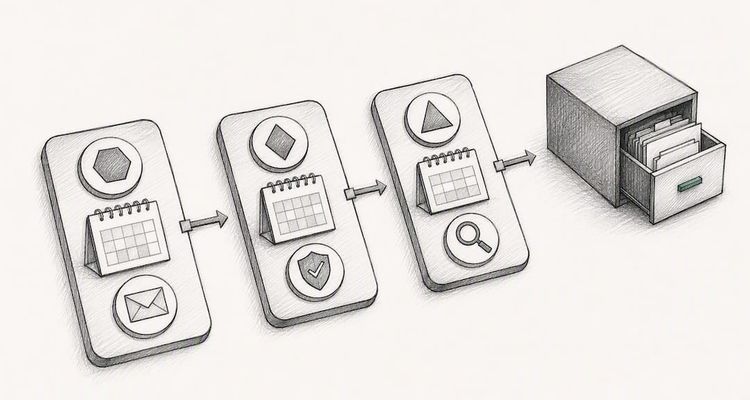
Document who ran each check, when, and how. A verification log with a name, date, and method attached is what turns “we checked” into evidence an auditor or opposing counsel can actually see.
What Worker-Level Safety Records Do You Need on File?
Company-level paperwork protects the contract. Worker-level paperwork protects the person standing on a scaffold. OSHA’s multi-employer citation policy holds general contractors responsible for demonstrating “reasonable diligence” in verifying subcontractor safety compliance, which means the burden sits on you, not just the sub, to show the training records exist.
- OSHA 10-hour cards cover general construction workers; OSHA 30-hour cards are required for supervisors and safety leads on most commercial jobs.
- Equipment operator certifications, including forklift and MEWP (mobile elevating work platform) credentials, need to be current and matched to the specific machine class being operated.
- Trade-specific certifications, such as confined space entry or crane rigging, should be verified against the actual scope of work, not assumed based on job title.
- Pull each subcontractor’s OSHA 300A summary as part of the risk screen. It tells you their recordable incident history without asking a single question.
- Require a signed site orientation acknowledgment from every worker before their first shift, and store it digitally so it survives crew turnover.
Rotating crews are where this breaks down fastest. If a subcontractor swaps out three workers mid-project, those three new names need OSHA cards and orientation sign-offs checked before they walk the site, not retroactively during the next audit cycle.
What Is the Timeline for Subcontractor Onboarding Before Day One?
A workable pre-mobilization schedule runs on a ten-day clock, with clear ownership at each stage so nothing stalls waiting on an unassigned task.
- T-10: Send the onboarding invite and full document requirements list. The compliance coordinator owns this step and confirms receipt.
- T-7: Subcontractor uploads documents to the portal or shared system. Automated reminders go out for anything missing.
- T-3: The compliance coordinator and safety lead run verification checks. Any deficiency triggers an immediate notice back to the subcontractor with a hard deadline.
- T-1: Accounts payable confirms ACH details and payment terms are locked in.
- Day 0: The project manager signs off on mobilization approval only after every gating document clears verification.
Manual, email-driven onboarding typically takes 11 to 20 business days start to finish. A centralized portal with automated reminders and clear task ownership can compress that to 5 to 10 business days, which matters when a job start date is fixed and a crew is standing by. Insurance and safety documentation are never candidates for expedited exceptions. Everything else, like a secondary trade certification for a task scheduled three weeks out, can sometimes wait a few days without stopping mobilization.
How Do You Track Renewals So Nothing Expires Mid-Project?
Onboarding is not a one-time event on a project that runs six months or longer. Insurance policies lapse, licenses expire, and certifications need renewal, often while the subcontractor is still actively on site.
- Set renewal reminders 30 days before COI expiration and before license renewal dates, giving enough runway to chase down a lapsed policy before it becomes a site-access problem.
- For repeat subcontractors working multiple projects with you, focus re-onboarding on what changed since the last job rather than rebuilding the entire file from scratch.
- Log every renewal request and keep the verification evidence (carrier confirmation, updated license screenshot) attached to that subcontractor’s record.
- Spreadsheets work for a handful of subs. Once you are tracking dozens of expiration dates across multiple trades, automated compliance tracking catches the gaps a manual system misses.
Pro Tip: Set your renewal reminder for 30 days out, not 7. A lapsed COI discovered a week before expiration rarely gets fixed in time; a month gives the subcontractor’s broker enough runway to actually process the renewal.
What Should Your Subcontractor Audit Binder Contain?
When an inspector, auditor, or opposing counsel asks for proof of due diligence, the request almost always follows the same pattern. Having these items assembled and indexed, not scattered across email threads, is what separates a clean audit from a scramble.
- Signed subcontractor agreement with all amendments attached.
- COI and every endorsement page, not just the summary certificate.
- Completed W-9 with TIN-match confirmation.
- License verification screenshots with timestamps.
- OSHA 300A summaries and signed site orientation acknowledgments.
- Executed lien waivers for each payment cycle.
- ACH authorization forms, stored separately given the sensitivity of banking data.
Timestamp every piece of verification evidence, whether it is a screenshot, a saved carrier confirmation email, or a license board search result. Keep the full binder for a minimum of three years after project close, and check your specific contract, since some owners or general contractors require longer retention windows written directly into the agreement.
Where Do You Find Templates for Subcontractor Documentation?
Organize your checklist fields into three groups: company-level (insurance, license, entity status), worker-level (safety cards, certifications), and project-specific (scope of work, site orientation).
- Sample COI request language: “Please provide an ACORD 25 certificate naming [Company] as additional insured, with CG 20 10 and CG 20 37 endorsements attached.”
- Sample scope checklist line: “Confirm materials, labor, equipment, and schedule milestones are explicitly stated, not referenced by attachment only.”
- Lien waiver forms are state-specific. Check your state’s statutory language before using a generic template, and a resource like Adverbum’s subcontractor documentation guide walks through common requirements by category.
Why a Portal Beats a Spreadsheet for Subcontractor Files
I have watched compliance teams lose entire afternoons hunting through email threads for one missing endorsement page, only to find it buried in a reply-all chain from three weeks earlier. That is not a documentation problem. It is an ownership problem, and it disappears the moment one person and one system own the file instead of six inboxes.
Centralized, deadline-driven tracking works because it removes the guessing. Automated reminders fire before a COI lapses, not after a subcontractor is already on site uninsured. A platform like ExpiryEdge exists for exactly this kind of recurring, date-driven obligation, where missing a renewal date carries real financial and legal consequences.
— Kuldeep
Automate Subcontractor Document Tracking With ExpiryEdge
Chasing subcontractor documents across email, spreadsheets, and shared drives means someone eventually misses a renewal date, and that gap is exactly where liability lives. A centralized platform can manage the entire pre-mobilization file, tracking COI expirations, license renewals, and safety certifications in one dashboard instead of multiple locations.

Such platforms send automated multi-channel reminders before a document lapses and build the audit trail automatically as each item gets verified and approved. That means less time spent reconstructing who checked what and when, and more confidence walking into an inspection or a dispute with a file that is already in order. Compliance teams managing dozens of subcontractors across multiple job sites use this same deadline-tracking approach for SOC 2 readiness and other recurring obligations where a missed date has real consequences.
ExpiryEdge also handles the collection side. One request link can ask a subcontractor for the COI, W-9, license and ACH form and carry the subcontractor agreement for e-signature, so the file arrives complete instead of in six separate emails. The sub needs no account, follow-ups go out automatically until everything is in, and you can reject a single item, such as a COI missing an endorsement, without asking them to resubmit the rest.
If your current onboarding process still runs on shared inboxes and manual follow-up, start a free trial with ExpiryEdge and see how quickly a deadline-driven system tightens up your subcontractor file.
Sources
FAQ
What Documents Should Be Included in a Subcontractor Onboarding Checklist?
At minimum: a certificate of insurance with endorsements, a signed W-9, a verified state contractor license, a signed subcontractor agreement, workers’ compensation proof or exemption, and an ACH payment authorization form. Worker-level items like OSHA 10/30 cards and site orientation acknowledgments round out the file before day one.
What Documents Are Required for Subcontractor Onboarding Specifically?
Beyond the core six documents, most projects also require business entity verification through the Secretary of State, an EMR and OSHA 300A summary for risk screening, and lien waivers matched to your state’s statutory format.
What Documents Do You Need From a Subcontractor Before They Start Work?
Every gating document (insurance, license, signed contract, workers’ comp) needs to be collected and verified, not just submitted, before mobilization approval. A platform like ExpiryEdge can automate the reminders and track verification status so nothing slips through during a busy onboarding cycle.
What Are the Stages of the Subcontractor Onboarding Process?
A typical timeline runs through invitation and requirements sharing (T-10), document upload (T-7), verification and deficiency remediation (T-3), payment setup confirmation, and final mobilization approval on day zero.
How Long Should You Keep Subcontractor Onboarding Documents on File?
Retain the full audit binder for a minimum of three years after project close, though contracts with owners or general contractors sometimes specify longer retention windows that override the general minimum.
Recommended
Frequently asked questions
Beyond the core six documents, most projects also require business entity verification through the Secretary of State, an EMR and OSHA 300A summary for risk screening, and lien waivers matched to your state's statutory format.
Every gating document (insurance, license, signed contract, workers' comp) needs to be collected and verified, not just submitted, before mobilization approval. A platform like ExpiryEdge can automate the reminders and track verification status so nothing slips through during a busy onboarding cycle.
A typical timeline runs through invitation and requirements sharing (T-10), document upload (T-7), verification and deficiency remediation (T-3), payment setup confirmation, and final mobilization approval on day zero.
Retain the full audit binder for a minimum of three years after project close, though contracts with owners or general contractors sometimes specify longer retention windows that override the general minimum.
Yes, if you use a document request rather than email. A single request can include file uploads for the COI, W-9 and license, fields for contact and payment details, and the subcontractor agreement for e-signature. In ExpiryEdge the sub completes it from one link without creating an account, and anything missing or wrong is sent back on its own while the rest of the file stays approved.