How Contract Obligation Tracking Works for Businesses

How Contract Obligation Tracking Works for Businesses

TL;DR:
Contract obligation tracking involves identifying, assigning, and monitoring specific duties within contracts to ensure compliance and meet deadlines. Most organizations struggle with effective tracking because they treat obligations as static documents instead of active tasks linked to workflows, owners, and alerts. Using dedicated platforms and establishing clear processes can significantly improve obligation fulfillment and reduce compliance risks.
Contract obligation tracking is the process of identifying, assigning, and monitoring every specific duty a business agrees to perform under its contracts, so nothing is missed, deadlines are met, and compliance is maintained. Most organizations sign dozens or hundreds of contracts each year, each containing multiple commitments with real legal and financial consequences. Without a system to track those commitments, teams rely on memory, scattered spreadsheets, or calendar entries that lack the context to drive action. This article breaks down how obligation tracking works, what tools support it, and what separates organizations that stay compliant from those that don’t.
How does contract obligation tracking work?
Contract obligation tracking is the industry term for what many teams call “contract compliance tracking.” It is distinct from general contract management, which monitors administrative lifecycle stages such as drafting, signing, and archiving. Obligation tracking covers deliverables, timelines, notice requirements, and completion evidence, while general contract tracking focuses on audit trails and status milestones. That distinction matters because a contract can be fully executed and archived while dozens of active obligations inside it remain unfulfilled.
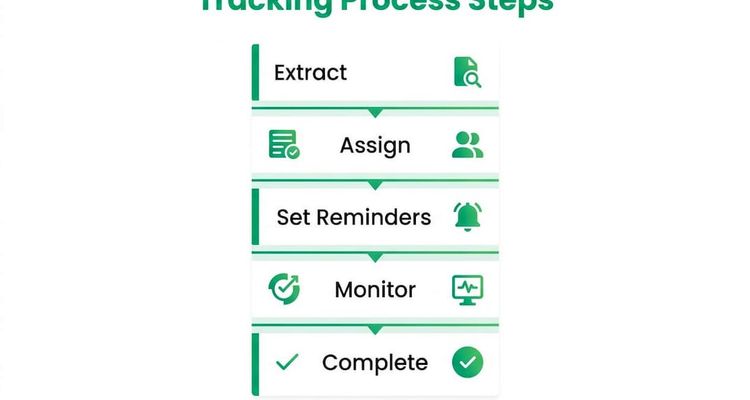
The core process follows four steps: extract obligations from the contract text, assign each obligation to an owner, set deadlines and reminders tied to the correct dates, and monitor fulfillment through status updates and audits. Each step requires deliberate design. Skipping any one of them creates gaps that lead to missed deliverables, penalties, or strained vendor relationships.

Contractual obligations form the foundation of contract performance, and understanding them thoroughly prevents breach and drives successful outcomes. That is not a legal abstraction. It is the operational reality for procurement, compliance, HR, and legal teams every day.
What are contract obligations and how are they identified?
Contract obligations are the specific, legally binding duties each party agrees to perform. Obligations cover deadlines, payments, notices, compliance requirements, and confidentiality duties, all enforceable by law. They appear in every contract type, from vendor agreements and employment contracts to software licenses and regulatory consent orders.
The most common obligation categories include:
- Delivery obligations: Specific goods, services, or reports due by a set date
- Financial obligations: Payment terms, invoicing schedules, and penalty clauses
- Compliance obligations: Regulatory certifications, audits, and reporting requirements
- Notice obligations: Required advance notice before renewal, termination, or price changes
- Performance obligations: Service level agreements and quality standards
- Confidentiality obligations: Data handling, non-disclosure, and information security duties
Identifying obligations inside a contract requires reading for specific language signals. Words like “shall,” “must,” “will,” and “within X days” almost always mark an obligation. Sections titled “Responsibilities,” “Deliverables,” “Compliance,” and “Termination” are the highest-yield areas. Temporal phrases like “no later than,” “prior to,” and “within 30 days of” signal deadlines that need to be extracted and tracked separately.
Pro Tip: Create a standard extraction checklist for your team that flags obligation-triggering language. Reviewing contracts with a checklist cuts extraction time and reduces the chance of missing buried obligations in schedules or appendices.
Regulatory frameworks add another layer. Industries governed by standards like ISO 27001, HIPAA, or SOC 2 embed compliance obligations directly into vendor contracts. Teams in those environments need to cross-reference contract language against the applicable regulatory requirements to catch obligations that are implied rather than explicitly stated.
The step-by-step process of tracking obligations in practice
Once obligations are identified, the tracking process follows a clear sequence. Skipping steps or treating them as optional is where most organizations run into trouble.
- Extract and catalog obligations. List every obligation from the contract, including the clause reference, the party responsible, the due date or trigger event, and the type of obligation. This becomes the obligation register for that contract.
- Assign ownership. Every obligation needs a named owner. Over 40% of organizations lack clear ownership for contract obligations, which creates accountability gaps and compliance risk. Ownership should be assigned at the individual level, not just the department level.
- Set deadline triggers based on notice periods. Most teams set reminders tied to the contract end date. The correct approach is to set reminders tied to the notice period. Notice periods of 30, 60, or 90 days dictate the effective action window, not the contract end date alone.
- Link obligations to task management systems. Obligations linked to tools like Jira, Notion, or Trello with owners, deadlines, and progress statuses improve fulfillment rates. An obligation that lives only in a contract document or a spreadsheet rarely gets acted on.
- Configure tiered alerts and escalation paths. A tiered notification system escalates from owner to manager when an obligation approaches its deadline without a status update. This prevents missed deadlines from going unnoticed until it is too late.
- Conduct periodic reviews. Tracking on-time fulfillment and overdue obligations quarterly supports continuous process improvement and reduces risk over time.
The table below shows how obligation data fields map to tracking actions:
| Obligation field | Tracking action |
|---|---|
| Obligation type | Categorize and route to the right team |
| Due date or trigger | Set primary deadline in the tracking system |
| Notice period | Set advance reminder 30, 60, or 90 days before |
| Owner | Assign task and accountability |
| Status | Update as in progress, complete, or overdue |
| Evidence required | Define proof of completion before closing the obligation |
Pro Tip: Never close an obligation without recording proof of completion. A signed delivery receipt, a compliance certificate, or a timestamped report protects your organization if a dispute arises later.
What technology supports contract obligation tracking?
The right tool depends on the volume of contracts and the complexity of obligations. Four broad approaches exist, each with different tradeoffs.
Manual review works for organizations with fewer than 20 active contracts. A team member reads each contract and populates a shared spreadsheet. The process is slow and error-prone at scale.
Spreadsheets with calendar reminders add a layer of automation but still fall short. Calendar entries lack status, assigned owners, and links to contract clauses, which means obligations get forgotten when the reminder fires and no one knows what action to take.
Dedicated obligation tracking platforms solve the core problem by combining a central obligation register, task assignment, multichannel alerts, and status dashboards in one place. Expiryedge is built specifically for this type of deadline-driven work, covering contract obligations, renewals, compliance requirements, certifications, and vendor agreements from a single platform.
AI-powered extraction is the most significant recent development. AI uses natural language processing to flag deadlines, deliverables, and compliance terms for review, improving extraction speed and accuracy. Manual extraction averages over 45 minutes per contract, while AI-powered extraction reduces this to minutes. For organizations processing large contract volumes, that difference is the gap between a manageable workload and a backlog that never clears.
Key features to look for in any tracking tool include:
- Centralized obligation register with clause-level references
- Task assignment with named owners and due dates
- Multi-channel alerts via email, SMS, or in-app notifications
- Tiered escalation paths from owner to manager
- Status dashboards showing open, in-progress, and overdue obligations
- Audit trail for completed obligations with evidence attachments
The deadline escalation workflow is one of the most underbuilt features in basic tracking setups. Organizations that configure escalation paths see fewer missed deadlines because the system does not rely on a single person remembering to act.
Common challenges and best practices in obligation tracking
The most frequent failure in contract compliance tracking is confusing renewal dates with notice period deadlines. A contract that renews on december 1 with a 60-day notice period requires action by october 1. Teams that track only the renewal date miss the actual decision window. This single error causes unwanted auto-renewals and contract lapses more than any other mistake.
A second common problem is obligation fade. An obligation gets extracted and entered into a system, but no one owns it. Without a named owner and a task linked to a workflow, the obligation sits in a register and never gets completed. Treating obligations as actionable tasks integrated into everyday project management tools is the only reliable way to prevent this.
Alert fatigue is a real risk in the opposite direction. Teams that configure daily reminders for every obligation quickly start ignoring notifications. The best practice is to set three tiered reminders: one at the notice period start, one at the midpoint, and one final alert before the deadline. Escalation to a manager fires only if the obligation remains open past the midpoint alert.
Pro Tip: Build a handoff protocol for staff turnover. When an obligation owner leaves the organization, their open obligations should automatically reassign to their manager until a new owner is designated. Without this, obligations become orphaned and get missed.
Maintaining data accuracy over time requires quarterly audits. Review which obligations were completed on time, which were overdue, and which were missed entirely. Those metrics reveal where the process breaks down, whether in extraction, ownership, or alert configuration, and give teams a concrete basis for fixing it.
For procurement teams specifically, the case for expiry tracking is especially strong because vendor agreements often contain layered obligations across payment, delivery, and compliance that interact with each other.
Key Takeaways
Effective contract obligation tracking requires extracting every commitment, assigning a named owner, setting reminders tied to notice periods, and linking obligations to task workflows where status is actively updated.
| Point | Details |
|---|---|
| Obligation tracking vs. contract management | Obligation tracking monitors specific duties and deadlines, not just lifecycle stages. |
| Notice periods over renewal dates | Set reminders based on 30, 60, or 90-day notice periods, not the contract end date. |
| Ownership is non-negotiable | Every obligation needs a named individual owner, not just a department. |
| Task integration drives completion | Obligations linked to tools like Jira, Notion, or Trello get completed at higher rates. |
| Quarterly audits improve the process | Reviewing fulfillment metrics quarterly reveals gaps in extraction, ownership, and alerts. |
Why I think most teams are solving the wrong problem
Most organizations I see struggling with contract compliance are not struggling because they lack a tracking tool. They are struggling because they treat obligation tracking as a documentation exercise rather than an operational one. They extract obligations into a spreadsheet, feel satisfied that the work is done, and then wonder why obligations still get missed.
The real problem is that a list of obligations in a document is not a workflow. It does not assign work, send reminders, escalate to managers, or record proof of completion. It just sits there. The organizations that get this right are the ones that treat every obligation as a task, give it an owner, connect it to the tools their teams already use, and build escalation into the system from day one.
I have also seen teams over-engineer the technology side while under-investing in the process side. A sophisticated AI extraction tool does not help if the obligations it identifies are never assigned to anyone. The process has to come first. Define your obligation categories, set your notice period rules, establish your escalation paths, and then choose the technology that supports those decisions.
The quarterly audit recommendation is the one most teams skip, and it is the one that matters most for long-term improvement. You cannot fix a process you are not measuring. Tracking on-time fulfillment rates and overdue items gives you the data to have a real conversation about where the system is failing and what to change.
— Kuldeep
Expiryedge: built for deadline-driven obligation tracking

Expiryedge is designed specifically for the kind of work described in this article. It centralizes contract obligations, vendor agreements, compliance requirements, and certifications into a single platform where every item has an owner, a deadline, and an escalation path. Teams receive multi-channel alerts through email and in-app notifications, and managers get automatic escalations when obligations approach their deadlines without a status update. The platform’s dashboard gives operations, compliance, and procurement teams real-time visibility into what is open, in progress, and overdue. If your organization is ready to move beyond spreadsheets and calendar reminders, start tracking obligations with a system built for fixed-date work.
FAQ
What is contract obligation tracking?
Contract obligation tracking is the process of identifying, assigning, and monitoring every specific duty a business must perform under its contracts. It covers deliverables, payment terms, notice periods, compliance requirements, and confidentiality duties.
How is obligation tracking different from contract management?
Contract management monitors the administrative lifecycle of a contract, including drafting, signing, and archiving. Obligation tracking focuses on the specific duties inside the contract and whether they are being fulfilled on time.
Why do notice periods matter more than renewal dates?
Notice periods define the actual window for action. A contract with a 60-day notice period requires a decision two months before the renewal date, so tracking only the renewal date causes teams to miss the deadline for acting.
How does AI improve contract obligation tracking?
AI uses natural language processing to scan contract text and flag obligations, deadlines, and compliance terms automatically. This reduces extraction time from over 45 minutes per contract to minutes, cutting errors and freeing up legal and operations teams.
What happens when no one owns a contract obligation?
Unowned obligations get missed. Research shows over 40% of organizations lack clear ownership for contract obligations, which creates accountability gaps and increases the risk of non-compliance, penalties, and contract disputes.
Recommended
Frequently asked questions
Contract management monitors the administrative lifecycle of a contract, including drafting, signing, and archiving. Obligation tracking focuses on the specific duties inside the contract and whether they are being fulfilled on time.
Notice periods define the actual window for action. A contract with a 60-day notice period requires a decision two months before the renewal date, so tracking only the renewal date causes teams to miss the deadline for acting.
AI uses natural language processing to scan contract text and flag obligations, deadlines, and compliance terms automatically. This reduces extraction time from over 45 minutes per contract to minutes, cutting errors and freeing up legal and operations teams.
Unowned obligations get missed. Research shows over 40% of organizations lack clear ownership for contract obligations, which creates accountability gaps and increases the risk of non-compliance, penalties, and contract disputes.
Not legal advice
This article is for general informational purposes and does not constitute legal advice. Laws, regulations and contract requirements vary by jurisdiction and change over time. Consult a qualified attorney in your jurisdiction before making decisions that depend on the specific legal interpretation discussed here.