
Veterinary Compliance Software: 7 Tools Compared for OSHA, Controlled Drugs and X-Ray Safety

ExpiryEdge is our first pick for a vet practice whose compliance gap is the calendar. It keeps every date you live by, from the DEA biennial inventory and dosimetry badge exchange to the x-ray equipment test, reminds the owner by SMS, WhatsApp or Teams, escalates to the practice manager when nobody acts, and runs your Monday checklists with a record of who ticked each step, from $29 a month.
If you need OSHA and infection control training, manuals and a consultant, pick Compli Vet, or add it alongside. For controlled drugs, buy a specialist: VetSnap is a digital DEA logbook, and CUBEX sells cabinets that log every removal. Vet S8 suits ezyVet practices, MedSafe sells onsite help, and Mitti is a free-to-start checklist app.
A note on bias first. We make ExpiryEdge. For the six other tools we went to each vendor's own pages on 7 November 2026, and every claim about them below links back to the page it came from.
| Tool | Main job | Controlled drug log | Recurring safety checks | Published pricing |
|---|---|---|---|---|
| ExpiryEdge Our product | Dates, documents and SOP checklists | No; tracks the inventory and registration dates | Yes, scheduled checklists | $29 to $199 a month |
| Compli Vet | OSHA training and compliance records | No | Yes, dashboard logs | Not published |
| VetSnap | Digital DEA logbook | Yes, with PMP reporting | No | $150 onboarding; plans by DVM count |
| CUBEX | Dispensing cabinets and software | Yes, automatic logs | No | Not published |
| Vet S8 | Online controlled drug register | Yes | No | Not published |
| MedSafe | Onsite assessments and training | No | Not stated | Not published |
| Mitti (SafetyCulture) | Inspection checklist app | No | Yes, digital checklists | Free for up to 10; Premium $24 a seat a month yearly |
How we compared these tools
Vet compliance tools split into very different jobs, so the first column is simply what each one is for. Then we asked the two questions that decide whether you'd pass an inspection: does it keep a controlled drug log, and does it run the weekly and monthly safety checks with a named person against each? Price is last, because most here don't publish one. We read every vendor's product and pricing pages on 7 November 2026 and set the dates against the eCFR, OSHA, the Texas radiation programme, the VMD, HSE and the RCVS. We haven't run paid trials of all seven, and ExpiryEdge is ours, so read our verdict on it in that light.
Four regulators, one x-ray room: the dates a vet practice answers for
A vet practice answers to more regulators than most small businesses. The DEA sets controlled drug rules, OSHA covers staff safety, and a state radiation programme inspects your x-ray room. In the UK, the VMD, HSE and the RCVS each have a say.
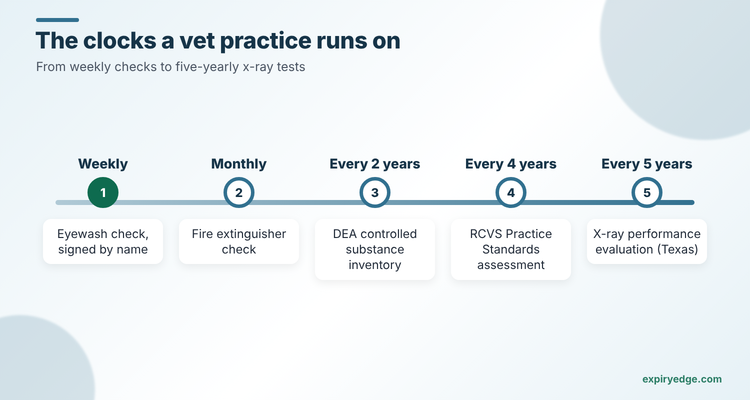
Controlled drugs carry fixed dates. Under 21 CFR 1304.11, you must take a new inventory of all controlled substances at least every two years. Under 21 CFR 1304.04, inventories and records must be kept for at least two years. In Great Britain, the VMD's guidance says a Schedule 2 register must be kept for at least two years after the last entry, and Schedule 2 destruction needs an authorised witness.
OSHA's Hazard Communication standard requires labels and safety data sheets for hazardous chemicals, and training so staff can read them. If your team works with x-rays, 29 CFR 1910.1096 requires dosimeters for workers likely to exceed a quarter of the dose limit, and exposure records for each of them.
State radiation programmes add their own dates. Texas, for example, lists an x-ray equipment performance evaluation every five years, an annual inventory of x-ray units and operating procedures signed by every operator and the radiation safety officer in its veterinary inspection checklist. In the UK, the Ionising Radiations Regulations 2017 require most employers using ionising radiation to register with HSE.
Then there's the inspection. The RCVS Practice Standards Scheme assesses accredited practices every four years, with spot checks in between.
- Controlled drug counts and the DEA biennial inventory
- Dosimetry badge exchanges and annual exposure notices
- X-ray registration and equipment performance tests
- Weekly eyewash and monthly fire extinguisher checks
- Autoclave spore tests
- Annual OSHA and HazCom training for every staff member
1. ExpiryEdge: best for the dates, checks and documents around your training and drug logs
ExpiryEdge doesn't keep your controlled drug register. It keeps the dates and proof around it. Each item becomes a record with an owner, a due date and the evidence attached: the DEA biennial inventory, each dosimetry badge exchange, the x-ray registration, the next equipment test and the RCVS assessment.
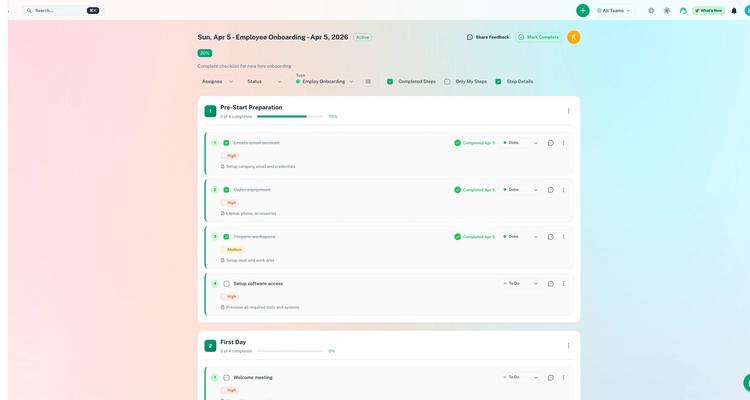
Recurring work goes into SOP workflow checklists. A Monday checklist can cover the controlled drug count, the eyewash station and the crash cart, assigned to a named nurse, with a record of who ticked each step. If the x-ray registration is 30 days out and nobody has acted, ExpiryEdge escalates to the practice manager.
Outside people are covered too. Your waste contractor, x-ray service engineer or dosimetry provider gets a no-login link to upload a certificate or report, and a rejected upload reopens the same link. The exportable audit trail goes to the inspector.
Try it with your own safety checks in 15 minutes
- Build a Monday checklist (controlled drug count, eyewash, crash cart), assign it to a named nurse and schedule it to run every week.
- Import a CSV of your dated items, such as the DEA biennial inventory, badge exchanges and the x-ray registration, with a 90/30/7-day reminder schedule and escalation to the practice manager.
- Send your dosimetry provider a no-login request link for the latest exposure report.
Pricing: plans run $29, $49, $99 or $199 a month, depending on users and records. You get 14 days free first, and no card is asked for.
Watch out for: ExpiryEdge isn't a DEA logbook, doesn't connect to cabinets or the PIMS, and doesn't include OSHA courses. Pair it with VetSnap or CUBEX for drugs.
The pricing page lists what each plan includes.
2. Compli Vet: best all-round OSHA platform for US practices
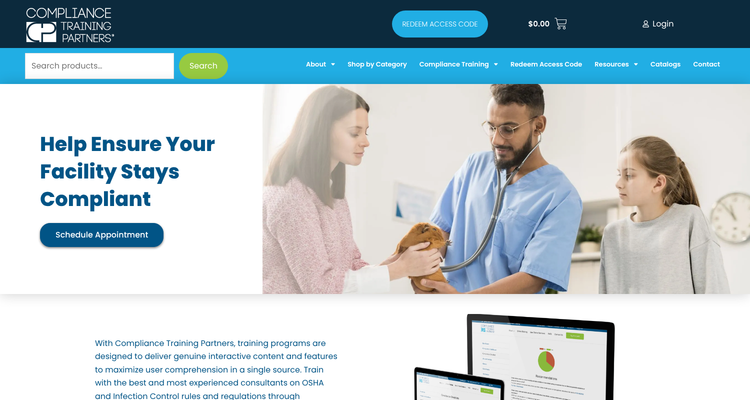
Compli Vet, from Compliance Training Partners, is built for vet practices. Its product page lists online OSHA and infection control courses that earn RACE CE credit, an on-demand consultant and help responding to an OSHA inspection.
The compliance dashboard logs routine checks such as weekly eyewash checks, monthly fire extinguisher checks and autoclave spore testing. It stores staff training certificates, includes a licence vault with renewal reminders, and gives regional managers an oversight view. Compli Plus adds digital OSHA and infection control manuals, and new Plus subscribers get radiation, biohazard and GHS labels. A free Vet Facility Audit Checklist app runs an OSHA audit for animal health facilities.
Pricing: not published. Compli Plus is described as a "low annual fee"; a demo gets you a number.
Watch out for: the page doesn't mention controlled drug logs or safety data sheet management, and it's US-focused. You'll still need a drug log.
3. VetSnap: best for replacing the paper DEA logbook
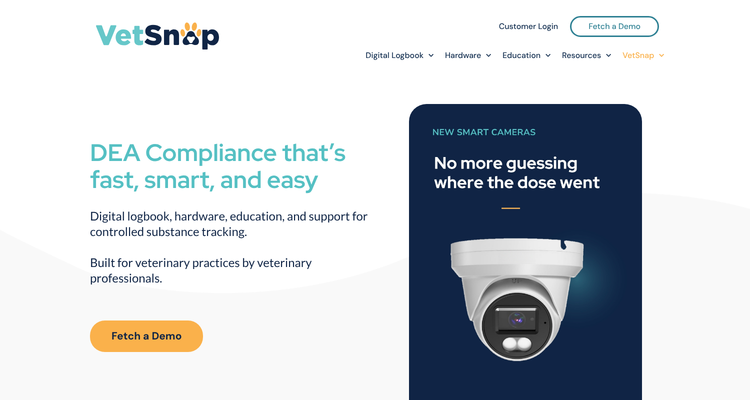
VetSnap is a digital logbook built for vet practices. It makes sure required fields are filled in, calculates quantity and container balances, builds physical inventory counts in, and catches errors overnight. Each employee has their own PIN, logs populate from the PIMS, and PMP submissions take a few clicks. It integrates with DaySmart Vet and also sells lockers, safes and cameras.
Pricing: the pricing page lists a $150 onboarding fee and says plans depend on DVM count. Hardware is a one-time purchase with no long-term contract.
Watch out for: you need a demo to get the software price, and it covers controlled drugs only.
4. CUBEX: best for locked cabinets that log themselves
CUBEX sells dispensing cabinets for vet practices with biometric access. Every removal and return is logged by user and time, and CubexPMP sends daily reports to your state PMP. Its software, MashuraOS, syncs with PIMS including IDEXX Cornerstone, ezyVet, AVImark, Covetrus Pulse, Shepherd and Instinct.
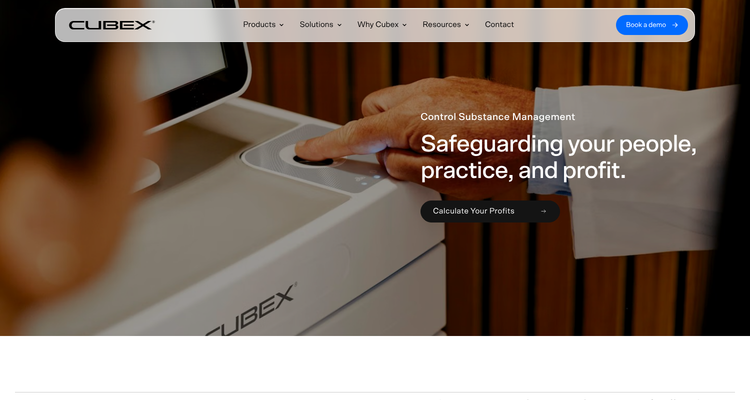
Pricing: not published. CUBEX offers a demo and a profit calculator.
Watch out for: this is hardware plus software, so it's a bigger purchase than a logbook. Ask what happens to your logs if you stop paying.
5. Vet S8: best online register for ezyVet practices
Vet S8, from Modeus, is an online controlled drug register that syncs with ezyVet so drug entries aren't typed twice. US customers get a PMP reporting workflow. The Modeus page lists reports by patient, drug and period, use on multiple computers at no extra cost, and integrations with Cornerstone, RxWorks and others.
Pricing: not published. Standard licences cover 1,200 register entries a year; Unlimited has no cap.
Watch out for: the Covetrus page that sells it is run from Asia-Pacific, and the pages we read don't name UK rules. UK and US buyers should ask how it maps to theirs.
6. MedSafe: best for onsite help
MedSafe sells customised training, onsite facility assessments with gap analysis, written policy manuals and safety data sheet management to vet practices. Training runs onsite or online, with support for events such as exposure incidents and audit notices.
Pricing: not published.
Watch out for: the page doesn't describe software features, controlled drugs or radiation safety.
7. Mitti (by SafetyCulture): best free checklist app to start with
SafetyCulture's checklist product now appears as Mitti. It turns checklists into inspections, lets staff flag issues with photos, and tracks assets. Its library has a free community safety inspection template for medical, dental and vet clinics.
Pricing: the pricing page lists a $0 tier for up to 10 people with five active templates, and Premium at $24 a seat a month yearly or $29 monthly.
Watch out for: you build the vet content yourself. Mitti doesn't know the DEA or RCVS rules.
ExpiryEdge as an alternative to Compli Vet
We put ExpiryEdge first because the calendar sits outside whichever training and drug-log tools you choose. But Compli Vet is the right pick if you want OSHA courses, manuals and a consultant on call. Keep it for training. Where practices look elsewhere is the rest of the calendar: dosimetry exchanges, x-ray tests, waste contracts, licences and the DEA inventory, each with a different owner.
ExpiryEdge holds all of those with published pricing, reminders by SMS, WhatsApp or Teams, and checklists that record who did what. It also collects documents from outside people, such as the x-ray engineer's report, without a login.
Don't switch if your gap is staff training content or OSHA advice. ExpiryEdge has neither.
Sort your jobs into logbook, training and calendar before you buy
List your recurring jobs first. Write down every check, count, test and renewal from the checklist above, with its frequency and owner. Count each dosimeter and each fire extinguisher separately; the list gets long fast.
Then split them by the kind of record each one needs. Controlled drug entries belong in a logbook or cabinet such as VetSnap, CUBEX or Vet S8. Training belongs in Compli Vet or MedSafe. Everything with a date or a weekly checklist can live in ExpiryEdge, which costs less than most of the specialists.
Finally, run one real week on a trial. Put Monday's drug count, the eyewash check and next month's badge exchange into the tool, assign each to a named person, and see whether the record at the end is something you'd hand an inspector.
Our SOP software page shows recurring checklists, and audit preparation covers the export. See the full veterinary compliance software guide and our comparison of veterinary licence and DEA tracking software.
Frequently asked questions
VetSnap is a digital DEA logbook with PMP reporting and PIMS integration. CUBEX sells cabinets that log every removal by user and time. Vet S8 is an online register that syncs with ezyVet. ExpiryEdge doesn't keep the log, but it can remind you about the biennial inventory.
Under 21 CFR 1304.11, a registrant must take a new inventory of all controlled substances at least every two years, after the initial inventory. Under 21 CFR 1304.04, inventories and records must be kept for at least two years.
Yes. OSHA's ionizing radiation standard, 29 CFR 1910.1096, requires dosimeters for workers likely to receive more than a quarter of the dose limit and exposure records for them. Most states also register x-ray machines and test them on their own schedule, such as every five years in Texas.
ExpiryEdge publishes $29 to $199 a month. Mitti is free for up to 10 people, with Premium at $24 a seat a month yearly. VetSnap charges $150 for onboarding and prices plans by DVM count. Compli Vet, CUBEX, Vet S8 and MedSafe quote on request.
The VMD's guidance says a Schedule 2 controlled drugs register must be kept for at least two years after the date of the last entry. It must be a bound book or computerised system, kept at the premises and available for inspection.
Mitti's $0 tier covers up to 10 people and five active templates, and its library has a free inspection template for vet clinics. Compliance Training Partners' Vet Facility Audit Checklist app is free on iOS. ExpiryEdge has a 14-day free trial, then paid plans from $29 a month.
Not safety or OSHA compliance advice
This article is for general informational purposes and does not constitute formal OSHA or workplace-safety compliance advice. Safety regulations and standards (OSHA, state plans, EU OSHA, AS/NZS, etc.) vary by jurisdiction and change. Consult a qualified safety professional or your regulator for the specifics of your operation.