
Construction Equipment Inspection Software: 6 Tools Compared for Contractors Who Own and Hire Plant

ExpiryEdge is our first pick if your gap is the paperwork, not the machines. It tracks the dated certificates that come from outside examiners (annual crane inspections, LOLER thorough examinations, hire company certificates), chases the examiner or hire firm for the next one, and shows its price. It suits contractors with a small or mostly hired fleet.
If you need crews running daily inspections and failed items turning into repairs, pick Tenna: QR-code inspections run on a phone and telematics feeds the schedule. If you run heavy civil on HCSS, Equipment360 is the natural choice. ToolWatch, Fleetio and Mitti (formerly SafetyCulture) suit narrower needs, covered below.
We make ExpiryEdge. The other five tools are described from their makers' own websites and help centres as we found them on 7 November 2026, with a link beside each fact.
| Tool | Reminds whoever renews (email, SMS, WhatsApp) | Hire firms upload reports from a link, no login | Tracks every examination certificate in one place | Escalates overdue items to a manager | Recurring inspection checklists | Published pricing / free trial |
|---|---|---|---|---|---|---|
| ExpiryEdge Top pick | Yes, email, SMS, WhatsApp, Slack, Teams | Yes, no-login link | Yes, AI reads the expiry date | Yes, built in | Yes, scheduled SOP checklists | $29-$199/month, 14-day free trial |
| Tenna | Not stated | Not stated | Not stated | Not stated | Yes, daily, weekly or on mobilisation | Quote, priced by asset count |
| HCSS Equipment360 | Alerts on certification due dates | Not stated | Alerts on equipment certifications | Not stated | Yes, by meter or date | Quote on request |
| ToolWatch (AlignOps) | Alerts before operator certifications expire | Not stated | Operator certifications | Not stated | Service reminders | Not published, book a demo |
| Fleetio | Not stated | Not stated | Not stated | Not stated | Yes, DVIR-style forms | From $4 per asset a month, 14-day trial |
| Mitti (SafetyCulture) | Not stated | Not stated | Documents stored per asset | Not stated | Yes, scheduled checks | $0 for up to 10 seats, Premium $24 a seat |
How we compared these tools
Our columns ask what stops a machine being parked: does the person who renews get told, can the hire firm send the report without an account, is every certificate in one place, and does a manager hear when one is overdue. Recurring checklists cover the crew side. Published pricing tells a 15-machine contractor whether a tool is in reach. Failed-item work orders are covered in each vendor's own section. On 7 November 2026 we read each vendor's product, pricing and help pages, and checked intervals against OSHA's crane and scaffold rules and HSE's LOLER guidance. We didn't buy paid trials of every tool. We make ExpiryEdge, which you should factor in when reading our entry.
Three layers of inspection, and a different person behind each
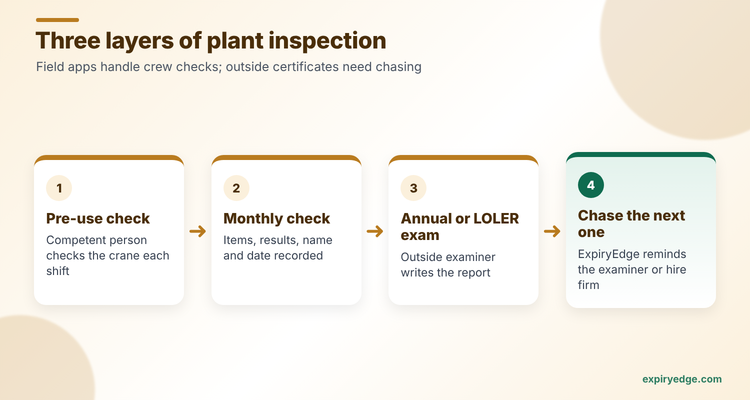
Plant inspections come in layers, and each layer has its own clock and its own person.
The first layer is the pre-use check. OSHA's crane rule requires a competent person to inspect a crane visually before each shift, and a monthly inspection that's documented with the items checked, results, name, signature and date, kept for at least three months, per 29 CFR 1926.1412 (shown on eCFR). Scaffolds need a competent person's inspection before each work shift under 29 CFR 1926.451(f)(3).
The second layer is periodic. The same crane rule requires a qualified person's annual inspection, with records kept for at least 12 months. In the UK, the HSE says lifting equipment used for people and all lifting accessories need a thorough examination every 6 months, and other lifting equipment every 12 months, unless an examination scheme sets other intervals. Construction working platforms you could fall 2 metres from must have been inspected within the previous 7 days, under regulation 12 of the Work at Height Regulations 2005.
The third layer is the certificate you don't write yourself. A thorough examination report comes from an insurer's engineer or a hire company. A field app can't fill it in, but your site still needs the current one before the crane lifts.
So you need a field app for the first layer, and a date tracker that chases outsiders for the second and third. Some tools do both. Most do one well.
- Pre-use and shift checks for cranes, MEWPs and telehandlers
- Monthly crane inspections and the annual inspection by a qualified person
- LOLER thorough examinations at 6 or 12 months, or per the examination scheme
- Weekly scaffold inspections and the scaffold handover certificate
- Hire company certificates for every rented machine
- Operator cards for whoever drives each machine
Before the demos: list every machine, then mark who inspects it
List every machine and the inspections it needs. A tower crane alone has a shift check, a monthly check and an annual inspection in the US, and a thorough examination plus weekly inspections in the UK.
Mark who performs each one. Your crew's checks belong in a field app. An examiner's report belongs in a date tracker that chases the examiner.
Count the outside certificates too. Twenty owned machines plus ten hired ones on a busy month might mean 60 dated documents, each with a different renewal owner.
When you trial the tools below, test your own worst case: a hired MEWP arriving without a current report on a Monday. See which tool catches it before the machine is used. Our equipment inspection tracking page shows the ExpiryEdge setup, and the construction compliance hub links the training and permit comparisons. For the cards your operators carry, see the construction safety training tracking comparison.
1. ExpiryEdge: best for keeping outside examiners' and hire firms' certificates current
With ExpiryEdge, no machine turns up on site with a lapsed thorough examination, and nobody on your team spends Friday ringing hire desks for reports. The certificates come to you, and you see the gaps weeks ahead.
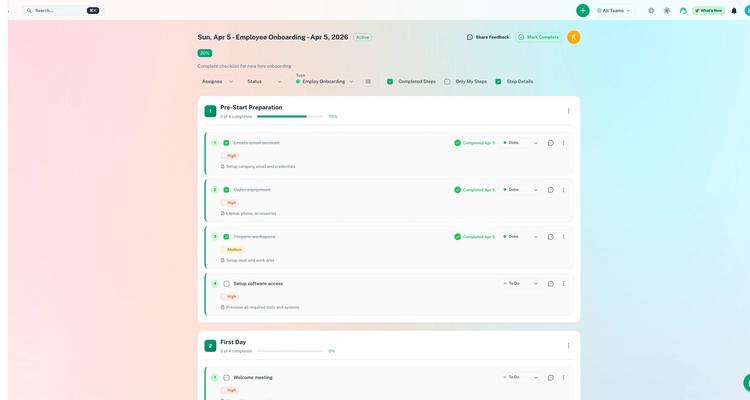
Each machine's dated items sit as records: the annual crane inspection, the 6-month LOLER exam on a telehandler, the hire company's certificate on a rented MEWP, the operator's card. AI reads the expiry date from each upload. Thirty days before a hired crane's examination runs out, the hire desk gets an email, SMS or WhatsApp with a no-login link to upload the new report, and your plant manager gets a Slack or Teams alert. If the report isn't in by day 7, it escalates to the project manager. A recurring checklist runs every Monday for scaffold inspections, assigned to the supervisor, with a record of who completed each step.
Across several jobs, the dashboard filters by site or by category, so you see every examination due in the next 30 days on one screen. When the HSE inspector or the owner's safety rep asks, you export the audit trail showing who uploaded each report and when.
Try it with your own plant certificates in 15 minutes
- Import your plant register as a CSV, with custom fields for serial number, hire firm and examination type.
- Set a 30, 14 and 7-day schedule that emails the hire desk and alerts your plant manager in Slack, escalating to the project manager if the report is still missing.
- Send one hire company a no-login request link for the current thorough examination report on a machine you have on site now.
Pricing: from $29 a month for one user up to $199 for 50 users, priced by how many dated records you hold. Start with a 14-day free trial, no card needed. The pricing page lists what each plan includes.
Good to know: ExpiryEdge runs beside your telematics or maintenance system rather than replacing it, so your mechanics keep the work orders they know and you get the certificates and the people behind them on time.
2. Tenna: best for mixed construction fleets
Tenna is built for construction and covers equipment, vehicles, tools and attachments, per its homepage. Its custom inspections run from QR codes in the Tenna app, work offline and sync later, and can require photos and signatures. Inspections recur daily, weekly or on events such as project mobilisation, and failed items automatically create maintenance requests assigned to a mechanic.
Telematics comes from Tenna's own trackers plus OEM and AEMP integrations, so meter readings drive preventive maintenance without anyone typing hours in.

Pricing: not published. The pricing page says core, add-ons and implementation are priced by asset count.
Watch out for: maintenance and safety are premium add-ons on top of the core platform, so get both in the quote.
3. HCSS Equipment360: best for heavy civil maintenance shops
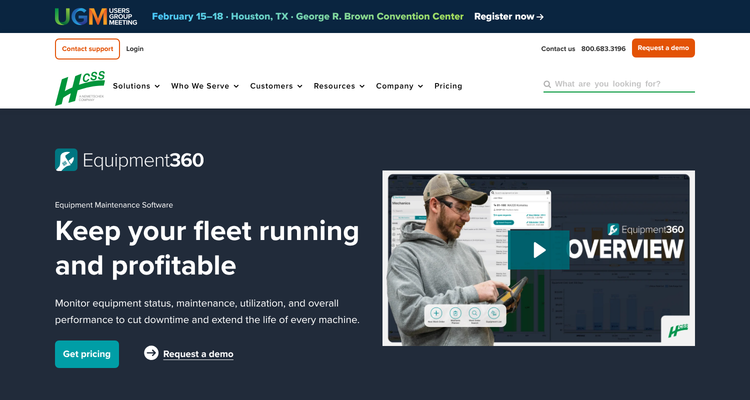
Equipment360 is HCSS's heavy equipment maintenance software for fleets of about 50 to 2,000+ assets. It schedules preventive maintenance from hours, mileage or dates, and turns inspection findings into work orders automatically. HCSS says you can set alerts for equipment certifications, inspections and work order due dates. Mechanics work from a mobile app with photos, parts and shift time.
Pricing: not published. The pricing page offers a custom quote.
Watch out for: it's a maintenance shop system. A small contractor with 15 machines may find it more than they need.
4. ToolWatch (AlignOps): best for tool rooms and small equipment
ToolWatch is now part of AlignOps, and toolwatch.com redirects to alignops.com. The ToolWatch page describes barcode, GPS and Bluetooth tracking of tools and equipment across jobsites and warehouses, service reminders with maintenance history, and certification management that limits equipment to certified operators with alerts before certifications expire.
Pricing: not published. The AlignOps pricing page lists Essentials, Pro and Enterprise tiers without prices.
Watch out for: the ToolWatch page doesn't mention inspections. AlignOps sells inspections through its separate SafetyReports product.
5. Fleetio: best published pricing for vehicles plus yellow iron
Fleetio's construction page covers custom DVIR-style forms per equipment type, defects that feed scheduled service, PM schedules by engine hours, and telematics links to Caterpillar VisionLink and John Deere Operations Center.
Pricing: published. The pricing page lists Essential at $4 per asset a month billed yearly ($5 monthly), Professional at $7 and Premium at $10, with a 14-day trial.
Watch out for: Fleetio grew up in vehicle fleets. Check which inspection and reminder features sit in your tier, because the pricing table marks some as limited.
6. Mitti (formerly SafetyCulture): best for custom checklists across many sites
SafetyCulture now trades as Mitti. Its inspections offer a drag-and-drop form builder, a large template library, scheduled checks, offline use and failed responses that trigger follow-up actions. The asset tracking module keeps an asset register with documents and an activity trail per asset, and schedules servicing by usage or time.
Pricing: the pricing page shows $0 for up to 10 seats with 5 active templates, and Premium at $24 a seat a month billed yearly.
Watch out for: it isn't built for plant. Expect to build your own crane, MEWP and scaffold templates.
ExpiryEdge as an alternative to Tenna
We put ExpiryEdge first because a lapsed examination report parks a machine just as surely as a breakdown, and that report comes from someone outside your company. Choose ExpiryEdge over Tenna when your fleet is small or mostly hired. A contractor who rents cranes, MEWPs and telehandlers job by job doesn't need GPS trackers on them. They need each hire company's current examination report on file before the machine works, and a reminder before it runs out.
ExpiryEdge also covers the paperwork Tenna doesn't focus on: the operator's NCCCO or CPCS card, the lift plan sign-off, the insurance certificate from the hire firm. One record per machine and one per person.
Tenna is still the right call if you own a mixed fleet, want telematics-driven maintenance and need crews to run daily inspections with failed items turning into repairs. Plenty of owners pair the two, using Tenna for the machines and ExpiryEdge for the certificates and the outside people behind them.
Frequently asked questions
Under 29 CFR 1926.1412, a competent person inspects before each shift, a documented monthly inspection is kept for three months, and a qualified person does an annual inspection kept for 12 months. Tenna, HCSS and ExpiryEdge can all schedule the recurring dates.
HSE says every 6 months for equipment that lifts people and for all lifting accessories, and every 12 months for other lifting equipment. A competent person's examination scheme can set other intervals. Track each machine's next due date. Then ask for the report early, so it doesn't lapse.
In the US, a competent person must inspect scaffolds before each work shift under 29 CFR 1926.451(f)(3). In the UK, construction working platforms over 2 metres must have been inspected within the previous 7 days under the Work at Height Regulations 2005.
It depends on who prices openly. Fleetio starts at $4 per asset a month on a yearly bill, and ExpiryEdge runs $29 to $199 a month for the whole team. Mitti costs nothing for up to 10 seats. You'll need a quote from Tenna, HCSS Equipment360 or ToolWatch.
Yes, with ExpiryEdge. You send the hire company a request link, they upload the thorough examination report without an account, and ExpiryEdge reads the expiry date and reminds them before the next one is due.
Not safety or OSHA compliance advice
This article is for general informational purposes and does not constitute formal OSHA or workplace-safety compliance advice. Safety regulations and standards (OSHA, state plans, EU OSHA, AS/NZS, etc.) vary by jurisdiction and change. Consult a qualified safety professional or your regulator for the specifics of your operation.