Guide · Germany · Vehicles and work equipment

UVV inspection in Germany: what is checked, how often, by whom?

"UVV" is short for the accident prevention regulations of the German statutory accident insurers. For company vehicles, forklifts and cranes they require an inspection by a competent person at least once a year, in addition to the vehicle roadworthiness test (HU). Here is which rule applies to what, and how to keep the dates.

Start Free Trial
No credit card required · Setup in minutes
UVV inspections - depot northSearch recordsCompany car M-EE 204Fleet14 MarValidTruck M-EE 311Workshop16 NovExpiringForklift FT-03Warehouse02 MayValidLoader crane LK-1Workshop01 OctExpired

Last updated · ExpiryEdge editorial team

Quick answer

A UVV inspection is the recurring safety check that German accident prevention regulations require for work equipment. Company cars, vans and trucks must be inspected by a competent person when needed and at least once a year (DGUV Regulation 70 section 57), forklifts at most a year apart (DGUV 68 section 37) and truck-mounted loader cranes at least yearly (DGUV 52 section 26). Results must be recorded.

Reference

UVV inspection intervals by equipment

The minimum intervals from the accident prevention regulations. The employer's risk assessment can set shorter intervals, for example for heavily used equipment.

UVV inspection intervals by equipment
EquipmentIntervalBasisInspected by
Company cars, vans and trucksWhen needed, at least once a yearDGUV Regulation 70 § 57Competent person (Sachkundiger)
Daily check before each shiftBefore every shiftDGUV Regulation 70 § 36Driver
Forklift trucks incl. attachmentsAt most 1 year apartDGUV Regulation 68 § 37Competent person
Forklifts and pallet trucks - pre-use checkBefore each use, for obvious defectsBetrSichV § 4 (5)Operator
Truck-mounted loader cranesAt least once a yearDGUV Regulation 52 § 26Competent person
Tail liftsAt least once a year (as part of the vehicle or per risk assessment)DGUV Regulation 70 § 57 / BetrSichVCompetent person
Employees' private cars used for businessNo UVV inspection duty for the employerBGN ASI 7.20-
The UVV inspection is separate from the roadworthiness test (HU) under the German road traffic licensing regulations; one does not replace the other. Records must be kept at least until the next inspection. Summary for orientation, last reviewed October 2026 - not legal advice.
What people ask

UVV inspection in practice

Is the UVV inspection mandatory for company cars?

Yes, when the vehicle is used by the business as work equipment, including pool cars and company cars driven by employees. The obligation is on the company. Employees' private cars used for business trips are not covered by the employer's UVV duty, but the employer should still make sure they are roadworthy and that the driver holds a valid licence.
Who may carry out the inspection?

A competent person (Sachkundiger): someone who, through training and experience, has enough knowledge of the equipment and the regulations to judge its safe condition. In practice that is often a qualified workshop, a testing organisation or a trained in-house technician. The accident insurer recommends that workshop invoices state the UVV inspection explicitly.

What happens if the UVV inspection has lapsed?

There is no grace period in the regulation. Using uninspected equipment breaches accident prevention rules, and after an accident the accident insurer and liability insurer will look at the inspection records. Book the inspection immediately and decide, based on the daily checks, whether the equipment can stay in use until then.

How is it documented?

Record the date, the inspector, the result and any defects, for example in an inspection book, an inspection card or a report, and keep it at least until the next inspection. A test label on the vehicle or forklift shows the next due date at a glance.

At a glance

Which rule applies to which equipment

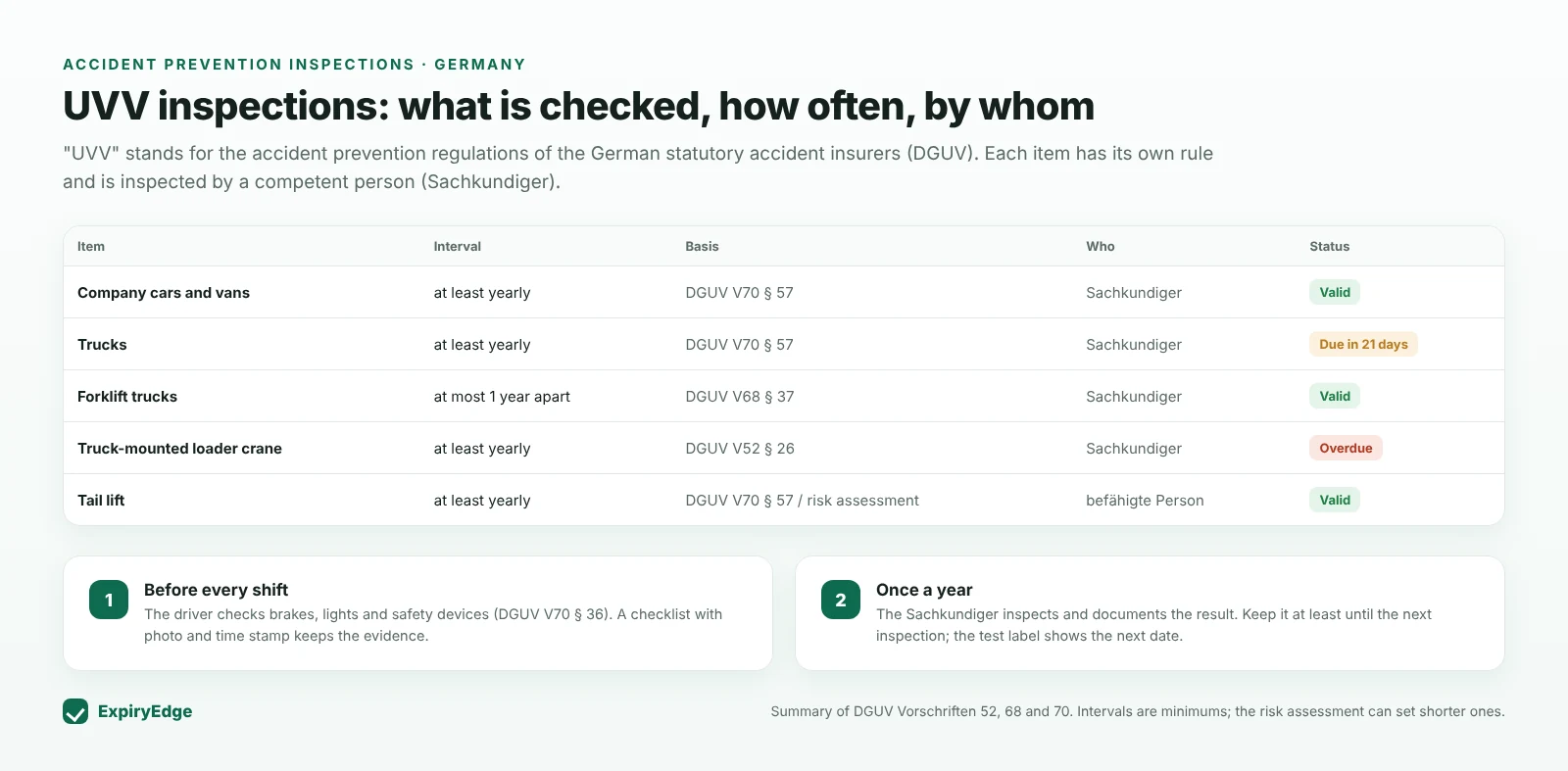
Table of UVV inspections in Germany: company cars and trucks at least yearly under DGUV 70 section 57, forklifts at most 1 year apart under DGUV 68 section 37, loader cranes yearly under DGUV 52 section 26, tail lifts yearly, with status and the two levels of daily driver check and annual inspection
Summary of DGUV Regulations 52, 68 and 70.
How it works

How to organise UVV inspections for a fleet or warehouse

1
1. List every vehicle and item of equipment

Company cars, vans, trucks, forklifts, pallet trucks, loader cranes and tail lifts, each with its location and the person responsible.

2
2. Set the interval and the inspector

At least yearly for vehicles, forklifts and loader cranes; shorter where your risk assessment says so. Decide which workshop or testing organisation inspects what.

3
3. Put the daily checks in writing

Drivers and forklift operators check before each shift. A short checklist with photo and time stamp turns that habit into evidence.

4
4. Book ahead of the due date

Workshops and testing organisations plan weeks ahead. Book at the 60-day mark so the vehicle is not taken out of service.

5
5. Record the result and close defects

File the report, update the next due date and track open defects until they are fixed.

Keeping it on schedule

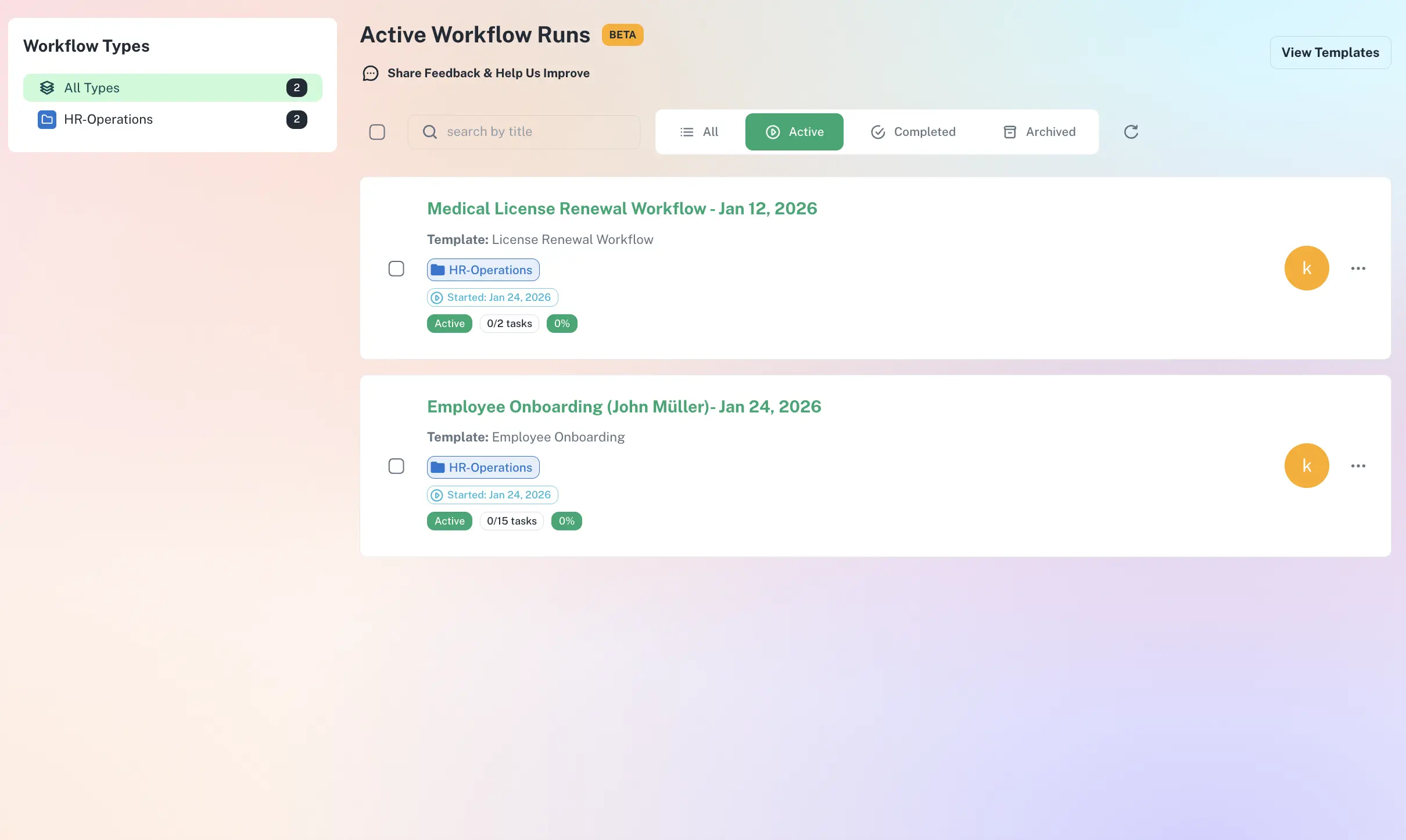
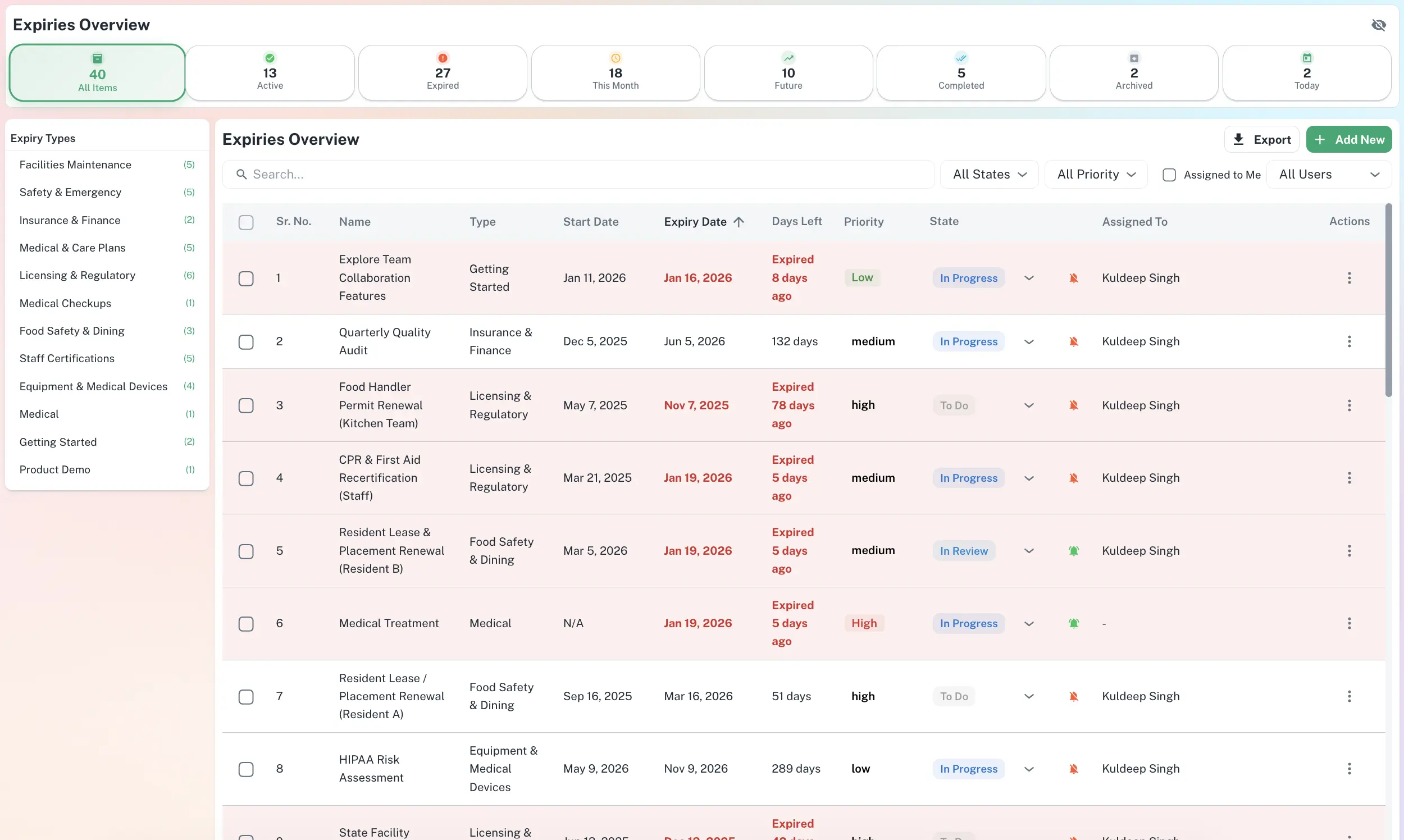
UVV dates in ExpiryEdge

One record per vehicle or machine
Next inspection, workshop and report in one place

Each vehicle, forklift and crane gets its UVV record with interval, responsible person, workshop and last report, next to its roadworthiness test, tachograph check and lease end. Reminders reach the fleet or warehouse manager 90, 60, 30 and 7 days before, by email, SMS, WhatsApp, Slack or Teams, and escalate if the date passes.

Recurring dates roll forward

HU, UVV and other dates per vehicle

Escalation when an inspection is overdue

ExpiryEdge dashboard showing vehicle and equipment inspection dates by status
Daily checks with evidence
Pre-shift checklists on the driver's phone

Turn the daily check into a checklist: each step can require a photo, a signature and a time stamp. Missed checks are flagged, and defects found on a check can start a follow-up task.

Photo, signature, time stamp and location

Assigned per vehicle or driver

Missed checks flagged

ExpiryEdge checklist for a pre-shift vehicle check in progress
Frequently asked questions

Yes for employers in Germany. Vehicles used as work equipment must be inspected by a competent person when needed and at least once a year (DGUV Regulation 70 section 57); forklifts at most a year apart (DGUV 68 section 37); truck-mounted loader cranes at least yearly (DGUV 52 section 26).

At least once a year for company vehicles, forklifts and loader cranes. The risk assessment may require shorter intervals, and drivers check obvious defects before every shift.

A competent person (Sachkundiger) with the knowledge and experience to judge the safe condition of the equipment, typically a qualified workshop, a testing organisation or a trained in-house technician.

The regulation has no grace period. Using uninspected equipment breaches accident prevention rules, and after an accident the inspection records will be checked. Book the inspection immediately and record the steps taken.

No. According to the accident insurer BGN, the employer has no UVV inspection duty for private cars that employees use for business trips. The employer should still check the driving licence and the car's roadworthiness.

No. The HU is required by road traffic law; the UVV inspection is required by accident prevention law. Both are needed and have their own due dates.

At most one year apart, by a competent person and including attachments (DGUV Regulation 68 section 37). Before each use, the operator checks the forklift for obvious defects.

Every UVV date for every vehicle and machine

Import your fleet and equipment list, set the intervals, assign owners. Free 14-day trial, no credit card.