
How Home Care Agencies Track Supervisory Visits and Care Plan Reviews: 6 Tools We'd Shortlist

ExpiryEdge is our first pick for any home care agency whose system doesn't warn you before a review date passes. It puts each 14-day supervisory visit, 60-day plan review and annual observation on a recurring record, reminds the supervising nurse by SMS, WhatsApp or Teams, and escalates to the clinical manager when nothing is logged, for $29 to $199 a month on top of whatever you already run.
If you want reviews scheduled inside one UK care platform, with rostering and care records, pick CareLineLive: it schedules carer and client reviews and spot checks, alerts you when they're due, and publishes its per-carer price. Birdie and AlayaCare tie care plan updates to the care record and keep a version history. Axxess suits Medicare-certified home health agencies whose nurses document the supervisory visit inside the visit note. AxisCare suits private-pay agencies that want care plan templates in their scheduler.
We make ExpiryEdge. The five care platforms below are described only from their own websites and help notes, opened on 7 November 2026, and we've linked the page behind each claim.
| Tool | Reminds the supervising nurse before each review (email, SMS, WhatsApp) | Escalates a missed review to the clinical manager | Families e-sign updated care plans from a link, no login | Runs spot checks as a scheduled checklist | Region and fit | Published pricing / free trial |
|---|---|---|---|---|---|---|
| ExpiryEdge Top pick | Yes, email, SMS, WhatsApp, Slack, Teams | Yes, built in | Yes, no-login link with e-signature | Yes, scheduled SOP checklists | US and UK, beside any care system | $29-$199/month, 14-day free trial |
| CareLineLive | Review notifications; late-visit alerts to office | Not stated | Not stated | Yes, carer and client reviews and spot checks | UK, full care platform | From £8.10 per carer/month, £120 minimum |
| Birdie | Not stated for review dates | Not stated | Not stated | Client auditing forms | UK, full care platform | From £200/month |
| AlayaCare | Not stated | Not stated | Not stated | Not stated | US, Canada, Australia | Not published, no free trial |
| Axxess | Not stated | Not stated | Not stated | Supervisory visit inside the visit note | US | Not published |
| AxisCare | Not stated | Not stated | Not stated | Care plan templates | US | Not published |
How we compared these tools
We looked at what a missed visit exposes. Does the nurse get warned before the date, and does a miss reach the clinical manager? Can a family member sign an updated plan without an account, and can the spot check run as a dated checklist? We also noted which country each tool serves and whether it shows a price. Region matters because the 14-day and 60-day rules are American and the agreed review date is CQC's. On 7 November 2026 we read each vendor's product, pricing and help pages, and checked the clocks in eCFR and CQC guidance. We didn't run paid trials. We make ExpiryEdge, so read its section as the maker's view.
The 14-day clock nobody notices until the chart audit
It has to make a dated promise happen: a nurse at the client's home, or a care plan re-read and signed, on or before a fixed day. Missing it is easy, because nothing breaks on the day you miss it.
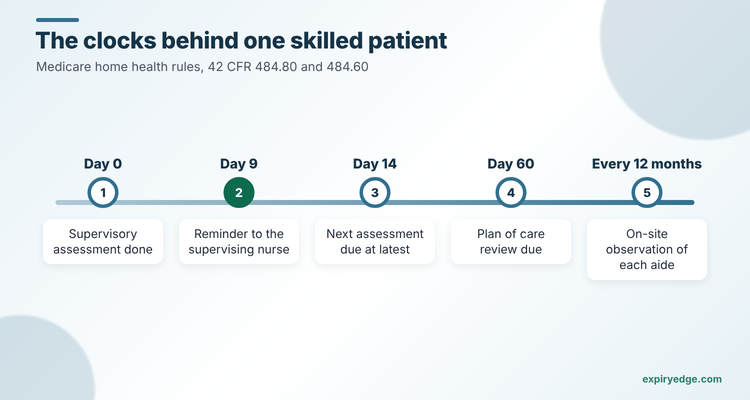
For Medicare-certified home health agencies, the dates are federal. Under 42 CFR 484.80(h), when a patient gets skilled services, a supervising professional must assess the aide's services at least every 14 days. When the patient gets aide services only, a registered nurse must visit on site every 60 days. And once a year, a nurse must watch each aide give care in the patient's home.
Care plans and assessments run on their own clocks. The plan of care must be reviewed at least every 60 days from the start of care, and the comprehensive assessment updated in the last 5 days of every 60, within 48 hours of a hospital return of 24 hours or more, and at discharge.
Non-medical personal care agencies follow state rules for supervisory visits, so the interval depends on where you operate. In England, CQC's Regulation 9 guidance says care plans should include an agreed review date and be reviewed whenever needs change. Regulation 18 expects ongoing supervision of staff, which most agencies meet with spot checks in clients' homes.
The 14-day clock is the one agencies miss most, because it runs per patient and restarts after every supervisory assessment. A nurse who's off sick for a week can push three or four patients past day 14 without anyone noticing until the chart audit. A missed 60-day review is easier to spot, but it often lands in the same week as the recertification paperwork, when nurses are busiest.
So the tracker has to hold many small clocks per client and per aide, warn the right nurse early enough to book the visit, and leave proof that it happened.
Ask every vendor what happens five days before a review
Write out every review clock you run. A Medicare-certified agency with 40 skilled patients has 40 14-day supervisory cycles, 40 60-day plan reviews and an annual observation per aide. A UK agency might have a 6-month review per client and a quarterly spot check per carer.
Then ask each vendor to show you, live, what happens 5 days before one of those dates. Who gets told, how, and what happens if they don't act? If the answer is "it appears on a report", you need reminders on top.
Finally, check the evidence. A surveyor wants to see the date, the nurse and what was found, not just a ticked box. Run one test review in each tool you shortlist and export the result. If you can't hand that file to an inspector as it is, keep looking.
For the rest of the sector picture, see the home care compliance software hub and our caregiver compliance tracking comparison. The recurring checks use case shows how repeat checklists work in ExpiryEdge.
1. ExpiryEdge: best for review-date reminders and escalation on top of any care system
With ExpiryEdge, the 14-day visit and the 60-day review stop slipping past unnoticed. The supervising nurse hears days ahead, the clinical manager hears the day after a miss, and you walk into a chart audit with the dates and signatures in one export.
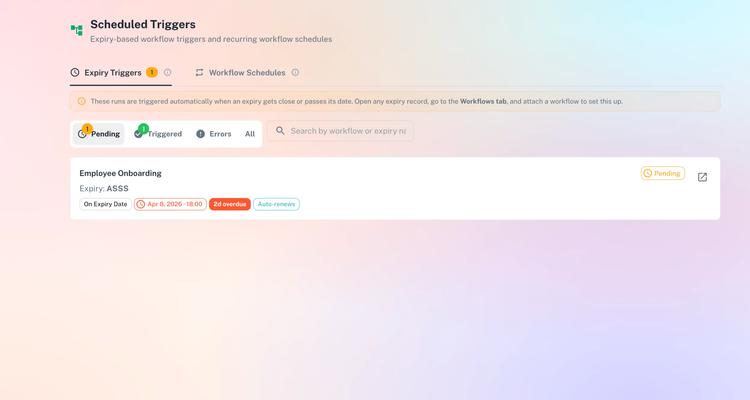
Each review is a dated record that repeats. A client gets a "care plan review" record every 60 days, or on the review date your plan sets, and an aide gets an "annual on-site observation" record, each owned by the supervising nurse. Reminders go out on your schedule, for example 10, 5 and 1 day before, by email, SMS, WhatsApp, Slack or Teams, and escalate to the clinical manager if nothing is logged. A scheduled SOP checklist runs the spot check itself (arrive on time, check the care log, observe moving and handling, sign off), so you see who did each step and when. When a plan changes, the client's daughter gets a no-login link to read and e-sign the update.
Try it with your own review dates in 15 minutes:
- Import your client list by CSV with a custom field for start of care, and set a care plan review record that recurs every 60 days (or on your agreed CQC review date).
- Give each review a 10/5/1-day schedule to the supervising nurse by SMS, with escalation to the clinical manager the day after.
- Build a spot-check checklist and schedule it to run quarterly for each carer.
Pricing: $29 a month on the smallest plan and $199 on the largest, with a 14-day free trial and no card needed. Plans by user count are on the pricing page.
Good to know: ExpiryEdge runs beside your EVV, rostering or clinical system rather than replacing it, so care notes and OASIS stay where they are. When a patient goes into hospital, change the record's date and the reminders follow it.
2. CareLineLive: best for UK agencies scheduling reviews and spot checks
CareLineLive is a UK home care management system with rostering, care records and eMAR. Its compliance and reporting page says you can schedule carer and client reviews and spot checks, get notifications for expiry reviews, and see a visual training matrix with each carer's gaps.
The care planning page adds assessment templates and custom forms for your own risk assessments, audits and care plans. Alerts for late or missed visits go to office managers.
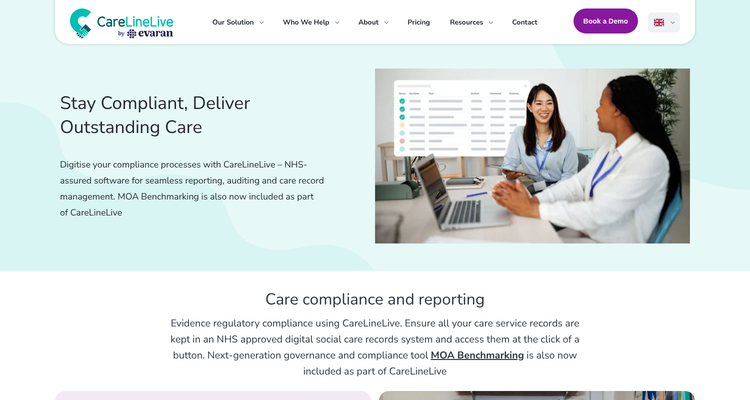
Pricing: the pricing page lists £8.10 per carer a month for eRoster, £19.70 for bring-your-own-device and £45 with managed phones, excluding VAT. Office users are free. There's a £120 monthly minimum and contracts are typically 12 months.
Watch out for: CareLineLive is a full management system. If you only want review reminders, it's more than you need.
3. Birdie: best for UK agencies that want reviews tied to the care record
Birdie is a UK home care platform covering care management, rostering and finance. Its quality and compliance page says care plan updates automatically trigger assessment reviews, and that you can measure how often care plans are updated and reviewed. It also offers client auditing forms and audit trails of changes to client records.
Pricing: the pricing page says plans start from £200 a month, based on hours of care scheduled. Per-plan prices need a demo. The SmartTools AI add-on is £3.50 per recording hour, with 3 hours free.
Watch out for: the page doesn't describe staff spot checks or alerts before a set review date. Ask how a 6-month review date would surface.
4. AlayaCare: best for larger agencies that want plan history for audits
AlayaCare's care planning builds plans from your own libraries, links them to visits and scheduling, and updates them at reassessment with a full version history for audits. Its Clinical Agent can draft a recommended care plan for the clinician to accept or change.
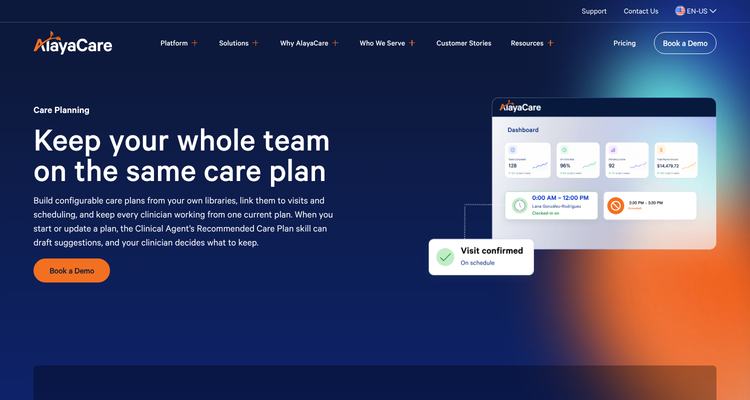
Pricing: the pricing page says pricing is custom, depending on size, service lines, regions and modules. There's no free trial.
Watch out for: the care planning page doesn't mention review-date alerts or supervisory visits by name.
5. Axxess: best for Medicare-certified home health agencies
Axxess sells home health, home care and hospice software. A software update note says Axxess CARE lets clinicians complete supervisory visits from within skilled nurse and therapy visit notes on the mobile app, to support aide supervisory visits every 14 days. Its home health software page covers OASIS support.
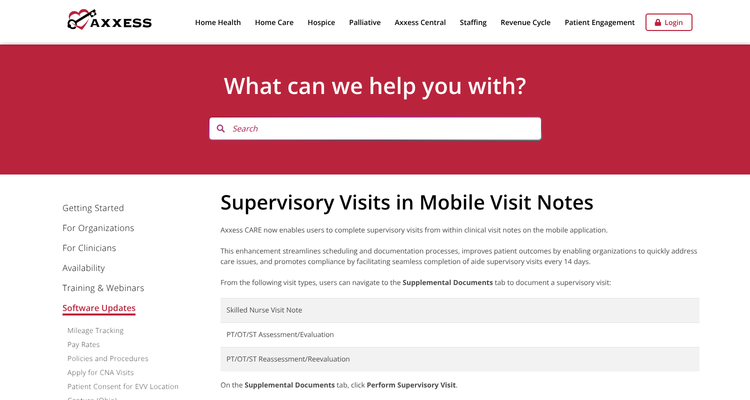
Pricing: not published; see a demo.
Watch out for: the pages we read don't describe due-date alerts, so ask how the 60-day and annual visits are flagged.
6. AxisCare: best for private-pay agencies with care plan templates
AxisCare's home health page offers adaptable care plan templates, and its product tours include a personalised care plan tour and ADL setup.
Pricing: not published; value-based pricing on request.
Watch out for: the public pages don't mention supervisory visits or review alerts.
ExpiryEdge as an alternative to Birdie
We put ExpiryEdge first because the review that gets missed is the one nobody was reminded about, and that works the same whatever care system you use. Birdie runs rostering, care records and finance. ExpiryEdge is built to sit beside a platform like that, so a UK agency that wants one care platform keeps Birdie for the care record.
It is an alternative for one piece of the job. If your reviews and spot checks live in a spreadsheet beside Birdie, or in a manager's diary, ExpiryEdge gives each one a date, an owner, reminders and escalation, at a published price. It also covers dates that sit outside the care record: staff supervisions, DBS rechecks, vehicle insurance and your own CQC registration items.
Stay with Birdie alone if its review tracking already tells you, before the date, which plans are due. One system beats two.
Frequently asked questions
Under 42 CFR 484.80(h), if the patient receives skilled services, the aide's care must be assessed at least every 14 days. If the patient receives aide services only, a registered nurse must visit on site every 60 days. A nurse must also observe each aide giving care once a year.
Federal rule 42 CFR 484.60 says the plan of care must be reviewed and revised as needed at least every 60 days from the start of care. The full patient assessment is updated in the last 5 days of every 60-day period, after a hospital stay of 24 hours or more, and at discharge.
CQC's Regulation 9 guidance doesn't set one interval. It says care plans should include an agreed review date and be reviewed whenever a person's needs change, or when they move between services. Many agencies set a fixed review date and track it in CareLineLive, Birdie or ExpiryEdge.
CareLineLive lists £8.10 to £45 per carer a month with a £120 monthly minimum. Birdie starts from £200 a month. ExpiryEdge publishes its prices, from $29 to $199 a month. AlayaCare, Axxess and AxisCare quote on request.
Only if it doesn't warn you before a review is due. Many platforms store the plan and its history but show overdue reviews only in a report. A reminder tool such as ExpiryEdge alerts the nurse days ahead and escalates to a manager if the date passes.