
How Retail and Franchise Area Managers Run Store Audits: 6 Tools We'd Shortlist

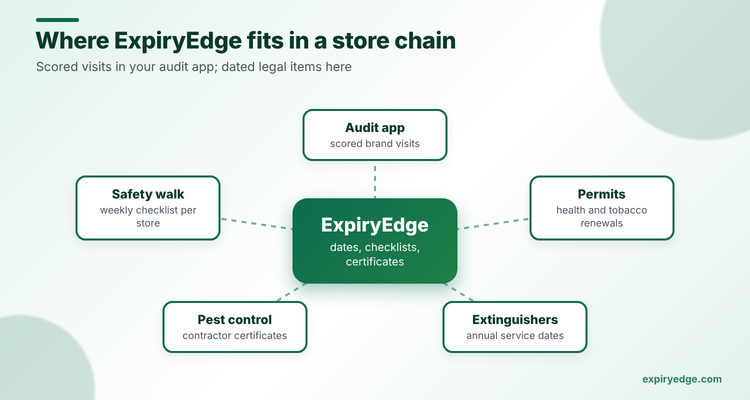
ExpiryEdge is first on our list for chains whose store audits keep finding the same dated failures: an extinguisher service overdue, a health permit expired, a pest control certificate missing. It runs the weekly safety walk as a recurring checklist at every store, reminds the store manager by WhatsApp or SMS before each permit and service date, and gets the contractor to upload the new certificate through a no-login link, for a flat $29 to $199 a month.
If what you need is scored visits, with photos, weighted questions and stores ranked by score, pick Mitti (the new name for SafetyCulture's inspection app), or add it alongside ExpiryEdge. YOOBIC suits large retailers that want visits, tasks, store comms and training in one app. Crunchtime suits restaurant franchises, GoAudits is the cheapest per user, and SmartSense (formerly Jolt) pairs checklists with sensors.
We make ExpiryEdge. What we report about Mitti, YOOBIC, Crunchtime, GoAudits and SmartSense comes from those companies' own sites and help docs on 7 November 2026, linked where we use it.
| Tool | Weekly store checklists scheduled at every store | Reminds the store manager before each permit and service date (email, SMS, WhatsApp) | Contractors upload service certificates from a link, no login | Escalates overdue items to the area manager | Published pricing / free trial | Scored visits with photos |
|---|---|---|---|---|---|---|
| ExpiryEdge Top pick | Yes, scheduled SOP checklists | Yes, email, SMS, WhatsApp, Slack, Teams | Yes, no-login link | Yes, built in | $29-$199/month flat, not per seat; 14-day free trial | Pair it with Mitti |
| Mitti (SafetyCulture) | Scheduled audits with due notifications | Not stated | Not stated | Actions, approvals or alerts from any answer | $0 up to 10 seats; $24-$29 a seat/month | Yes, photos with annotations |
| YOOBIC | Conditional checklists; predefined tasks for recurring issues | Not stated | Not stated | Corrective actions with owners and follow-up | Not published, priced by stores and modules | Yes, instant visit scores |
| Crunchtime Ops Execution | Opening checklists and line checks | Not stated | Not stated | Not stated | Not published | Audits with AI photo checks |
| GoAudits | Daily self-inspections to monthly visits | Not stated | Not stated | Actions assigned automatically | $10-$30 a user/month yearly; 14-day trial | Yes, photos with annotations |
| SmartSense (Jolt) | Opening and cleaning checklists | Missed-task alerts | Not stated | Not stated | Not published, quote | Checklists more than scored visits |
How we compared these tools
We compared what stops the same finding coming back every visit. Does the weekly safety walk run on a schedule at every store? Does the store manager hear before a permit or service date, and can the contractor send the new certificate without an account? Does an overdue item reach the area manager? Published pricing tells a 30-store chain what it'll pay. Scored visits get the last column because they're the audit apps' speciality. On 7 November 2026 we read each vendor's product pages, pricing and help docs, and checked the legal items an audit should catch against OSHA 1910.37 and 1910.157 and GOV.UK's fire safety guidance. We didn't run paid trials of every app. We make ExpiryEdge, so keep that in mind when you read its section.
Brand standards and legal standards: the two lists on every visit
A store visit checks two kinds of thing. Brand standards are yours: the window display, the planogram, the uniform, the till queue. Legal standards come from regulators, and they're the ones that cost money when they slip.
Fire safety is the obvious example. In the US, OSHA's exit route rule says exit routes must be free and unobstructed, with no materials placed in them even temporarily. That's the stockroom door blocked by a delivery on a Saturday. OSHA's extinguisher standard requires a visual check every month and a maintenance check every year, with the annual date recorded.
In the UK, the GOV.UK fire safety guidance makes the employer, owner or occupier the "responsible person". You must carry out a fire risk assessment and review it regularly, and local fire and rescue authorities can inspect and issue notices.
Most chains also want proof for themselves. When a customer trips on a box in an aisle, the useful record isn't the policy, it's the dated checklist showing someone walked that aisle at 9am and the photo of what they saw.
So a good audit tool does three jobs. It makes the checklist quick enough that managers finish it. It turns a "no" into a task with an owner and a date. And it proves later that the fix happened.
- Exit routes and fire doors clear, exit signs lit
- Fire extinguishers present, monthly check tag signed, annual service in date
- Fire risk assessment reviewed (UK) and evacuation plan posted
- Business licence, health or tobacco permits displayed where required
- First aid kit stocked and accident book in place
- Ladders and steps inspected
1. ExpiryEdge: best for recurring store checklists tied to permit and certificate dates
With ExpiryEdge, your area managers stop writing up the same "extinguisher service overdue" finding every visit. The weekly safety walk happens at every store with a name against each step, permits and service certificates get renewed before they lapse, and you pay one flat fee however many store managers use it.
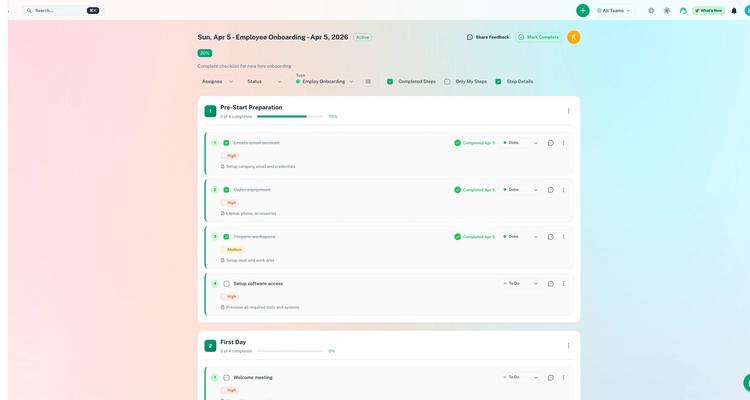
Store routines run as SOP workflow checklists. Build a template once, such as "Monday fire walk" with steps for exits, extinguisher tags and the first aid kit, schedule it weekly at every store, assign each step and watch progress live. The extinguisher service, alarm inspection, business licence and health permit for each store are records with expiry dates and reminders by email, SMS, WhatsApp, Slack or Teams. When the annual extinguisher service is 7 days out and nobody has booked it, the area manager gets an escalation. The contractor uploads the new service certificate through a no-login link, and everything lands in an exportable audit log. See our SOP software page.
Try it with your own stores in 15 minutes
- Build a "Monday fire walk" checklist template with steps for exits, extinguisher tags and the first aid kit, and schedule it weekly for three stores.
- Import each store's extinguisher service, alarm inspection and health permit dates by CSV.
- Set reminders at 30 and 7 days, with escalation to the area manager when nobody has booked the service.
Pricing: a flat monthly fee of $29, $49, $99 or $199, not a per-seat charge, with a 14-day free trial and no card. Plan limits for users and dated items are on our pricing page.
Good to know: for a small chain, ExpiryEdge can be the whole store-check system. If your field team runs scored visits and ranks stores by score, keep that in Mitti, YOOBIC or GoAudits and let ExpiryEdge handle the dates and contractor paperwork around it.
2. Mitti (SafetyCulture): best store audit app for most chains
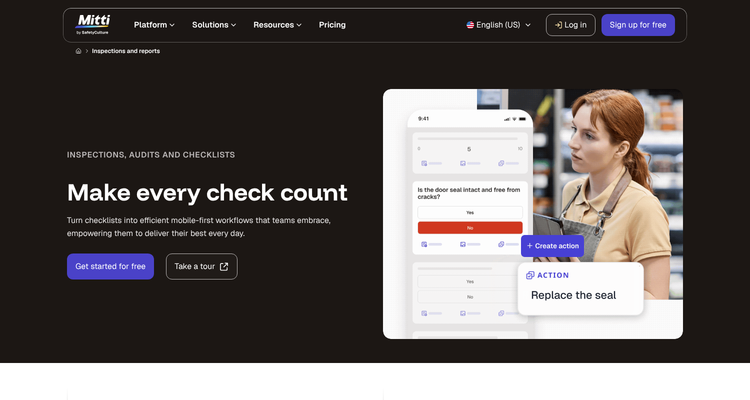
SafetyCulture's inspection app is now sold as Mitti, and safetyculture.com links redirect to mitti.com. Its inspections page describes a drag-and-drop checklist builder, a library of over 9,000 templates, and AI that turns an uploaded photo or PDF into a checklist. Staff add photos and video with annotations. Any answer can trigger an action, approval or alert, follow-ups go to named people, checks can be scheduled, and the app works offline.
Its retail audit page adds scheduled audits with due notifications and custom reports for stakeholders, on iOS, Android or web.
Pricing: the pricing page lists $0 for teams of up to 10, Premium at $24 a seat a month billed yearly or $29 monthly, and custom Enterprise pricing.
Watch out for: the $0 tier allows five active inspection templates. A chain with separate opening, closing, safety and visit checklists will hit that quickly.
3. YOOBIC: best for large retailers
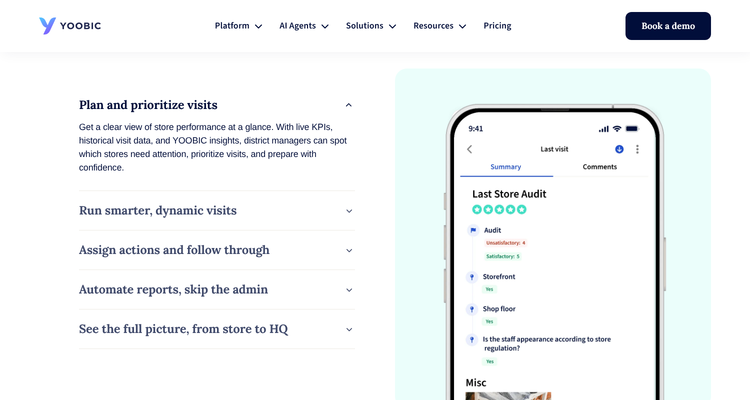
YOOBIC is a frontline platform for retail and hospitality, with tasks, store comms, learning and AI tools in one app. Its store visits page describes conditional checklists that adapt to each store, photos and scores captured on the shop floor, instant visit scores and shareable reports. You create corrective actions, assign owners and track follow-up, and set predefined tasks for recurring issues.
Pricing: the pricing page says YOOBIC is priced by number of stores and the modules you choose. No figures are published.
Watch out for: you'll need a sales call. The store visits page doesn't mention offline use.
4. Crunchtime Ops Execution: best for restaurant franchises
Crunchtime Ops Execution (formerly Zenput) covers line checks, opening checklists, audits and food safety tasks, per its product page. AI checks submitted photos and flags ones that are blurry or show the wrong thing. It handles multibrand franchise hierarchies, and you can pull a location's completed work for a date range to share with a health department.
Pricing: not published.
Watch out for: it's built for restaurants. A clothing or phone retailer will find much of it irrelevant.
5. GoAudits: best low per-user price
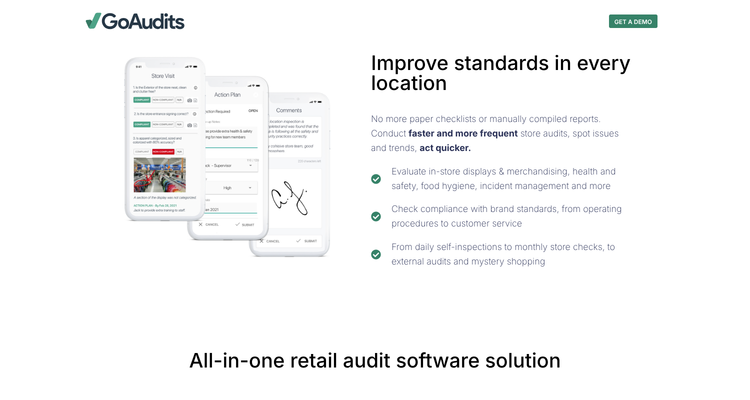
GoAudits' retail page covers checks from daily self-inspections to monthly store visits and mystery shopping. Auditors add photos, annotations and comments, corrective actions go to the right people automatically, reports are emailed when an audit closes, and the app works fully offline.
Pricing: the pricing page lists Starter at $10 and Enterprise at $30 per user a month on yearly billing, with a 14-day trial and no card.
Watch out for: monthly prices aren't listed, only the yearly rate with a 20% discount.
6. SmartSense (formerly Jolt): best when checklists need sensor data
Jolt has merged with SmartSense. Its Operate product runs opening and cleaning checklists with built-in SOPs and training videos, sends alerts when a task is missed, and won't let a corrective action close without evidence such as a photo, signature or QR scan. A cloud dashboard shows every location.
Pricing: not published. You request a quote.
Watch out for: the page describes checklists more than scored store visits, so test a full district manager visit before you buy.
ExpiryEdge as an alternative to SafetyCulture (Mitti)
We put ExpiryEdge first because, in most stores, the audit findings that cost money are dates that slipped, and that's the job it does best. But keep Mitti if your area managers do scored visits with photos on a tablet and need to compare stores by score. That's its job, and the two run well side by side.
Use ExpiryEdge alongside it, or instead of it, when the failures your audits find are mostly dates. A visit that keeps flagging "extinguisher service overdue" or "permit not displayed" is a reminder problem, not an audit problem. ExpiryEdge chases the contractor before the date, escalates when nobody acts, and runs the weekly safety walk as a recurring checklist.
Here's a typical split. The district manager's monthly visit, with scores and photos of the displays, stays in the audit app. The fire extinguisher service, alarm test certificate, pest control contract and each store's business licence go into ExpiryEdge, where the contractor uploads the new certificate through a link and the store manager gets a WhatsApp message a month before anything lapses.
For a small chain, ExpiryEdge can replace a separate audit app outright. Ten stores with a weekly safety checklist and 12 dated items each fit the $49 Pro plan, five users included.
Run your real visit in two apps, on a real store floor
Write down your actual visit: the questions, which ones are scored, and what happens after a "no". Then run that exact visit in two apps on a real store floor, with a real phone and weak signal. The app your managers finish fastest is usually the one they'll keep using.
Keep the visit short. A 40-question checklist done properly beats a 150-question one that managers rush through in the car park. Split it: a daily or weekly self-check the store team runs, and a longer monthly visit by the area manager that checks the self-checks were real.
Next, check what happens to the fix. Can you see every open action across 30 stores, sorted by age? Does the store manager get it on their phone? Can they close it only with a photo?
Finally, list the items your audits keep finding out of date. If most are licences, permits and service certificates, track those in ExpiryEdge and keep the audit app for brand standards. Our franchise compliance comparison and the franchise and retail compliance guide cover the rest, and our guide to repeatable safety inspection checklists helps you write the checklist itself.
Frequently asked questions
Mitti charges $0 for up to 10 seats with five active templates, then $24 to $29 a seat a month. GoAudits lists $10 to $30 per user a month on yearly billing. ExpiryEdge runs $29 to $199 a month. YOOBIC, Crunchtime and SmartSense quote on request.
SafetyCulture's inspection app is now sold under the Mitti name. Links on safetyculture.com redirect to mitti.com, and the Mitti site carries a "by SafetyCulture" label. Pricing and plans are listed on mitti.com.
Two things. First, your own brand standards: the window, the shelves, how staff greet people. Second, the legal checks. In the US you'd confirm exit routes are clear and the fire extinguisher's monthly check is signed, as OSHA requires. In the UK you'd check the fire risk assessment is current. Add licences and permits too, so an expired one gets spotted.
Yes. Mitti, YOOBIC, GoAudits and Crunchtime assign follow-up actions from failed questions. SmartSense won't close an action without evidence such as a photo. ExpiryEdge assigns checklist steps and escalates overdue items to a manager.
Probably not for scored visits, because FranConnect's Optik IQ already captures audit findings and assigns corrective actions. You may still want a tracker such as ExpiryEdge for the permits, certificates and contractor service dates those audits keep flagging.