Best Alcohol License Renewal Reminder Software in 2026

Best Alcohol License Renewal Reminder Software in 2026

TL;DR:
Automated alcohol license renewal software helps businesses track permits, send timely alerts, and prevent accidental lapses. It centralizes data, automates multi-channel reminders, and assigns responsibility to ensure continuous compliance. Proper setup and regular review of workflows maximize its effectiveness and reduce administrative workload.
Alcohol license renewal reminder software is defined as a compliance tracking system that automates deadline alerts, centralizes permit data, and notifies responsible staff before state liquor control commission deadlines arrive. Missing a renewal date does not just mean paperwork. It means a forced closure, lost revenue, and potential fines from agencies like the Alcohol and Tobacco Tax and Trade Bureau or your state’s liquor authority. The best alcohol license renewal reminder software removes that risk by replacing manual calendar checks with automated, multi-channel notifications that fire weeks or months before a deadline. Expiryedge is one platform built specifically for this kind of deadline-driven compliance work.
What features define the best alcohol license renewal reminder software?
The best renewal reminder software does three things well: it stores every license in one place, it sends alerts through multiple channels before deadlines hit, and it gives managers a real-time view of compliance status across all locations.

Centralized license database. Every permit, its issuing agency, its expiration date, and its renewal fee should live in a single record. Scattered spreadsheets fail because one person updates them and another does not. A centralized database with status fields eliminates that gap.
Multi-channel automated alerts. Automated reminder software sends renewal notices by email, SMS, and messaging apps like Slack before any deadline. That redundancy matters because a single email can be missed, but a Slack message followed by an SMS rarely is.
Customizable lead times. Not every license renews on the same schedule. A state liquor license in Illinois requires renewal 90 days before expiration, complete with insurance certificates and fees. Your software should let you set a 90-day, 60-day, and 30-day alert sequence for each permit type independently.
Calendar and task management integration. Connecting renewal deadlines to Google Calendar or Slack keeps license dates visible inside the tools your team already uses every day. Deadlines that live only inside a compliance app get ignored.
Reporting dashboards. Central dashboards displaying license status and upcoming renewals reduce missed deadlines and improve communication across teams. A dashboard that shows “3 licenses expiring in the next 30 days” is more useful than a buried spreadsheet tab.
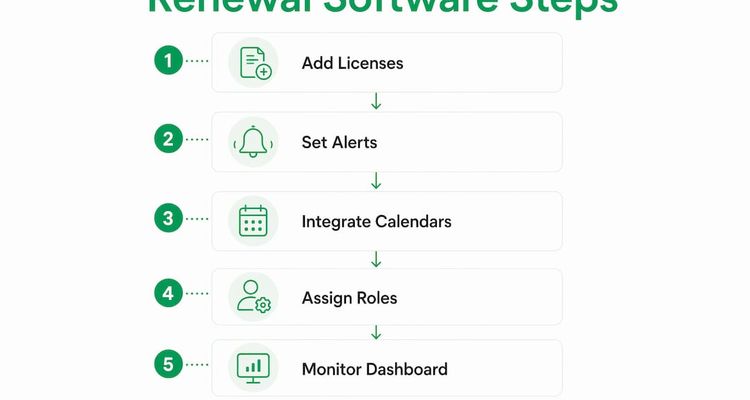
Role-based access controls. Not every employee needs to edit license records. Role-based permissions let you assign view access to location managers and edit access to your compliance officer, reducing the risk of accidental data changes.
Pro Tip: Set up three alert tiers for every alcohol permit: 90 days out for document gathering, 30 days out for submission, and 7 days out as a final escalation. This three-tier approach catches nearly every renewal before it becomes an emergency.
How does automation improve compliance and reduce manual workload?
Automation shifts your staff from managing calendars to managing exceptions. That distinction sounds small, but it changes how your team spends its time every week.
Manual renewal tracking forces someone to open a spreadsheet, check dates, send reminder emails, and follow up. That process breaks down when the person responsible is sick, changes roles, or simply forgets. Renewal software automates tracking and flags lapsed items, so staff only intervene when something goes wrong, not as part of a routine daily check.
Automation also handles portal verification. Software can log into state and city licensing portals automatically, checking renewal status without requiring a staff member to do it manually. That means your records stay current even when no one is actively monitoring them.
Escalation workflows add another layer of protection. When a license approaches its expiration without a completed renewal, the system can escalate late licenses with penalties and trigger required document updates per license type. That automatic escalation prevents the scenario where a missed reminder sits unnoticed for weeks.
“The goal of renewal software is to shift staff focus from managing calendars to managing exceptions through automated tracking, fee collection, and escalation processes.”
Weekly renewal digests round out the automation picture. Weekly renewal digests showing expiring permits with deadlines and renewal URLs, delivered via Slack or email, give managers a single weekly touchpoint instead of constant manual checking. That predictable rhythm makes compliance feel manageable rather than chaotic.
Steps to implement alcohol license renewal reminders effectively
A well-configured reminder system requires upfront setup work. Skipping that work produces a system that alerts you at the wrong times or for the wrong licenses.
- Inventory every license. List all permits your business holds, including the issuing agency, license number, expiration date, renewal fee, and the contact at the agency. Multi-location operators often discover licenses they had forgotten about during this step.
- Set lead times by license type. Liquor license renewals typically require 90–120 days of lead time depending on jurisdiction. Set your first alert at the outer edge of that range.
- Integrate with your daily tools. Connect your reminder software to Google Calendar and Slack so renewal dates appear in the systems your team checks every morning.
- Create renewal runbooks. A runbook is a short checklist for each license type: which documents to gather, which fees to pay, and which portal to use. Attach the runbook to the license record so whoever handles the renewal has clear instructions.
- Assign an owner to each license. Every permit needs one named person responsible for its renewal. Shared responsibility means no responsibility.
- Update records after each renewal. Once a license renews, update the expiration date immediately. A stale record produces false alerts and erodes trust in the system.
- Review workflows annually. Renewal fees change, agencies update their portals, and your license portfolio grows. A yearly review keeps the system accurate.
Pro Tip: For businesses operating across multiple states, build a compliance calendar that maps every renewal deadline by quarter. A quarterly view reveals clusters of simultaneous renewals that would overwhelm a single staff member if left unplanned.
Common pitfalls in alcohol license management and how software fixes them
Manual renewal tracking fails in predictable ways. Knowing those failure points helps you choose software that addresses them directly.
- Missed reminders from calendar errors. A manually entered calendar event gets deleted, moved, or simply ignored. Most states won’t notify you before your license expires, so a missed calendar event means a lapsed license with no safety net.
- Complex multi-license workflows. A single restaurant location may hold a state liquor license, a city beer and wine permit, a food handler’s permit, and a health department certificate. Each has a different renewal date, fee, and agency. Manual tracking across four agencies in parallel is where errors multiply.
- Variable fees and permit conditions. Renewal fees change year to year, and some permits require updated insurance certificates or inspections before renewal. Software that tracks conditions alongside dates prevents the surprise of a rejected application.
- Lack of team visibility. When license records live in one person’s email inbox, the rest of the team has no visibility. If that person leaves, the records go with them. A centralized platform with role-based access solves this immediately.
- No audit trail. Regulators sometimes ask for proof that a renewal was submitted on time. A software platform that logs every alert sent, every status update, and every document uploaded provides that audit trail automatically.
Businesses that rely on professional service providers for compliance support, such as those working with alcohol industry specialists, benefit from pairing that external expertise with internal software that keeps records current between consultations.
Key Takeaways
Automated alcohol license renewal software is the most reliable way to prevent permit lapses, reduce administrative overhead, and maintain continuous compliance across multiple locations and license types.
| Point | Details |
|---|---|
| Centralize all license data | Store every permit, expiration date, and fee in one platform to eliminate spreadsheet gaps. |
| Use multi-tier alert sequences | Set alerts at 90, 30, and 7 days before expiration to catch renewals before they become emergencies. |
| Automate portal verification | Software that checks licensing portals automatically keeps records current without manual effort. |
| Assign a named owner per license | Every permit needs one responsible person; shared ownership produces missed deadlines. |
| Review workflows annually | Fees, portals, and license portfolios change; a yearly audit keeps your reminder system accurate. |
Why I think most businesses underuse their renewal software
Kuldeep here. After working with operators across hospitality and retail, the pattern I see most often is this: a business buys renewal software, enters their licenses, and then treats it like a document storage folder. They wait for alerts to arrive instead of building renewal management into their weekly operational rhythm.
The businesses that get the most value treat license tracking as an operational layer, not a filing cabinet. They connect their reminder software to Slack so renewal alerts appear alongside daily operational messages. They assign renewal tasks the same way they assign inventory checks. They review the compliance dashboard every Monday morning, not just when an alert fires.
The other mistake I see constantly is setting a single alert too close to the deadline. One reminder at 14 days out is not enough for a liquor license that requires a 90-day lead time. By the time that alert fires, you are already behind. Set your first alert at 90 days and treat it as the start of a process, not a nudge to act immediately.
The features most businesses never activate are escalation workflows and weekly digests. Both are available in most platforms. Both would prevent the majority of emergency renewals I see operators scrambling through every year. Turn them on. Configure them for your specific license types. The setup takes an hour and saves days of stress.
— Kuldeep
How Expiryedge handles alcohol license renewal reminders
Expiryedge is built for exactly this kind of deadline-driven compliance work. The platform centralizes all your license records, sends automated alerts through email, SMS, and app notifications, and integrates with the tools your team already uses, including Google Calendar and Slack.

Setup takes minutes per license. You enter the expiration date, set your preferred alert sequence, assign an owner, and Expiryedge handles the rest. The platform’s dashboard gives you a real-time view of every upcoming renewal across all locations, so nothing slips through. For operators managing multiple permits across multiple states, that visibility is the difference between proactive compliance and a forced closure. Visit Expiryedge to start tracking your alcohol licenses with automated reminders today.
FAQ
What is alcohol license renewal reminder software?
Alcohol license renewal reminder software is a compliance tracking platform that stores permit data and sends automated alerts before renewal deadlines. It replaces manual calendar tracking with multi-channel notifications that fire weeks or months in advance.
How far in advance should I set renewal reminders for a liquor license?
Set your first alert at least 90 days before expiration. Illinois, for example, requires renewal applications 90 days before the expiration date, and most jurisdictions follow a similar timeline.
Do state agencies send renewal reminders automatically?
Most states do not send renewal reminders before a license expires. Businesses must track renewals proactively using dedicated software or risk a lapsed permit.
What channels should renewal alerts use?
The most reliable systems send alerts by email, SMS, and workplace messaging apps like Slack. Using multiple channels reduces the chance that a single missed notification causes a lapse.
Can renewal software handle multiple licenses across different locations?
Yes. Platforms like Expiryedge centralize all permits in one dashboard, assign owners per license, and send location-specific alerts, making multi-location compliance manageable from a single interface.
Recommended
Frequently asked questions
Set your first alert at least 90 days before expiration. Illinois, for example, requires renewal applications 90 days before the expiration date, and most jurisdictions follow a similar timeline.
Most states do not send renewal reminders before a license expires. Businesses must track renewals proactively using dedicated software or risk a lapsed permit.
The most reliable systems send alerts by email, SMS, and workplace messaging apps like Slack. Using multiple channels reduces the chance that a single missed notification causes a lapse.
Yes. Platforms like Expiryedge centralize all permits in one dashboard, assign owners per license, and send location-specific alerts, making multi-location compliance manageable from a single interface.