Renewal Alerts in Procurement: A 2026 Strategy Guide

Renewal Alerts in Procurement: A 2026 Strategy Guide

TL;DR:
Renewal alerts automate notifications that warn procurement teams before contracts expire. They improve contract management by ensuring timely reviews, negotiations, and compliance checks. Properly configured alerts reduce auto-renewal risks and enhance supplier oversight.
Renewal alerts in procurement are automated notifications that warn stakeholders about upcoming contract expirations, giving teams time to review terms, renegotiate, or exit before a deadline passes. The role of renewal alerts in procurement has shifted from a nice-to-have administrative feature to a core discipline in contract lifecycle management and supplier compliance. 2026 industry data shows that organizations using systematic alert cadences achieve 25–40% faster procurement qualification and 30–45% higher win rates. That performance gap is too large to ignore. This guide explains how to configure, automate, and apply renewal alerts to get those results in your organization.
How renewal alerts shape contract lifecycle management
Renewal alerts define the difference between a procurement team that controls its contracts and one that reacts to surprises. The most effective alert architecture uses staged notifications at 120, 90, and 30 days before expiration. Each stage serves a different purpose: 120 days triggers a supplier performance review, 90 days open benchmarking and negotiation, and 30 days forces a final go or no-go decision.
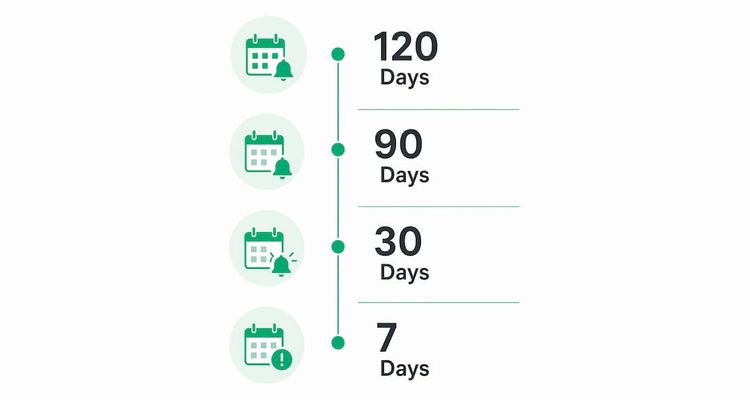
Staged renewal alerts are recognized best practice for managing complex contracts and avoiding surprises. That timing structure gives procurement teams enough runway to gather competitive quotes, assess whether the current supplier still meets service level agreement standards, and document their decision before the auto-renewal window closes.
One of the most costly failures in contract management is the unwanted auto-renewal. Missed renewal deadlines lock organizations into outdated terms, often at prices that no longer reflect market rates. A well-timed alert prevents that outcome by creating a mandatory review checkpoint before the rollover date.
- Set a 120-day alert to trigger a formal supplier performance review against agreed KPIs.
- Set a 90-day alert to initiate benchmarking, request competitive bids, and open renegotiation conversations.
- Set a 30-day alert to confirm the renewal decision, execute paperwork, or issue a termination notice.
- Set a 7-day alert as a final escalation to the contract owner and their manager if no action has been recorded.
Pro Tip: Configure your 90-day alert to automatically attach the supplier’s last three performance scorecards to the notification email. Procurement managers who walk into renegotiations with data close better terms than those who rely on memory.
How to avoid alert fatigue without losing coverage
Alert fatigue is the single biggest barrier to successful procurement alert adoption. When teams receive too many irrelevant notifications, they start ignoring all of them. Irrelevant alerts cause missed opportunities and wasted effort, which defeats the purpose of building an alert system in the first place.
The solution is a three-tier alert architecture that separates signal from noise:
- Primary alerts: Contracts directly tied to your core spend categories, flagged with specific CPV codes or commodity keywords. These demand immediate action.
- Adjacent alerts: Contracts in related categories that affect your supply chain or create substitution opportunities. These require monitoring, not immediate response.
- Monitoring alerts: Low-priority contracts or market signals that inform strategy without requiring action. Review these weekly, not daily.
Balanced alert configuration using focused CPV codes and keywords measurably improves alert relevance. That specificity prevents the inbox overload that causes procurement teams to tune out notifications entirely.
Regular maintenance of your alert filters matters as much as the initial setup. Markets shift, supplier relationships change, and organizational priorities evolve. An alert filter built in january that made sense then may generate irrelevant results by july if no one has updated the keywords or contract categories it monitors.

Pro Tip: Schedule a quarterly alert audit. Pull a 90-day report of all alerts received, then calculate the ratio of alerts that triggered a documented action versus those that were ignored. If that ratio falls below 50%, your filters need tightening.
Automating renewal alert workflows across procurement operations
Automation turns renewal alerts from a manual calendar exercise into a repeatable, auditable process. Timer-based automation for renewal emails at 60 and 30 days before expiry significantly reduces manual errors and improves renewal confirmation rates. That reliability matters because a missed alert caused by human error carries the same cost as no alert at all.
Effective automation in procurement alert systems connects three components: the contract database, the workflow trigger engine, and the notification delivery channel. When a contract record in your database reaches a defined threshold date, the trigger fires automatically and routes the alert to the right stakeholder without anyone manually checking a spreadsheet.
Key automation practices that procurement teams apply successfully include:
- Database-linked triggers: Alerts fire based on expiration dates stored in the contract record, not manually scheduled reminders.
- Role-based routing: The alert goes to the contract owner, their manager, and the relevant category buyer simultaneously, so no single point of failure exists.
- Escalation logic: If no action is recorded within five business days of an alert, the system escalates to the next level of authority automatically.
- Audit logging: Every alert sent, received, and acted upon is logged with a timestamp, creating a governance trail for compliance reviews.
Automation does not eliminate judgment. Complex contracts with custom terms, multi-year pricing structures, or strategic supplier relationships still require human review. The automation handles the scheduling and routing. The procurement team handles the decision. That division of labor is what makes automated procurement workflows sustainable at scale.
What is the impact of renewal alerts on supplier compliance?
Renewal alerts are a compliance enforcement tool, not just a scheduling convenience. Regular alerts create audit trails and governance compliance for procurement departments, which matters when internal auditors or regulators ask whether contracts were reviewed before renewal.
The compliance risk of skipping alerts is concrete. A contract that auto-renews without review may lock your organization into terms that no longer meet current regulatory requirements, data protection standards, or supplier code-of-conduct obligations. Procurement teams that use alerts systematically catch those gaps before they become liabilities.
The table below shows the operational difference between procurement functions that use structured renewal alert systems and those that do not.
| Outcome area | With renewal alert system | Without renewal alert system |
|---|---|---|
| Contract review before renewal | Systematic, documented at each alert stage | Ad hoc, dependent on individual memory |
| Auto-renewal prevention | Alerts trigger mandatory review before rollover | Auto-renewals frequently go unnoticed |
| Supplier performance oversight | Performance data reviewed at 120-day alert | Reviewed only when problems arise |
| Audit trail | Full log of alerts sent, received, and acted on | Incomplete or absent documentation |
| Negotiation leverage | Early benchmarking enabled by 90-day alert | Renegotiation attempted under time pressure |
Proactive alert management transforms procurement teams from reactive responders into strategic functions that manage supplier risk and performance. That shift is visible in audit results, contract compliance rates, and the quality of supplier relationships over time.
Supplier compliance also benefits from the consistency that alerts enforce. When every contract receives the same structured review process, suppliers know their performance will be evaluated before renewal. That expectation alone changes supplier behavior and reduces the frequency of SLA breaches in the final months of a contract term.
Key Takeaways
Renewal alerts are the most direct tool procurement teams have for converting contract management from a reactive task into a predictable, governed process.
| Point | Details |
|---|---|
| Stage alerts at key intervals | Use 120, 90, 30, and 7-day alerts to structure review, negotiation, and decision milestones. |
| Fight alert fatigue with filters | Apply CPV codes and keyword filters to keep notifications relevant and actionable. |
| Automate with database triggers | Link alerts to contract records so notifications fire without manual scheduling. |
| Build audit trails by default | Log every alert action to satisfy governance and compliance review requirements. |
| Alerts shift procurement culture | Teams using systematic alerts move from reactive to strategic contract management. |
Why I think most procurement teams underuse their alert systems
Most procurement teams I have observed treat renewal alerts as a reminder tool. They set a single 30-day notification, check the box, and move on. That approach captures maybe 20% of the value alerts can deliver.
The real power of renewal alerts is not in the reminder itself. It is in the structured decision process the alert forces. When a 120-day alert fires and requires a documented supplier performance review, it creates a paper trail, surfaces problems early, and gives the procurement team genuine negotiating leverage. Without that structure, the 30-day alert just creates panic.
Alert fatigue is a real problem, but the solution is not fewer alerts. The solution is better-configured alerts tied to a clear response protocol. I have seen procurement teams receive 200 alerts a month and act on all of them because each alert was specific, routed to the right person, and connected to a defined next step. I have also seen teams receive 20 alerts a month and ignore most of them because no one knew what to do when one arrived.
The future of procurement alert systems points toward AI-enhanced precision, where alerts carry context about market pricing, supplier risk scores, and regulatory changes alongside the expiration date. That context turns an alert from a calendar ping into a decision brief. Organizations that build that capability now will have a significant structural advantage as contract volumes grow and procurement teams face pressure to do more with the same headcount.
— Kuldeep
Expiryedge and the next level of renewal alert management
Procurement teams that manage contracts, vendor agreements, compliance obligations, and supplier certifications across multiple categories need more than a calendar reminder.

Expiryedge is built specifically for deadline-driven work. It automates multi-stage renewal alert cadences, routes notifications to the right stakeholders, logs every action for audit purposes, and escalates automatically when deadlines approach without a recorded response. Procurement managers get a centralized view of every expiring contract and compliance obligation across their portfolio. If you want to move from spreadsheet-based tracking to a system that enforces your renewal process without manual effort, explore Expiryedge’s deadline tracking to see how it fits your procurement workflow.
FAQ
What is the role of renewal alerts in procurement?
Renewal alerts are automated notifications that warn procurement teams before contracts expire, enabling timely review, renegotiation, or termination. They prevent unwanted auto-renewals and create a documented governance trail for compliance purposes.
How far in advance should renewal alerts be set?
Best practice calls for staged alerts at 120, 90, 30, and 7 days before contract expiration. Each stage triggers a specific action, from supplier performance review at 120 days to final decision confirmation at 30 days.
What causes alert fatigue in procurement teams?
Alert fatigue occurs when teams receive too many irrelevant notifications, causing them to ignore all alerts including critical ones. Focused CPV code filters and keyword-based configuration reduce noise and keep alerts relevant.
How does automating renewal notifications reduce risk?
Automated timer-based alerts fire from contract database records without manual scheduling, eliminating the human error that causes missed deadlines. Escalation logic ensures that unacknowledged alerts reach a manager before the renewal window closes.
How do renewal alerts support supplier compliance?
Renewal alerts force a documented review of contract terms and supplier performance before every renewal decision. That review process creates an audit trail that satisfies governance requirements and prevents organizations from rolling over contracts with outdated or non-compliant terms.
Recommended
Frequently asked questions
Best practice calls for staged alerts at 120, 90, 30, and 7 days before contract expiration. Each stage triggers a specific action, from supplier performance review at 120 days to final decision confirmation at 30 days.
Alert fatigue occurs when teams receive too many irrelevant notifications, causing them to ignore all alerts including critical ones. Focused CPV code filters and keyword-based configuration reduce noise and keep alerts relevant.
Automated timer-based alerts fire from contract database records without manual scheduling, eliminating the human error that causes missed deadlines. Escalation logic ensures that unacknowledged alerts reach a manager before the renewal window closes.
Renewal alerts force a documented review of contract terms and supplier performance before every renewal decision. That review process creates an audit trail that satisfies governance requirements and prevents organizations from rolling over contracts with outdated or non-compliant terms.