Automate Manual Deadline Reminders: A Practical Guide

Automate Manual Deadline Reminders: A Practical Guide

Automated deadline reminders are scheduled notifications triggered by a system when a task, certification, or compliance obligation approaches its due date. Teams that automate manual deadline reminders remove the calendar-checking, spreadsheet-scanning, and email-chasing that consume hours every week. Platforms like ExpiryEdge, Microsoft Power Automate, and Slack-connected workflow tools make this possible without custom code. The change is narrow but decisive: the deadline stops depending on somebody remembering it, and starts depending on a schedule that runs whether or not anyone is thinking about it.
What do you need before you automate manual deadline reminders?
The biggest reason automation projects fail is dirty data, not bad software. Before you configure a single reminder, audit every spreadsheet, shared drive, and inbox where deadline information currently lives. Inconsistent date formats, duplicate records, and missing expiry fields will cause reminders to fire at the wrong time or not at all. Cleaning your source data first is the single step that separates a fast deployment from a months-long troubleshooting exercise.
Once your data is clean, choose the right tool for your context. The options below cover the most common use cases across operations, HR, compliance, and procurement teams.

| Tool | Best for | Key strength | Limitation |
|---|---|---|---|
| Expiryedge | Certifications, contracts, licenses | Multi-channel alerts, escalation chains, expiry tracking | Specialized for deadline-driven work |
| Microsoft Power Automate | Microsoft 365 environments | Deep integration with Teams, Outlook, SharePoint | Requires workflow-building expertise |
| Slack Workflows | Team-based task nudges | Fast setup, native Slack delivery | Limited escalation logic |
| LMS platforms (e.g., Coggno) | Compliance training deadlines | Built-in reporting and completion tracking | Scoped to training use cases |
After selecting a tool, define your reminder schedule before touching any settings. Generic schedules fail because they ignore industry regulations and workforce realities. A complex safety certification needs a 90-day lead time, while a simple software license renewal works fine with a 30-day notice. Map each deadline category to a specific schedule before you build anything.
- List every deadline type your team manages (certifications, contracts, inspections, audits).
- Assign a lead time to each category based on complexity and consequence.
- Identify who receives each reminder and who gets escalation notices.
- Confirm which channels (email, SMS, Teams, Slack) your team actually monitors.
Pro Tip: Run a one-week audit of how your team currently responds to manual reminders. If most action happens in the last 48 hours before a deadline, your lead times are too short. Build in more runway before you automate.
How to set up automated deadline reminders step by step
A structured rollout prevents the most common failure mode: automating a broken process and making it faster. Follow these steps in order.
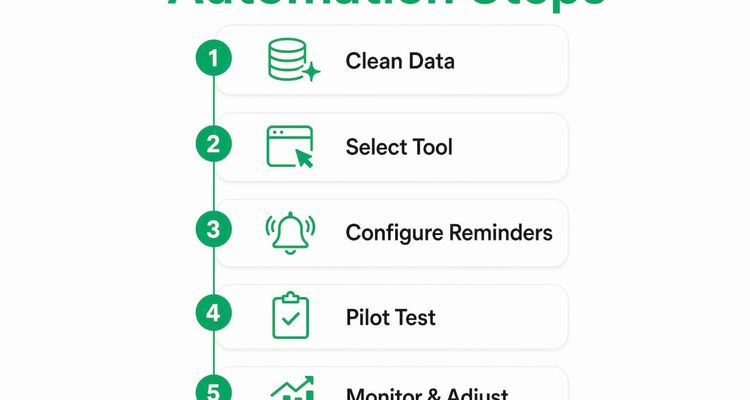
- Document the current process. Write down every manual step your team takes today, from identifying an upcoming deadline to confirming completion. This map shows you exactly what to replace and what to keep.
- Define your objectives. Set a measurable target before you start. Examples: reduce overdue certifications by 50%, cut HR admin time on follow-up by 10 hours per month, or achieve 95% on-time renewal rates across vendor contracts.
- Clean and centralize your data. Import all deadline records into one system. Normalize date formats, remove duplicates, and fill in missing expiry fields. Most teams deploy within days once this step is complete.
- Configure reminder schedules and escalation chains. Set the first reminder at your defined lead time. Add a second notice at the midpoint and a final alert 5–7 days before the deadline. Assign escalation to a manager if the primary recipient does not act within a set window.
- Account for time zones and non-working days. Reminders sent during off-hours or on public holidays get ignored. Build buffer time into your schedule and configure your tool to respect regional calendars.
- Pilot in one department. Run the automated system alongside your manual process for two to four weeks. Compare completion rates, note any misfires, and gather feedback from recipients.
- Roll out organization-wide. After a successful pilot, expand the system. Small organizations pilot in days, but a full rollout across a complex organization typically takes 6–12 weeks. Plan for that timeline.
- Monitor and adjust. Review completion dashboards weekly for the first month. Adjust reminder timing, escalation logic, or channel selection based on what the data shows.
Pro Tip: Do not turn off your manual backup process during the pilot phase. Run both systems in parallel so you catch any gaps before they become compliance failures.
Common challenges in automating reminders and how to avoid them
Automation does not fix a bad process. These are the four pitfalls teams hit most often, along with direct solutions.
- Alert fatigue from over-notification. Sending daily reminders starting 90 days out trains recipients to ignore them. A tiered approach at 90, 60, and 30 days with escalations in the final week keeps urgency calibrated. Limit total touches to five or fewer per deadline cycle.
- Data quality failures. A reminder built on a wrong expiry date is worse than no reminder at all. Audit source data before import and set a recurring quarterly review to catch records that drift out of sync.
- Time zone and calendar blind spots. A reminder sent at 3 a.m. local time or on a national holiday gets buried. Buffer time in reminders accounts for time zone differences and processing delays, so notifications land when recipients are actually working.
- One-size-fits-all schedules. HR certification reminders for a nurse renewing a clinical license need different timing than a procurement team tracking a software subscription. Generic reminder schedules fail when they ignore the specific compliance requirements and workforce realities of each team. Segment your deadline categories and configure each one separately.
- No escalation logic. A reminder that goes unanswered is just noise. Build escalation chains so that a manager or compliance officer receives a follow-up notification if the primary recipient does not act within 48–72 hours.
These challenges share a root cause: teams treat automation as a one-time setup rather than an ongoing system. Schedule a monthly review of reminder performance and treat it the same way you treat any other operational metric.
How do you measure success after automating deadline reminders?
The right metrics tell you whether your automation is working or just running. Track these four indicators from day one.
On-time completion rate is the primary signal, and the only baseline worth comparing against is your own. Measure it for a full cycle before you automate anything: of the deadlines that fell due, how many were completed on or before the date? Record the number, then measure the same thing 90 days after go-live. Published benchmarks for this do not exist in any form we can trace to a real study, and a vendor-supplied percentage tells you nothing about your own workflow. Your before-and-after does.
Overdue rate confirms whether fewer deadlines are slipping through. Track it monthly against your pre-automation baseline, and split it by owner and by obligation type - the aggregate number hides the pattern that actually matters. If overdues concentrate on one team or one document type, the problem is usually reminder timing or an escalation path that dead-ends, not the system as a whole.
Admin time saved measures the labor cost of the old process against the new one, and you can only get this number from your own team. Ask whoever currently chases renewals to log the hours for a month: time spent checking the spreadsheet, sending follow-ups, and confirming completion. Multiply by their loaded hourly cost. That is a defensible ROI figure to take to leadership, and unlike a vendor's published average it will survive the first question about where it came from.
Penalties and disruptions avoided captures the less visible but often larger return. ROI depends not just on labor savings but on avoiding compliance penalties and costly operational disruptions from missed deadlines. Assign a dollar value to each penalty your team has historically incurred and track how many you avoid after automation goes live.
Pro Tip: Build a simple dashboard in your tracking tool that shows on-time rate, overdue count, and escalations triggered. Review it in your weekly team standup. Visibility creates accountability faster than any policy document.
Key takeaways
Automating deadline reminders works when clean data, calibrated schedules, and escalation logic work together, not when any one of these elements is in place alone.
| Point | Details |
|---|---|
| Clean data first | Audit and normalize all deadline records before configuring any reminder system. |
| Match lead times to complexity | Start reminders 90 days out for complex certifications and 30 days out for simple renewals. |
| Use tiered escalation | Send reminders at 90, 60, and 30 days, then escalate to a manager if no action is taken. |
| Measure from day one | Track on-time completion rate, overdue reduction, and admin time saved every month. |
| Plan for a full rollout timeline | Expect 6–12 weeks for organization-wide deployment after a successful departmental pilot. |
The shift I’ve seen teams miss when they automate reminders
The teams that get the most out of automation are not the ones with the best software. They are the ones that treated the rollout as an organizational change, not an IT project. I have watched compliance teams spend weeks configuring Expiryedge or Power Automate perfectly, only to see adoption stall because nobody told the recipients why the reminders were changing or what was expected of them.
The cultural shift matters as much as the technical one. Moving from reactive follow-up to proactive deadline management requires people to trust the system enough to act on the first reminder instead of waiting for a manager to chase them. That trust takes time to build. The teams that build it fastest are the ones that communicate the “why” before the first automated notification ever lands in an inbox.
The other lesson I keep coming back to: automation does not replace human judgment. It replaces human memory. Your system will fire reminders on schedule, but a manager still needs to review the escalation report and decide what to do when someone consistently ignores notifications. The teams that get the most out of this treat their compliance dashboard as a weekly management tool rather than a set-and-forget report. That habit, more than any feature, is what separates a system that works from one that quietly stops being read.
— Kuldeep
How Expiryedge helps teams stay ahead of every deadline

Expiryedge is built specifically for deadline-driven work. It tracks certifications, contracts, licenses, vendor agreements, inspections, and compliance obligations from a single platform. Teams receive multi-channel alerts via email, SMS, and integrations with tools like Slack and Microsoft Teams, so notifications reach people where they actually work. Escalation chains fire automatically when a deadline goes unacknowledged, and compliance dashboards give managers real-time visibility without manual reporting. If your team is ready to move past spreadsheets and calendar alerts, explore Expiryedge to see how automated expiry tracking and deadline management work in practice.
FAQ
What is an automated deadline reminder?
An automated deadline reminder is a system-triggered notification sent to a person or team when a task, certification, or obligation is approaching its due date. These reminders fire based on predefined schedules without any manual input after initial setup.
How do automated reminders improve compliance rates?
Automated systems improve on-time completion by removing human memory as a dependency - the reminder fires whether or not anyone remembered the date. Escalation chains do the other half of the job: an unacknowledged deadline gets flagged to a manager while there is still time to act, rather than surfacing after it has become a violation.
How long does it take to set up automated deadline reminders?
Small teams can pilot a system within a few days after cleaning their source data. A full organization-wide rollout typically takes 6–12 weeks depending on the number of deadline categories and the complexity of escalation logic required.
What causes automated reminders to fail?
The most common causes are dirty source data, misconfigured time zones, and alert fatigue from over-notification. A tiered reminder schedule and a quarterly data audit prevent most failures before they occur.
Which teams benefit most from automating certification expiry reminders?
HR, compliance, procurement, facilities, and legal teams see the highest return because they manage the largest volumes of recurring, date-driven obligations. These teams also face the steepest penalties when deadlines are missed, which makes the ROI from automation easiest to quantify.
Recommended
Article generated by BabyLoveGrowth