
We failed a fire inspection because servicing was overdue. How do we fix it?
Book the overdue servicing today, send the inspector proof of the booking, and keep the notice and every certificate together. Then track each extinguisher, alarm system and emergency lighting service as a dated record per building, with an owner and reminders that start before the contractor's diary fills up.
Last updated · ExpiryEdge editorial team
Quick answer
If you failed a fire safety inspection because extinguisher, alarm or emergency lighting servicing was overdue, book the servicing now, follow every instruction in the inspector's notice by its deadline, and keep proof of each step. To stop it recurring, record every service due date per building and per system, assign an owner at each site, and send reminders at 60, 30 and 7 days.
What to do in the next 48 hours
1. Read the notice and note every deadline
Inspection reports and enforcement notices differ by country and by fire authority. Note exactly what was found, what you must do, and by when. If anything is unclear, call the inspecting officer and ask - it is better than guessing. If you think the notice is wrong, ask about the appeal route and its time limit.
2. Book the overdue servicing with a competent contractor
Call your fire protection contractor today. Ask for the earliest date and get it confirmed in writing. If they cannot come soon enough, ask another qualified provider. Send the booking confirmation to the inspector if the notice asks for evidence of action.
3. Put interim measures in place if needed
If an alarm system or emergency lighting may not work, ask your competent person or the fire authority what temporary measures are appropriate, such as extra fire watches or restricting use of an area. Brief staff on any change to evacuation arrangements.
4. Check the other sites before their inspector does
If one building was overdue, others probably are. Ask each site manager for the date on the last service label or certificate for extinguishers, alarms, emergency lighting and sprinklers where fitted. List everything overdue or due in the next 60 days and book it.
5. File the evidence in one place
Keep the notice, the booking, the service certificates and any logbook entries together, per building. You will need them for the re-inspection, your insurer and your next fire risk assessment review.
Servicing goes overdue for predictable reasons
The contractor was supposed to remind you
Many teams rely on the service company to call when a visit is due. When the contractor changes staff, loses the contract or simply forgets, nobody notices.
Each site kept its own records
Dates lived on labels, in a logbook in a drawer, or in one manager's head. Head office had no single view of what was due where.
Different systems, different cycles
Extinguishers, alarms, emergency lighting, sprinklers and fire doors are serviced on different schedules by different people. One spreadsheet tab per system breaks down fast.
Checks were ticked, not done
Weekly alarm tests and monthly lighting checks were signed off on paper with no evidence. A tick does not show anyone actually pressed the call point.
Every system, every building, one dated schedule
A record for each service due date at each site
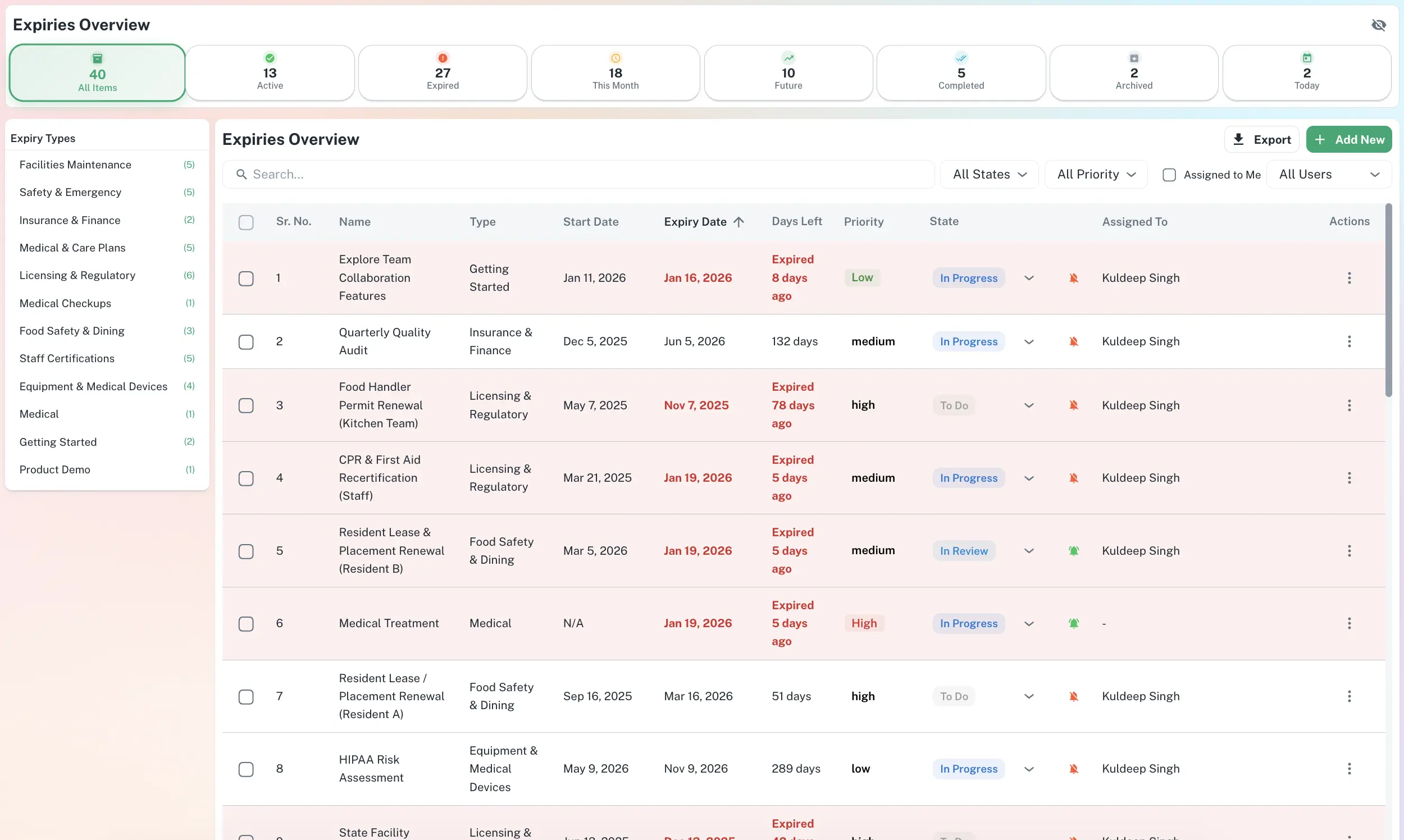
In ExpiryEdge each building gets its own records for extinguisher servicing, alarm servicing, emergency lighting, sprinklers, fire risk assessment review and anything else with a due date. Group them by location and each site manager sees their own list while head office sees all sites.
Status per site: valid, due soon or overdue
Service certificate attached to each record
Roll-up across all locations for head office
Reminders to the site owner, escalation to the manager above
Reminders go to each site owner at 60, 30 and 7 days, by email, SMS, WhatsApp, Slack or Microsoft Teams. If a service date passes with no new certificate logged, the record escalates to a regional or facilities manager so it cannot sit quietly overdue.
Cadence configurable per item type
Escalation to a senior owner when overdue
Owners reassigned in one click when staff change
SOP checklists with steps, owners and progress
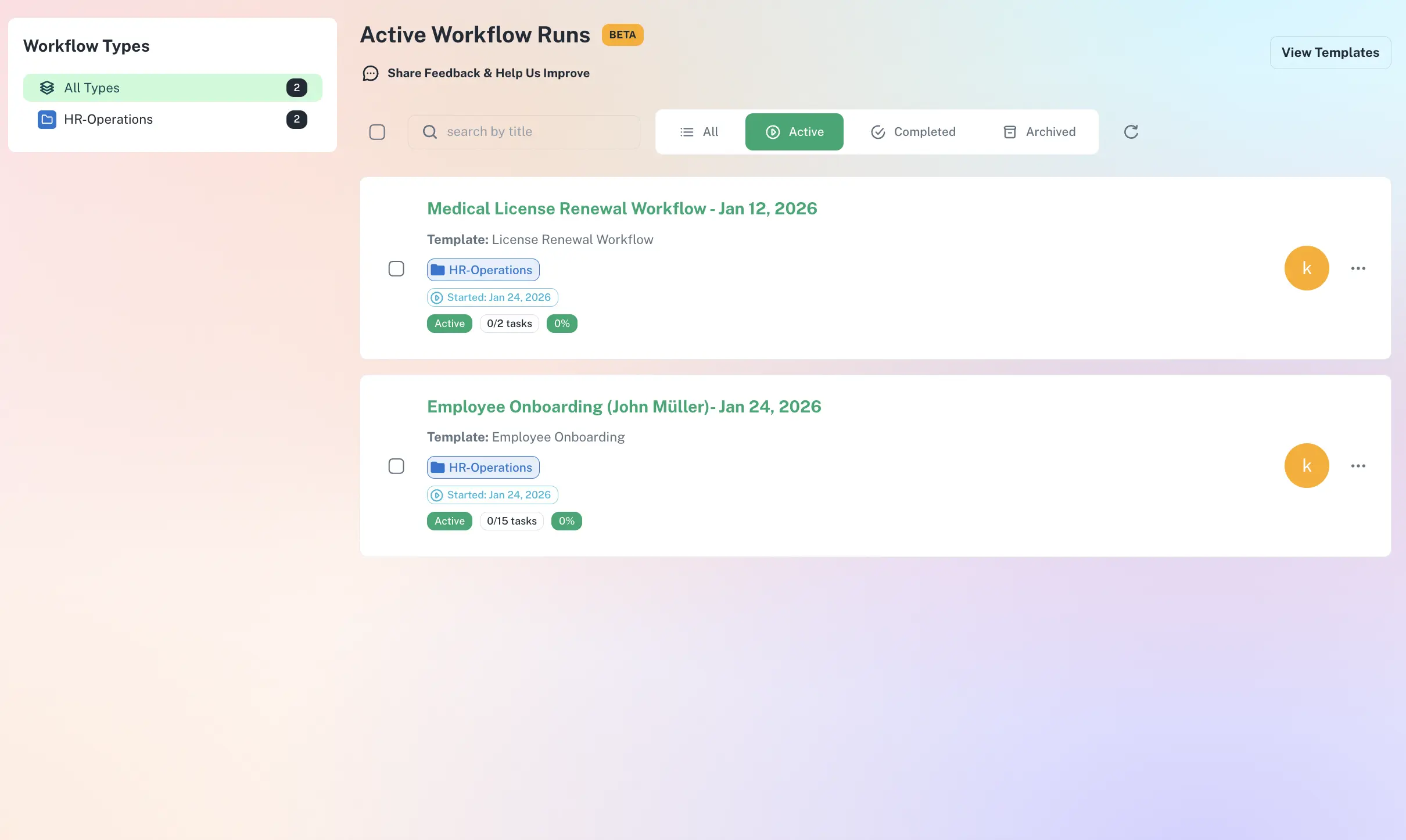
Use SOP checklists for weekly alarm tests, monthly emergency lighting checks or fire drills. Each checklist has steps, an owner for each step and a progress view, and the audit trail shows who completed each step and when. Service certificates sit on the dated records alongside.
Checklists with steps and owners
Progress visible to the site manager
Timestamped history for inspectors and insurers
Create one record per system per building - extinguishers, fire alarm, emergency lighting, sprinklers, fire doors - with the next service date, the contractor, and a site owner. Attach the latest service certificate. Then set reminders at 60, 30 and 7 days so there is time to book the visit. ExpiryEdge groups these records by location, so each manager sees their own site and head office sees everything due across all of them. Service intervals depend on the equipment, the standard that applies and local law, so confirm them with your competent person.
Track each as its own dated record with the certificate attached. In the UK, there is no single legal interval for PAT testing; frequency should follow a risk assessment and the type of equipment. LOLER thorough examinations are generally needed every 6 months for lifting accessories and equipment that lifts people, every 12 months for other lifting equipment, or as set by a written examination scheme. Landlords need a gas safety check every 12 months. Outside the UK, rules differ, so check locally.
Look for an app where each check is a checklist with a named owner, clear steps and a visible progress view, plus a log of who completed each step and when. ExpiryEdge offers SOP workflow checklists alongside its date tracking, and dated items that go overdue escalate to a senior owner, so the weekly alarm test and the annual service sit in the same system. It is not a full maintenance management system, so very large estates with work-order needs may want a CMMS as well.
Ask for evidence, not a tick. Require a photo, a reading or a short note for each check, assign one named person rather than a team, and have missed checks escalate to their manager automatically. Spot-check a sample each month by comparing the record against the building. A timestamped audit trail helps too: a log showing every weekly test completed at 9:00 on Monday morning, in seconds, is a sign to look closer.
Schools usually keep a schedule of fire drills, alarm tests, emergency lighting checks and contractor servicing for each building, with a named premises or business manager responsible. How often drills must happen depends on the country, state or education authority, so check your local requirements. Record each drill with the date, evacuation time and any issues found. For school groups and districts, a single view across all sites shows which school is behind before an inspection does.
For small and mid-sized estates, a tracker with recurring due dates, owners, reminders and attached certificates covers most needs: you record each asset or system, the next service date and who books it. ExpiryEdge works this way, with reminders by email, SMS, WhatsApp, Slack or Teams and escalation when a date passes. What it does not do is manage work orders, spare parts or technician scheduling. If you need those, you need a CMMS.
It depends on where you are and what you have. In the US, fire codes and NFPA standards such as NFPA 10 for extinguishers and NFPA 72 for alarms set inspection and maintenance requirements, as adopted by your local authority. In the UK, BS 5306-3 and BS 5839-1 are the usual reference standards for extinguishers and alarms. Your fire risk assessment, insurer and the manufacturer may add requirements. Ask your fire authority or a competent fire safety person to confirm the intervals for each building.
See every service date across every site
Import your buildings and service dates, attach the certificates, assign a site owner. Free 14-day trial, no credit card.