
Healthcare-Compliance, die sich im Credentialing-Zyklus auszahlt.
Jedes fünfte Krankenhaus verliert jährlich mehr als 1 Mio. $ durch Verzögerungen im Credentialing. ExpiryEdge verfolgt jede Anbieter-Qualifikation, jedes Schulungszertifikat, jede Gerätekalibrierung, jede Gebäudeprüfung - mit Erinnerungen an Kliniker UND Führungskräfte, und tracer-reife Nachweise nur eine Suche entfernt. HIPAA-bewusste Infrastruktur, BAA verfügbar, 14 Tage kostenlos testen.
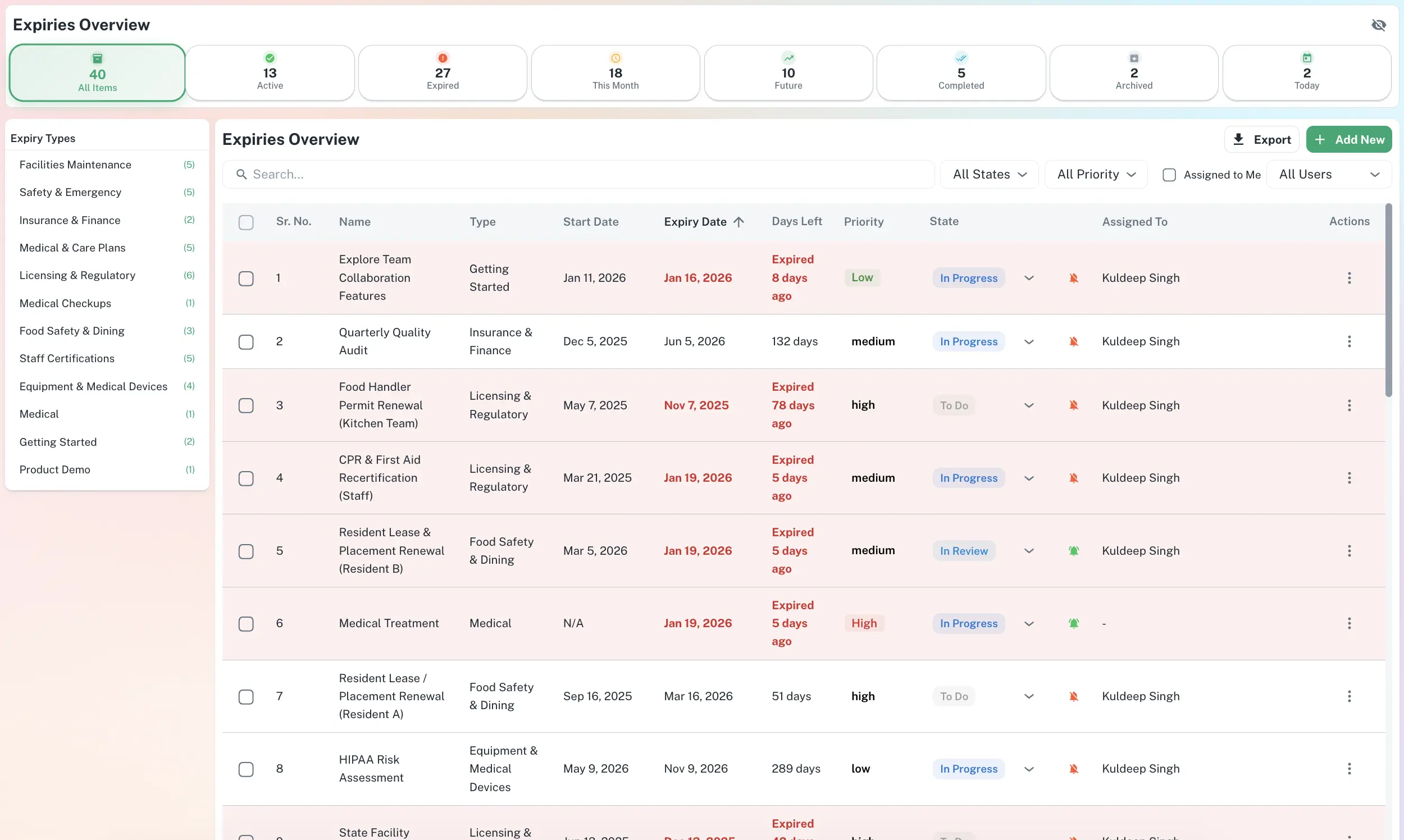
Kurz erklärt
Healthcare-Compliance-Software verfolgt jede terminierte Verpflichtung einer Gesundheitseinrichtung - Anbieter-Credentialing und Kostenträger-Registrierung, klinische Zertifizierungen (BLS/ACLS/PALS), DEA- und Landeslizenzen, OIG-/SAM-Sanktionsprüfungen sowie Kalibrierung medizinischer Geräte. ExpiryEdge speichert jeden Posten beim übergeordneten Datensatz (Anbieter, Gerät, Einrichtung) mit Zeitstempel-Historie, versendet Erinnerungen an Kliniker und deren Führungskraft und erstellt Joint-Commission-/CQC-/DNV-Tracer-Nachweise in einer einzigen Suche. Neueinstellungs-Unterlagen für das Credentialing - Lizenzkopien, DEA-Zertifikate, Lebensläufe - lassen sich als Dokumentenerfassungs-Link anfordern, den der Kliniker ohne Konto ausfüllt; lehnt ein Prüfer eine fehlerhafte Datei ab, wird nur dieses Dokument erneut angefordert, statt die gesamte Aufnahme neu zu starten.
Was Reibung im Credentialing kostet
1 von 4
Gesundheitsorganisationen verlieren bis zu 1 Mio. $ pro Jahr an Abrechnungen durch Credentialing-Verzögerungen
Source: Intelliworx-Umfrage, 1.-9. Dez. 2025rund 122.000 $
typischer Verlust an persönlichem Abrechnungsumsatz je Arzt während des laufenden Credentialing
Source: Neolytix (arztspezifische Analyse)90-180 Tage
zwischen Einreichung des Antrags und Prüfung sowie Genehmigung der Qualifikationsnachweise
Source: MGMA$16,550
maximale OSHA-Strafe pro schwerwiegendem Verstoß bei Arbeitsplatzgefahren im klinischen Umfeld (2025)
Source: OSHA / U.S. Dept of Labor (2025)Drei Dinge, die Healthcare braucht - und allgemeine Compliance-Tools nicht liefern
Credentialing, Auditbereitschaft und geteilte Erinnerungsverantwortung - die Lücken, die ein allgemeines Tracking-Tool offen lässt.
Credentialing ohne den 120-Tage-Zyklus
Ärzte-Credentialing dauert typischerweise vier Monate und kostet pro Zyklus und Anbieter rund 122.000 $ an entgangenen Honoraren. ExpiryEdge verfolgt jede Kostenträger-Registrierung, jede Primärquellenverifizierung und jeden Re-Credentialing-Termin - der Zyklus wird an einem System gemessen, nicht an einem Klemmbrett.
Auditbereit für Joint Commission / CQC / DNV
Tracer-Audits erwarten Nachweise in unter fünf Minuten. Jede Qualifikation, jedes Schulungszertifikat und jede Gerätekalibrierung ist eine Suche entfernt - über jeden Kliniker, jedes Gerät, jeden Standort hinweg.
Erinnerungen an Kliniker UND Führungskraft
Die NMC-PIN-Erneuerung geht an die Pflegekraft plus Führungskraft. BLS-/ACLS-/PALS-Ablauf an den Kliniker plus Credentialing. Gerätekalibrierung an Facility Management plus Medizintechnik. Niemand ist alleiniger Verantwortlicher für die Erinnerung.
Verfolgt über jeden Anbieter, jedes Gerät und jede Einrichtung
Anbieter-Credentialing + Kostenträger-Registrierung
NPI, DEA, Landeslizenz je Bundesstaat
Facharztzertifizierung + Re-Credentialing (2-3-Jahres-Zyklus)
AHA BLS / ACLS / PALS / NRP (Ablauf nach 2 Jahren)
Jährlicher TB-Test / N95-Passtest / Schulung zu blutübertragbaren Erregern
OIG-(LEIE)- / SAM.gov- / bundesstaatliche Medicaid-Sanktionsprüfungen
DEA-Registrierung (3 Jahre) + landesrechtliche Betäubungsmittelzulassung
Kalibrierung medizinischer Geräte + Wartungsintervalle
FDA-UDI- / Rückruf-Abgleich
Compact-/länderspezifische Lizenzierung für Zeitarbeits-Pflegekräfte
Sechs Funktionen für den Healthcare-Compliance-Stack
Die Anbieterakte, systematisch verfolgt
NPI, DEA, Landeslizenz je Bundesstaat, Facharztzertifizierung, Lebenslauf / Ausbildung / Schulungen, Haftpflicht-Historie, Referenzen sowie Kostenträger-Registrierung je Plan - mit automatisch geplantem Re-Credentialing-Zyklus (typischerweise 2-3 Jahre). Die Sanktionsprüfung läuft monatlich gegen OIG-LEIE-, SAM.gov- und bundesstaatliche Medicaid-Listen, sodass ein Ausschluss während der Beschäftigung am Tag seines Eintretens erkannt wird. Die Akte für einen neuen Arzt zusammenzustellen, ist ein Dokumentenerfassungs-Link, der direkt an ihn gesendet wird - kein Konto nötig -, und lehnt das Credentialing-Team einen Posten ab, etwa eine abgelaufene Lizenzkopie, öffnet sich nur dieses Feld erneut zur Einreichung.
Primärquellenverifizierungstermine pro Anbieter verfolgt
Ärztliche Lizenzierung in mehreren Bundesstaaten separat verwaltet
Fortlaufendes OIG-/SAM-Monitoring statt einmal pro Zyklus
Neueinstellungs-Unterlagen über einen Link ohne Login gesammelt, mit Ablehnung/Neueinreichung auf Feldebene
Jede Prüferfrage in einer einzigen Suche beantwortet
Prüfer arbeiten nach der Tracer-Methode - sie wählen einen Patienten, Anbieter oder ein Gerät aus und verfolgen Nachweise in Echtzeit zurück. Ein Audit scheitert, wenn die Suche zu lange dauert, nicht weil Nachweise fehlen. ExpiryEdge speichert alles beim übergeordneten Datensatz mit Zeitstempel-Historie; die meisten Kunden berichten von einer Abrufzeit unter 60 Sekunden.
Joint-Commission-/CQC-/DNV-Nachweispakete je Zyklus
Personalakte, Schulungsnachweis, Gerätehistorie pro Datensatz
Export als PDF oder CSV in Sekunden
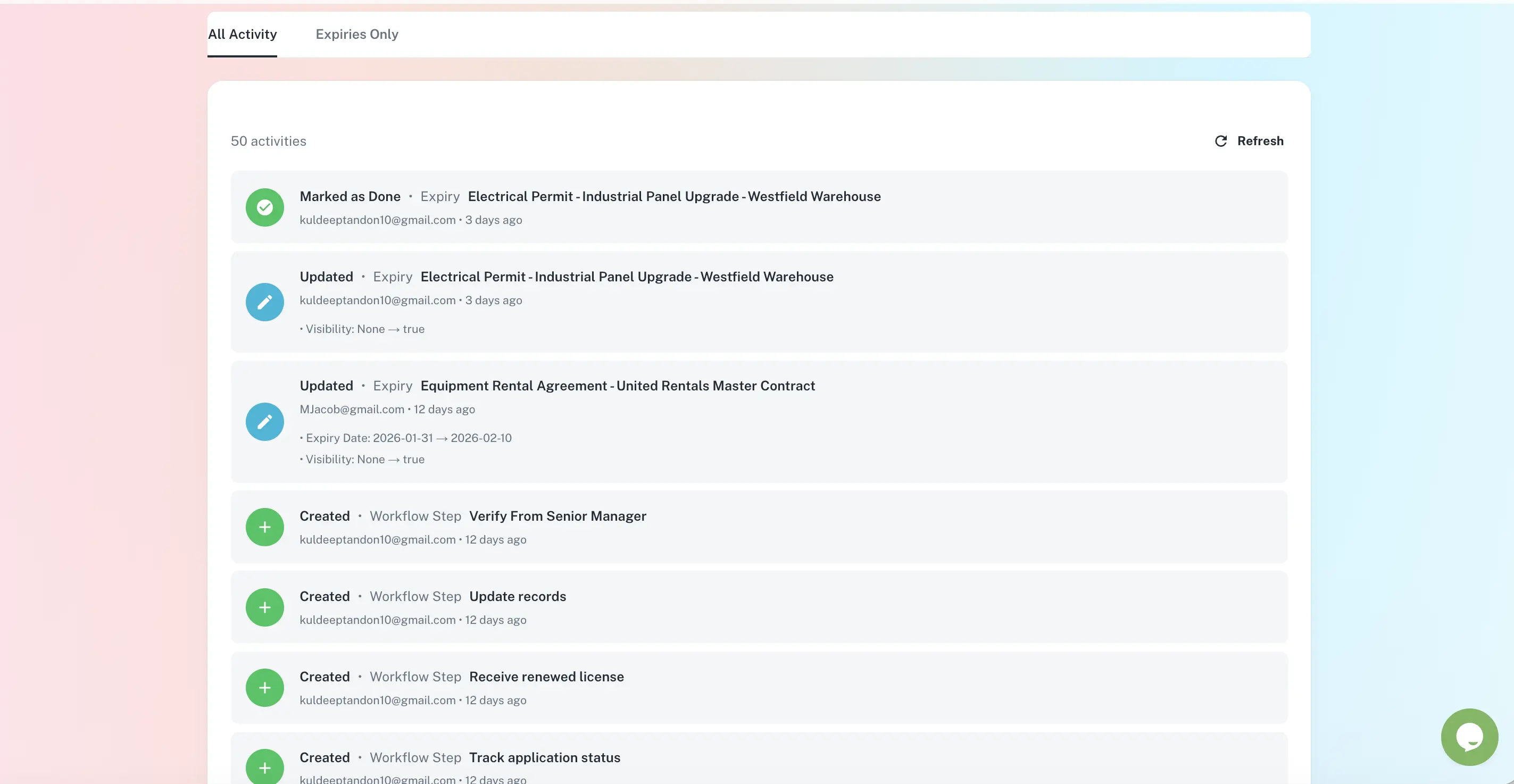
Erinnerungen gehen an Kliniker und Führungskraft
AHA-Zertifizierungen laufen alle 2 Jahre ab; Erneuerungswarnungen gehen 90/60/30 Tage vorher an den Kliniker plus Credentialing. Erinnerungen zur Gerätekalibrierung gehen an Facility Management plus Medizintechnik. Niemand ist der alleinige Schwachpunkt bei einer abgelaufenen Qualifikation.
90/60/30-Tage-Rhythmus je Zertifizierung
E-Mail, SMS, WhatsApp, Slack, Microsoft Teams
Führungskraft und Kliniker beim selben Datensatz benachrichtigt
Jede Gesundheitseinrichtung mit Credentialing und Compliance
Krankenhäuser & Gesundheitssysteme
Konsolidieren Sie ablaufende Qualifikationen, überfällige Schulungen und verpasste Gerätewartungen über alle Einrichtungen, mit Detailansicht je Standort.
Ärztegruppen & Praxen
Verfolgen Sie Kostenträger-Registrierung und Re-Credentialing, damit neue Ärzte pünktlich abrechnen können - nicht vier Monate zu spät.
Häusliche Pflege & Hospizdienste
Verwalten Sie Kliniker-Lizenzierung und Kalibrierung medizinischer Hilfsmittel über mehrere Bundesstaaten hinweg in einem Dashboard.
Pflegeheime & Langzeitpflege
Halten Sie Pflichtfortbildungsstunden, TB-Tests und Passtests für jede Pflegekraft aktuell.
Zeitarbeits-Pflegekräfte / Personalagenturen
Länderspezifische Zulassungen und Compact-Lizenzierung werden für jeden Einsatz getrennt verfolgt.
Psychische Gesundheit & Suchtbehandlung
DEA-, landesrechtliche Betäubungsmittelzulassungen und CSOS-Zertifikate werden auf Bundes- und Landesebene verfolgt.
Operationszentren / ASCs
Kalibrierung von OP-Geräten, FDA-Rückrufabgleich und tracer-reife Historie pro Gerät.
FQHCs & ländliche Gesundheitszentren
Credentialing PLUS Facility-Compliance PLUS Vertragsverlängerungen in einem System zu Mid-Market-Preisen.
ExpiryEdge im Vergleich zu symplr, MedTrainer und Tabellen
| ExpiryEdge | symplr | MedTrainer | Tabelle | |
|---|---|---|---|---|
| Anbieter-Credentialing + Kostenträger-Registrierung | Teilweise | |||
| AHA-BLS-/ACLS-/PALS-Ablaufverfolgung | Teilweise | |||
| Monatliche OIG-/SAM-/Landes-Sanktionsprüfungen | ||||
| Kalibrierung medizinischer Geräte + Medizintechnik | Teilweise | |||
| Ärztliche Lizenzierung in mehreren Bundesstaaten | Teilweise | |||
| Auditreifer Tracer-Nachweisexport | Teilweise | |||
| Preismodell für <500 Anbieter / einzelnes ASC | Kostenlos | |||
| Einrichtung in unter einer Woche |
Die veröffentlichten Zahlen weisen in dieselbe Richtung: Jede vierte Gesundheitsorganisation meldet Verluste von bis zu 1 Mio. $ pro Jahr an Abrechnungen durch Credentialing-Verzögerungen (Intelliworx-Umfrage vom 1. bis 9. Dezember 2025), und die MGMA beziffert die Spanne zwischen Antragseinreichung und abgeschlossener Prüfung und Genehmigung auf 90 bis 180 Tage. Neolytix schätzt den entgangenen persönlichen Honorarumsatz je Arzt in dieser Zeit auf rund 122.000 $. Bei einer Gruppe mit 200 Anbietern, die jährlich 4 neue Ärzte einstellt, entspricht das rund einer halben Million Dollar aufgeschobenen Umsatzes pro Jahr - allein durch Reibung im Credentialing.
symplr und HealthStream sind Enterprise-Plattformen - vollständiges Credentialing plus Privilegierung plus Kostenträger-Registrierung plus Kompetenz-Tracking - typischerweise für Krankenhäuser und Gesundheitssysteme mit Budgets über 50.000 $ pro Jahr. MedTrainer ist eine starke Mid-Market-Alternative mit Fokus auf Schulung plus Credentialing. ExpiryEdge deckt dasselbe Mid-Market-Segment ab, geht aber breiter: Anbieter-Credentialing PLUS Kalibrierung medizinischer Geräte PLUS Facility-Compliance PLUS Vertrags-/Anbieter-/Versicherungsverlängerungen in einem System. Die meisten Kunden nutzen ExpiryEdge parallel zu einem rein klinischen Tool oder ersetzen mehrere Einzeltools damit.
Ja. Wir führen monatliche automatisierte Abgleiche gegen die OIG-Ausschlussliste (LEIE), SAM.gov und bundesstaatliche Medicaid-Ausschlusslisten durch. Jeder Treffer wird dem Credentialing-Team sofort gemeldet. CMS erwartet fortlaufendes Monitoring statt einmaliger Prüfung pro Zyklus - genau diesen Standard legt ExpiryEdge von Haus aus zugrunde.
Alles mit einem Erneuerungs- oder Auffrischungstermin: AHA BLS / ACLS / PALS / NRP, landesspezifische Pflegelizenzen, Facharztzertifizierung, DEA- und landesrechtliche Betäubungsmittelzulassungen, jährlicher TB- / N95-Passtest, OSHA-Schulung zu blutübertragbaren Erregern, HIPAA-Schulung, Verhaltenskodex-Bestätigungen, Pflichtfortbildungsstunden und einrichtungsspezifische Einarbeitung. Bei Zeitarbeits-/Vermittlungsagenturen werden länderspezifische Zulassungen und Compact-Lizenzierung separat verfolgt.
Prüfer arbeiten nach der Tracer-Methode - sie wählen einen Patienten, Anbieter oder ein Gerät aus und verfolgen Nachweise in Echtzeit zurück. Ein Audit scheitert, wenn die Suche zu lange dauert, nicht weil Nachweise fehlen. ExpiryEdge speichert alles beim übergeordneten Datensatz (Anbieter / Gerät / Einrichtung) mit Zeitstempel-Historie, sodass jede Tracer-Frage mit einer einzigen Suche beantwortet wird. Die meisten Kunden berichten von einer Abrufzeit unter 60 Sekunden insgesamt.
Ja. Jede Einrichtung, jeder Standort oder jede Klinik hat eigene Datensätze und lässt sich unabhängig einsehen. Das konsolidierte Dashboard fasst alles zusammen - insgesamt ablaufende Qualifikationen in 30/60/90 Tagen, überfällige Schulungen, verpasste Gerätewartungen - über die gesamte Organisation, mit Drill-down je Einrichtung. Geeignet für Krankenhaussysteme, Ärztegruppen mit mehreren Standorten und häusliche Pflegedienste in mehreren Bundesstaaten.
Die meisten Credentialing-Daten liegen bewusst außerhalb des EMR. ExpiryEdge unterstützt CSV-Import für Massenübernahmen sowie Webhook-/API-Integration mit gängigen HRIS-Plattformen (BambooHR, Workday, ADP) für Neueinstellungs- und Austrittsereignisse. Für die vollständige EMR-Integration arbeiten wir während der Implementierung mit Ihrem IT-Team zusammen.
Jedes Gerät hat einen Datensatz mit: Wartungsintervall, Kalibrierungszertifikat, FDA-UDI, Hersteller, Modell, Seriennummer, Installationsdatum, Garantie. Erinnerungen gehen vor jedem Wartungs- und Kalibrierungstermin raus. FDA-Rückruflisten lassen sich mit Ihrem Bestand abgleichen, um jedes betroffene Gerät zu erkennen. Geeignet für Biomedizintechnik-Teams in Krankenhäusern, OP-Geräte in ASCs und medizinische Hilfsmittel in der häuslichen Pflege.
Ja. Senden Sie einen Dokumentenerfassungs-Link für Lizenzkopie, DEA-Zertifikat, Lebenslauf oder Haftpflicht-Historie, und der Kliniker füllt ihn aus - ohne Registrierung, Login oder App-Installation. Lehnt Ihr Credentialing-Team einen Posten ab - etwa eine abgelaufene Lizenzkopie -, öffnet sich nur dieses Feld erneut zur Einreichung, sodass der Kliniker nicht die gesamte Einreichung wiederholen muss.
Jede Qualifikation aktuell. Jedes Zertifikat abrufbar. Immer tracer-bereit.
14 Tage kostenlos testen. BAA verfügbar. Bereit für mehrere Standorte.

Dieser Leitfaden basiert auf unserer Zusammenarbeit mit Betriebsteams im Gesundheitswesen - aus Hausarztpraxen, Facharztpraxen und der häuslichen Pflege. Er bezieht sich auf öffentliche Vorgaben der Joint Commission und der CMS, HRSA-HPSA-Einstufungen sowie auf die Ablaufmuster von Qualifikationen, die wir über ExpiryEdge-Kundenkonten hinweg beobachtet haben. Wir aktualisieren die Seite, sobald sich die zugrunde liegenden Vorschriften oder Best Practices der Branche ändern.
Keine medizinische, klinische oder HIPAA-Compliance-Beratung
Dieser Artikel dient allgemeinen Informationszwecken und stellt keine klinische Beratung oder Beratung zur HIPAA-Compliance dar. ExpiryEdge ist derzeit kein HIPAA Business Associate. Gesundheitseinrichtungen, die geschützte Gesundheitsdaten (Protected Health Information) verarbeiten, sollten die Einzelheiten ihres Compliance-Programms mit einer qualifizierten Datenschutzbeauftragten bzw. einem HIPAA-Berater klären.