
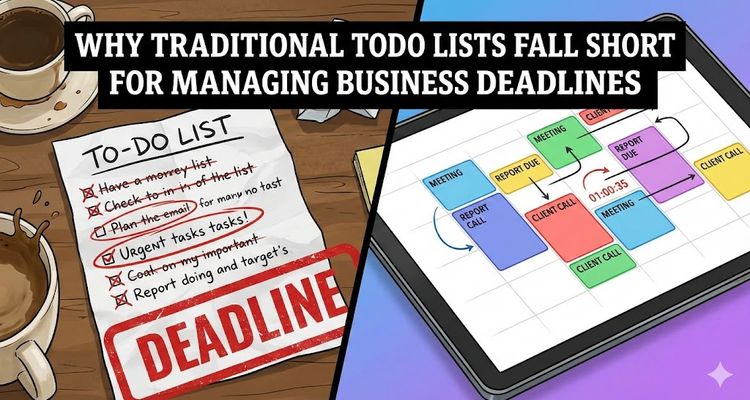
Why Traditional Todo Lists Fall Short for Managing Business Deadlines
Published: 12/16/2025
Every organization operates on deadlines. From regulatory compliance filings to vendor contract renewals, these critical dates keep businesses running smoothly and legally compliant. Yet surprisingly, many companies still rely on outdated methods—scattered Excel sheets, employee memory, or generic todo list apps—to track these mission-critical expiration dates.
The problem? These approaches weren't designed for deadline management, and the consequences of missed dates can be severe: regulatory penalties, service disruptions, lost discounts, or compliance violations.
The Excel Sheet Dilemma
Many organizations default to Excel spreadsheets for tracking expiration dates. On the surface, this seems logical—it's familiar, customizable, and already available. But this approach creates significant challenges:
Time-Intensive Maintenance: Excel requires constant manual updates. Someone must regularly review the spreadsheet, check which dates are approaching, and manually reach out to responsible parties. This demands daily attention and creates a bottleneck around a single person or team.
Communication Breakdown: When a deadline approaches, the spreadsheet owner must proactively notify relevant stakeholders. This manual communication chain introduces delays and depends entirely on someone remembering to send reminders—a system vulnerable to human error.
No Automated Alerts: Spreadsheets can't send deadline reminders automatically. You must actively open the file and check it, meaning critical dates can easily slip through the cracks during busy periods.
Why Generic Todo Lists Aren't the Answer
Recognizing Excel's limitations, some organizations turn to popular todo list applications like Todoist, Microsoft To Do, or Asana. While these tools represent an improvement, they still struggle with expiration date management:
Designed for Daily Tasks, Not Date-Critical Workflows: Todo apps excel at managing day-to-day activities and project tasks, but they aren't optimized for the unique requirements of deadline and expiration tracking. Features like renewal cycles, advance warning systems, and compliance documentation take a backseat to general task management.
Notification Overload: Todo apps send mobile notifications that quickly get buried among dozens of other alerts—social media updates, news, messages, and more. Critical compliance deadline reminders blend into the noise, making them easy to miss or dismiss.
Limited Stakeholder Visibility: When multiple people need awareness of upcoming expirations, todo apps require manual sharing and updates. There's no centralized system ensuring everyone receives timely alerts through their preferred communication channels.
Lack of Specialized Features: Generic todo lists don't offer expiration-specific functionality like automatic renewal tracking, document attachment for certificates and licenses, or compliance reporting capabilities.
The Solution: Purpose-Built Expiration Management Software
The answer isn't working harder with inadequate tools—it's using specialized software designed specifically for managing expiration dates and deadlines.
What Makes Dedicated Expiration Tracking Different?
Date-Centric Design: Unlike todo lists that treat dates as just another task attribute, expiration management platforms like ExpiryEdge make dates the central organizing principle. Every entry revolves around its expiration date, with the system automatically calculating time remaining and urgency levels.
Multi-Channel Reminder Services: Purpose-built solutions deliver alerts through channels people actually check multiple times daily:
- Email notifications for detailed information and documentation
- SMS reminder service for immediate, attention-grabbing alerts
- WhatsApp reminder services reaching users on their most-used messaging platform
By utilizing SMS and WhatsApp—two of the most frequently checked mobile applications—these systems dramatically reduce the chance of missed deadlines compared to app-based push notifications that get lost in notification centers.
Automatic Escalation and Distribution: Instead of relying on one person to manually notify stakeholders, expiration tracking software automatically sends reminders to multiple designated recipients at configurable intervals (30 days before, 15 days before, 3 days before, etc.). This ensures accountability and prevents single points of failure.
Comprehensive Tracking for All Business Expirations: Specialized platforms handle the full spectrum of business deadlines:
- Regulatory compliance filings and license renewals
- Insurance policy expirations
- Vendor contract renewal dates
- Employee certification and training deadlines
- Domain name and software subscription renewals
- Equipment maintenance schedules and warranty periods
Audit Trails and Compliance Documentation: When regulatory compliance is on the line, you need more than a checked box. Expiration management systems maintain complete records of who was notified when, what actions were taken, and documentation of renewals—essential for audits and compliance verification.
The Cost of Missed Deadlines
Before dismissing specialized tools as "just another software expense," consider what missed expiration dates actually cost organizations:
- Regulatory penalties ranging from hundreds to millions of dollars
- Business interruptions when essential licenses or permits lapse
- Lost discounts from missing early renewal periods
- Emergency renewal fees significantly higher than standard rates
- Reputational damage from compliance violations
- Employee productivity losses scrambling to address preventable crises
When viewed against these risks, purpose-built expiration tracking represents not an expense but risk mitigation insurance.
Making the Switch to Specialized Expiration Management
Transitioning from Excel sheets or todo lists to dedicated expiration tracking software doesn't require wholesale business process changes. The best platforms integrate seamlessly into existing workflows:
- Centralized Dashboard: View all upcoming expirations across departments in one place
- Customizable Alert Schedules: Configure reminder timing based on deadline criticality
- Team Collaboration: Assign ownership, track renewal progress, and maintain accountability
- Mobile Access: Check deadlines and update statuses from anywhere
- Reporting Capabilities: Generate compliance reports and identify renewal trends
Conclusion: Work Smarter, Not Harder
Todo lists and Excel spreadsheets serve important purposes, but managing business-critical expiration dates isn't among them. When regulatory compliance, financial penalties, and business continuity are at stake, organizations need tools purpose-built for the challenge.
ExpiryEdge provides that specialized solution—transforming expiration date management from a constant source of anxiety into an automated, reliable system. With multi-channel reminder services including SMS and WhatsApp notifications, automatic stakeholder alerts, and comprehensive tracking capabilities, you can finally stop worrying about what might slip through the cracks.
Ready to eliminate the stress of deadline management? Discover how ExpiryEdge's specialized expiration tracking platform can protect your organization from costly missed deadlines.
Don't let critical deadlines become business disasters. Experience purpose-built expiration management with ExpiryEdge.com today.